← Back
Story
1
The Mater Podcast
2
Note
3
Quote
4
Quote
5
Link
6
Image
7
Quote
8
Note
9
Image
10
Image
11
Note
12
Quote
13
Link
14
The Mater Podcast
15
Story
16
The Mater Podcast
17
Story
18
Story
19
Story
20
Story
21
Text
22
Text
23
Text
24
Submit an entry
Plants
24 items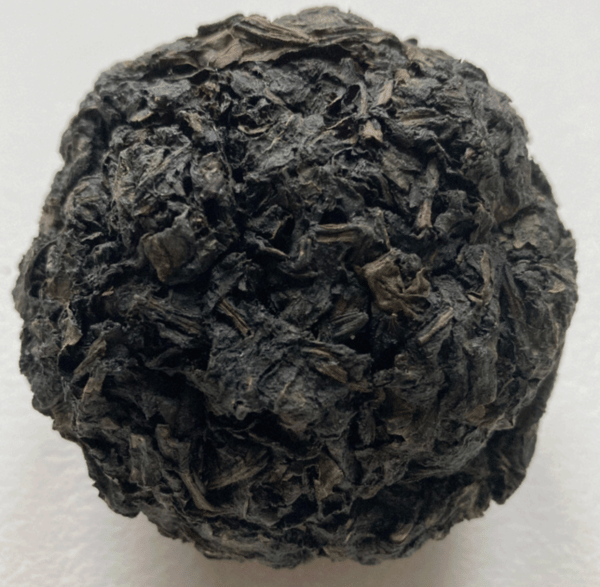
Wood as art material: cardboard, paper, ink, charcoal, lamp black, wood-block printing, woodcut, painting panel, canvas frame, carving, dowels. From resin: turpentine & damar varnish
The scribes used iron gall ink made from growths on oak trees caused by parasitic wasps. The galls were crushed and mixed with water and honey, and sometimes with vitriol—sulphuric acid—gum arabic, which is a binding agent, and iron shavings from the bottom of cauldrons to make blue/black ink. Over time, the ink rusts, so the writing on the four Magna Cartas is now brown. The scribes used a quill pen made from the thick end of the feather from a large bird, usually a goose. The feather was sharpened and split at one end to create a nib, which had to be frequently re-sharpened. If the scribe made a small mistake, a knife could be used to scrape off a thin layer of parchment and provide a clean surface.
— The Making of The Magna Carta, UK Parliment
Lamp Black is a form of carbon black. It is essentially soot and is composed of finely particulate amorphous carbon. The pigment is cheap and easy to make; all you need is a flame and a fuel source and a surface for the soot to accumulate on. This pigment must have been recognised from the earliest dates of human cognition. It has been recognised in paintings of all periods and all regions and was also widely used as a cosmetic and as a tattooing ink. Lamp Black has been the main ink used for writing and calligraphy in many cultures (although iron gall inks and sepia have also been used from the Roman Periods onwards). Nevertheless, Lamp Black was the main constituent of India Ink (but note that modern India Inks are made with a mixture of organic dyes). The best lamp blacks are made from burning tree resins, pitch or tar, or burning the wood of resinous trees such as pine’ ‘‘Blackness’ depends on factors including particle size and the degree of reflectivity/absorption of light. Ivory black has always had the reputation as the finest of black pigments, but lamp black is readily available, inexpensive and easy to make and is a fine, black ink
— Lamp Black: Digital Humanities, Ruth Siddall (2016), The Pigment Timeline Project, UCL
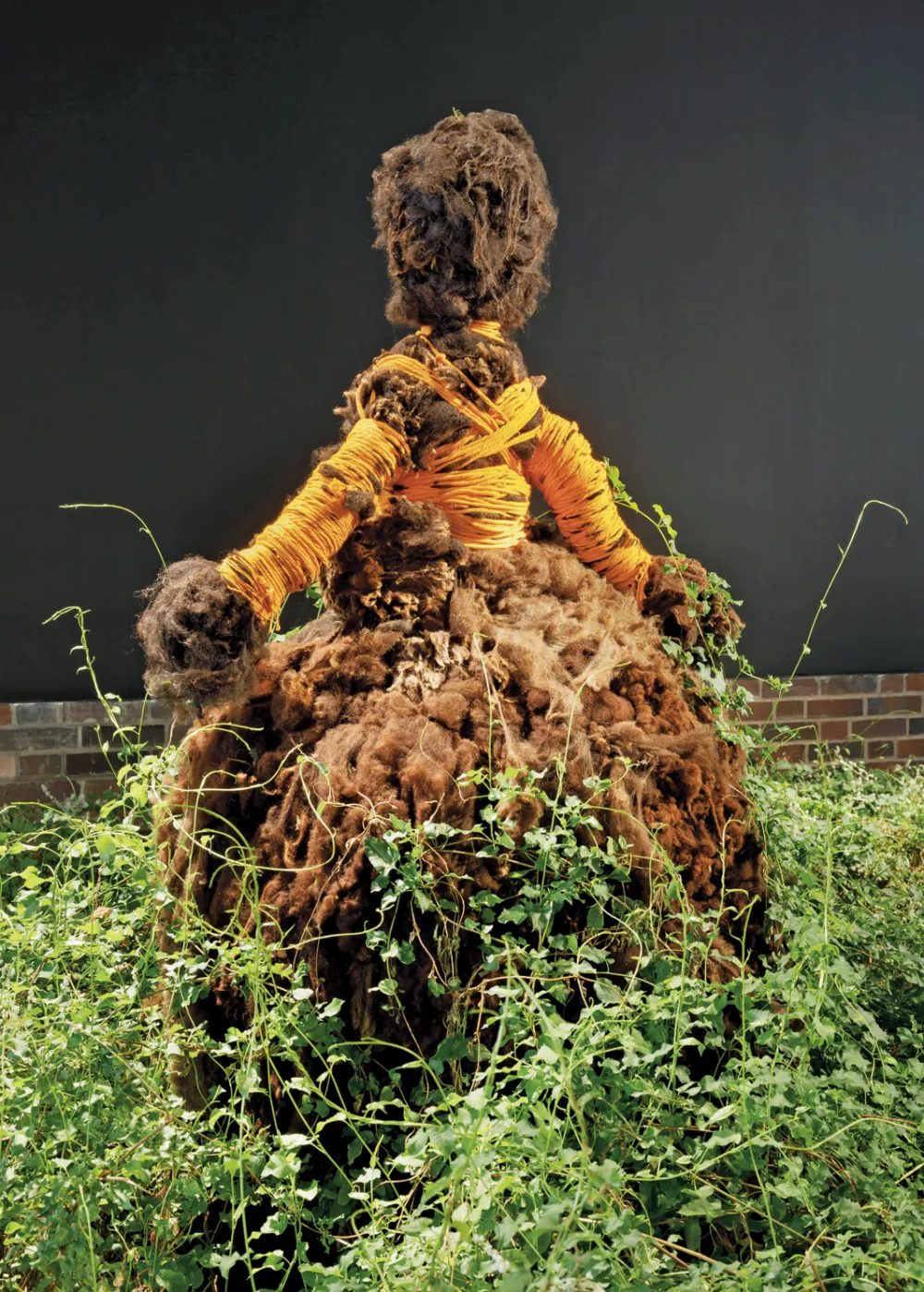
Precious Okoyomon, Angel of death, 2020, raw lambswool, dirt, wire, yarn. Earthseed, Zollamt MMK, Frankfurt. The sculpture is surrounded by Kudzu plants imported from Amsterdam. "In 1876, the United States government introduced the Japanese vine kudzu to Mississippi. The state was in danger of being lost entirely to widespread soil erosion brought about by the extensive cultivation of cotton by chattel slaves, and the vine—already notorious for the speed at which it grew—was deployed as a weapon intended to fortify the ground soil. Instead, kudzu—now thousands of miles away from its home in Japan—became monstrous, consuming everything in its vicinity and earning the epithet “the vine that ate the south.” The word kudzu has meanwhile become a metonymy for the threat of invasive species everywhere." - from the press release.
I have been exploring the symbolic and spiritual ethnobotanical relationships between Pre-Columbian and South American thought and the living world, where plants have been aliies that helped us create myths in our ancient quests for vision. In collaboration and assisted by the non-human world, humans have dwelled along the centuries in the Vegetal Matrix, which contains information to broaden our concioussness and to reconnect with planetary memory.
The alignment that comes by conceiving plants as companions, organic technologies and connecting with plant intelligence and plant spirits, have provided us with multispecies inter-connection.
— Patricia Dominguez, Vegetal Matrix, 2021, Rooted Beings, Wellcome Collection
In her book Papermaking with Garden Plants and Common Weeds, papermaker Helen Hiebert outlines some of the ways one can find raw materials for paper-making, if they don’t have a garden. She writes, ‘I collect onion skins from the bottom of the bin at the local grocery store, for instance, and get corn husks at the neighbourhood farmer’s market. Nurseries and flower shops often have plant waste lying around, and roadside weeds such as cattails and phragmites are adundant and suitable for papermaking.’
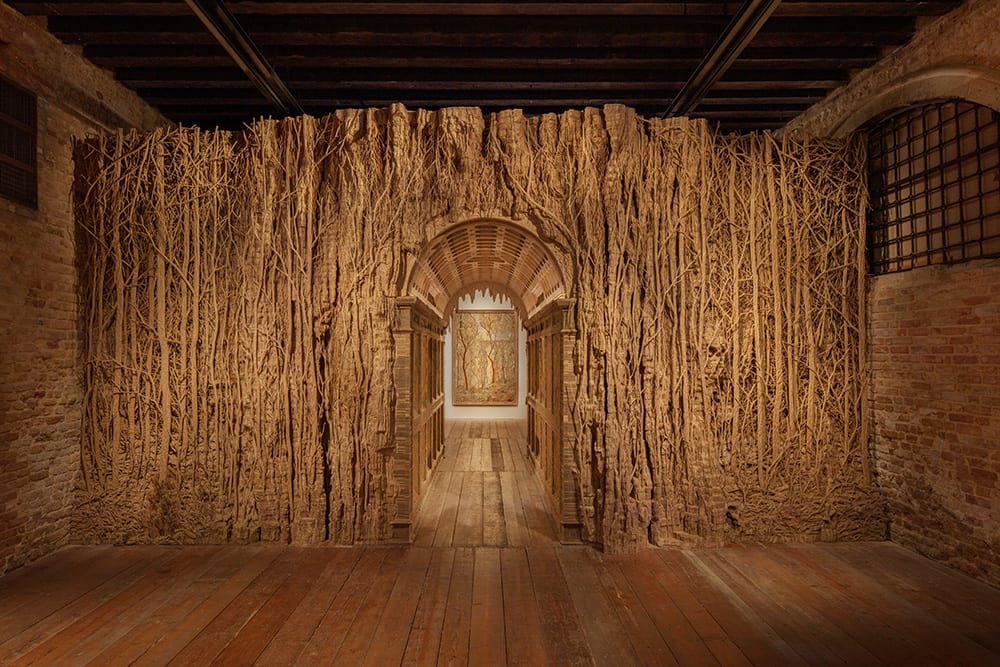
Eva Jospin's exhibition 'Selva' at Museo di Palazzo Fortuny, 2024. I had the joy of seeing this incredible exhibition. The Selva publication says of Jospin's materials: 'Cardboard - which Eva Jospin transforms into solid architectures from the classical repertory or into the thickly tangled fonds of dense forests'. These are works which replicate the 'forest at nearly life size with the brown of the wood and the texture of the cellulose fibre'.
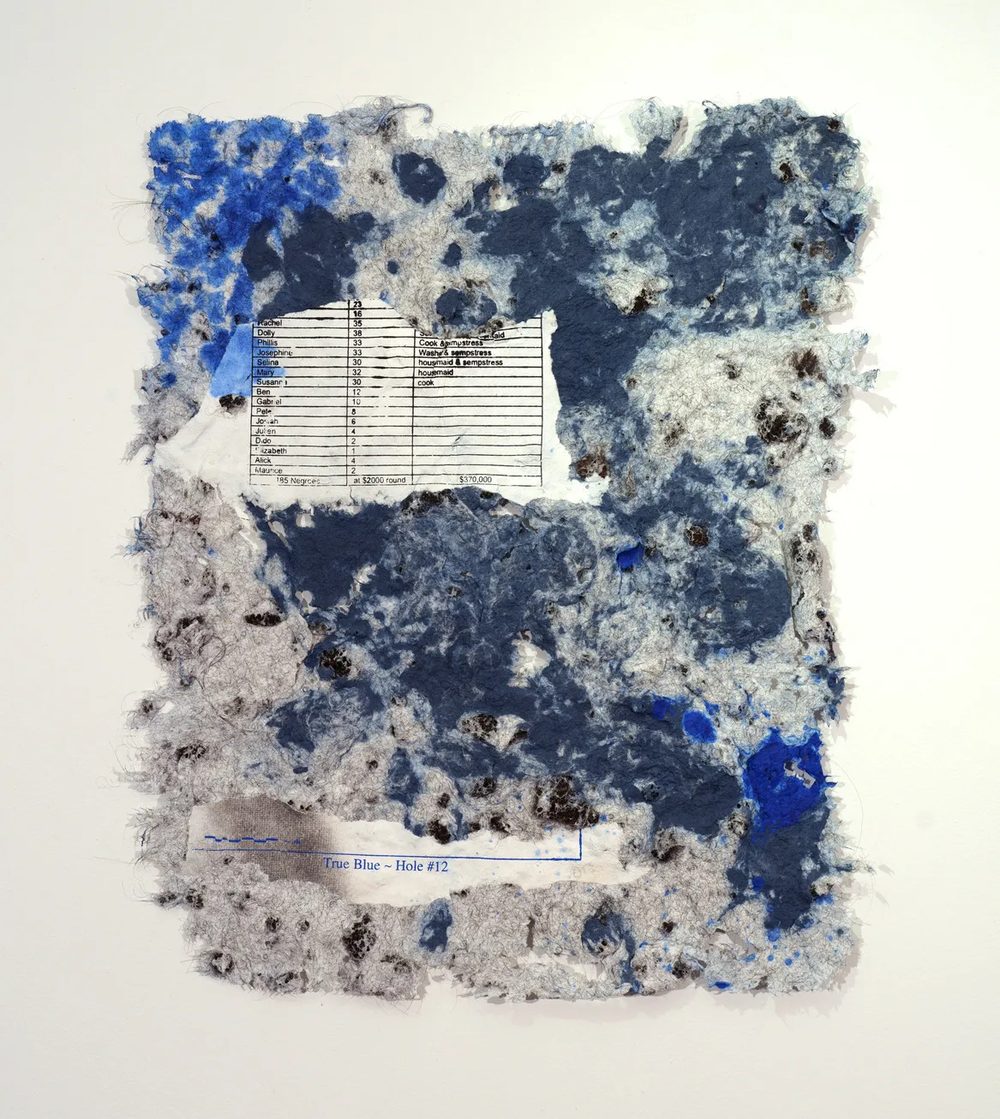
Artist | Adebunmi Gbadebo (b. 1992 in Livingston, New Jersey) is a multimedia artist. Human Hair features as a material across her sculptural and two dimensional works. Her website states, about the paper works: "When creating paperworks, she invokes the Japanese couching technique, preparing a vat of pulp made from donated hair and raw cotton, pulverizing the natural fibers in collected water from rivers at True Blue, pouring the pulp onto a screen, and hand treating the fiber—molding it into organic forms, dyeing it with indigo, and silkscreening fragments from True Blue’s plantation archives, her family’s nineteenth and twentieth century photographs, and other primary sources."
Iron Gall Ink was a popular ink made from Oak Gall Nuts. The Oak Gall Nut is technically an abnormal growth/ a protective reaction of an oak tree in response to “wasps depositing eggs beneath its bark". When this happens the oak tree responds by growing a gall structure instead of a normal branch. This structure ends up housing the wasp’s larvae. This is only one of many relationships between insects and plants - where an insect will utilise plants or wood fibres as nest-like structures. Given that both the paper and the ink originate from plants, it is interesting to think that this particular combination of materials causes conservation problems down the line due to the ink’s corrosion of paper.
Plants, too, provide an endless source of materials for further processing and transformation. One has only to enumerate, for example, all the different materials that can be derived from trees, including wood, bark, sap, gum, ash, paper, charcoal, tar, resin and turpentine. Other flowering plants and grasses give us cotton, flax, jute and papyrus. […] Many materials in common use are derived from the unlikely combination of ingredients from an astonishing variety of different sources. […] ink, an essential material for the medieval scribe. Two kinds of ink were used. One was made of lamp- black mixed with gum. For the other, which came into general use from the 12th century, the principal ingredient was the oak apple. This is the round, marble-sized tumour that often grows on the leaves and twigs of oak trees. It is formed around the larva of the gall wasp that has laid its egg in the tree bud. The oak galls are collected, crushed and either boiled or infused in rainwater (or white-wine vinegar). The other main ingredient is copperas, manufactured by the evaporation of water from ferrous earth, or by pouring sulphuric acid over old nails, filtering the liquid and mixing it with alcohol. The copperas is added to the oak-gall potion and thoroughly stirred with a stick from a fig tree. This has the effect of turning the solution from pale brown to black. Finally, gum arabic – made from the dried-up sap of the acacia tree – is added in order to thicken the concoction (de Hamel 1992, 32–33).
— Tim Ingold, *Materials against Materiality*, Cambridge University Press, 2007