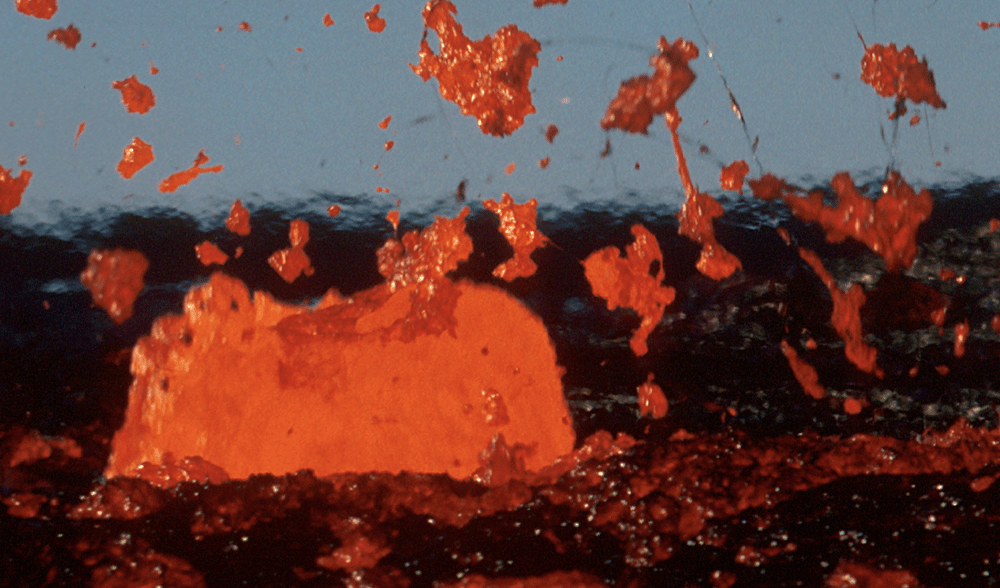
While the extereme heat of lava causes it to set fire to surrounding environments, it is a ground element (molten rock), as opposed to a fire element (combustion process). Image: Still from Fire of Love (2022). "Fire of Love tells the story of two French lovers, Katia and Maurice Krafft, who died in a volcanic explosion doing the very thing that brought them together: unraveling the mysteries of our planet, while simultaneously capturing the most explosive volcano imagery ever recorded." - Sandbox Films.
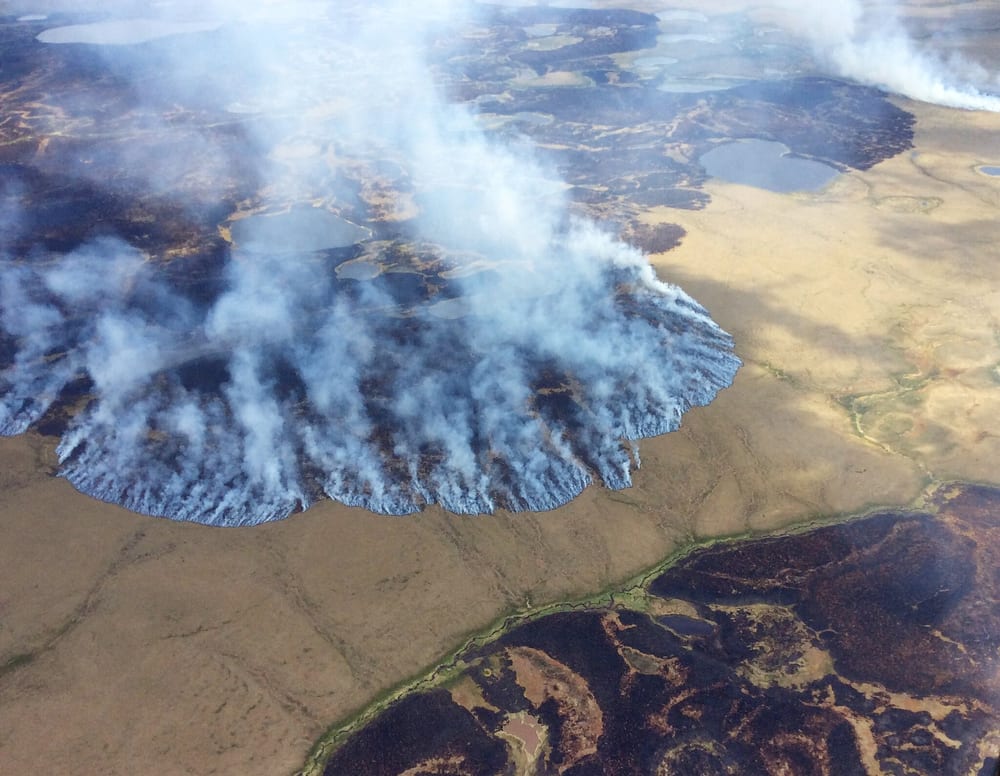
Zombie fires | Fires which appear to come back from the dead. "After a wildfire has been extinguished on the surface, some of it can still burn belowground in secret, fuelled by peat and methane. These fires can continue to burn all through winter, hidden under a layer of snow, and in spring as the temperature rises, the snow melts and the soil dries out, the wildfires can re-ignite and spread once again." - BBC, What are 'zombie fires' and why is the Arctic Circle on fire?
In Japanese, the Kanji character of black is written as 黒 and the four dots at the bottom represent fire as how the soot is fired and produced. While 墨, Sumi (black ink) is made by kneading animal glue and soot that is produced by burning oil or pinewoods, the character for Sumi is a combination of 黒 (black) and 土 (earth).
— Vintage Sumi Ink: Exploring the Beauty of Kogaboku. Pigment Tokyo
Lamp Black is a form of carbon black. It is essentially soot and is composed of finely particulate amorphous carbon. The pigment is cheap and easy to make; all you need is a flame and a fuel source and a surface for the soot to accumulate on. This pigment must have been recognised from the earliest dates of human cognition. It has been recognised in paintings of all periods and all regions and was also widely used as a cosmetic and as a tattooing ink. Lamp Black has been the main ink used for writing and calligraphy in many cultures (although iron gall inks and sepia have also been used from the Roman Periods onwards). Nevertheless, Lamp Black was the main constituent of India Ink (but note that modern India Inks are made with a mixture of organic dyes). The best lamp blacks are made from burning tree resins, pitch or tar, or burning the wood of resinous trees such as pine’ ‘‘Blackness’ depends on factors including particle size and the degree of reflectivity/absorption of light. Ivory black has always had the reputation as the finest of black pigments, but lamp black is readily available, inexpensive and easy to make and is a fine, black ink
— Lamp Black: Digital Humanities, Ruth Siddall (2016), The Pigment Timeline Project, UCL
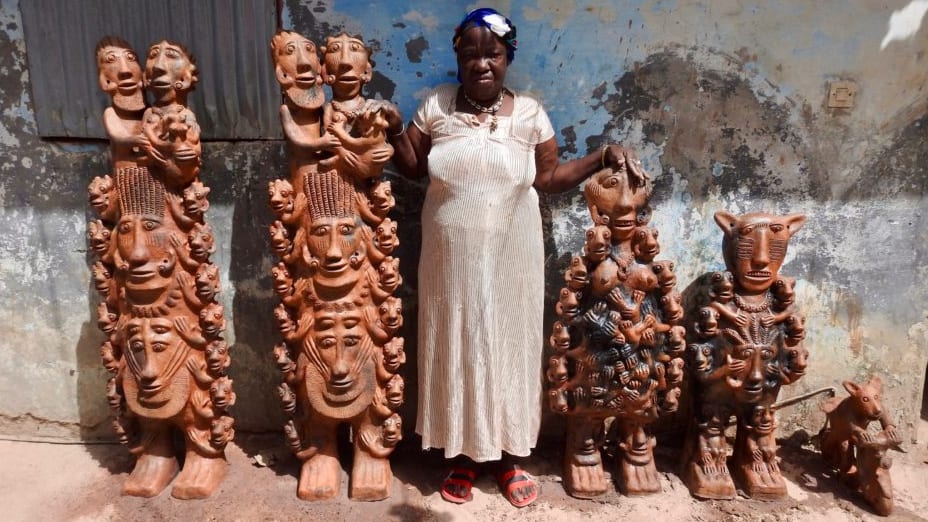
Artist | Seyni Awa Camara | These totemic clay sculptures were often unglazed, and fired in an open hearth kiln in front of her house. Camara was born into a family of potters in Basse-Casamance, Senegal.
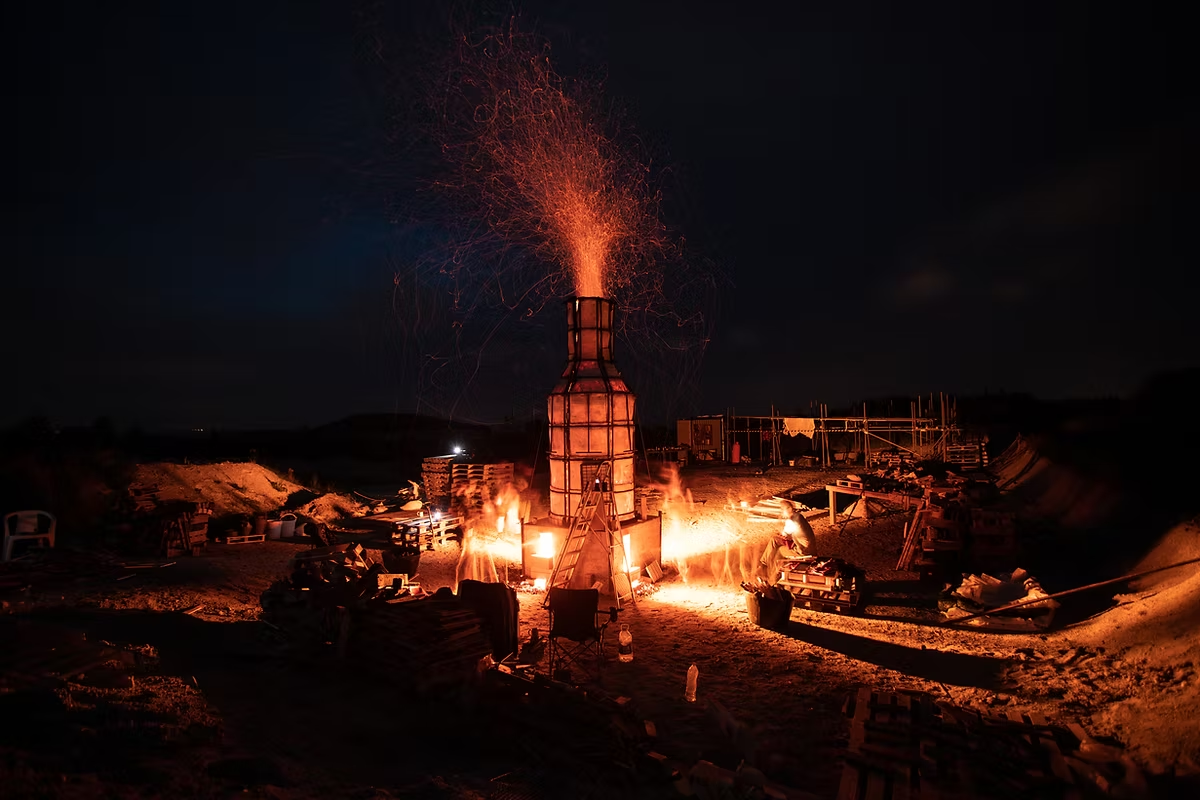
Artist | Robin Sulivan | And Everything And Nothing Has Changed, 2021, Cornwall, UK. Photograph of the group firing of a ceramic menhir: a monolithic sculpture co-designed and co-built with over 450 local participants. Fired in a 4.5m-high petal kiln in a public event below the iconic Sky Tip, this contemporary standing stone was both ritual and record, memorial and monument. It now resides permanently in the local area, gifted to the community that created it., 2021. “I wanted to build a monument to community — a symbol of what we can create together, in a landscape that has been continuously shaped, scarred, and softened by human hands.” — Robin James Sullivan
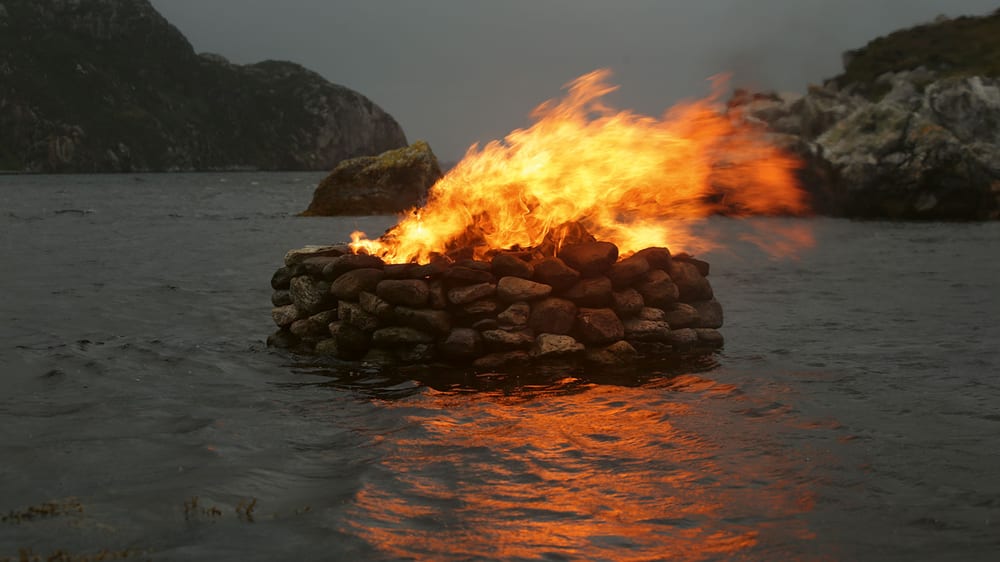
Julie Brook, Firestack, Autumn, Aird Bheag, Outer Hebrides, 5.68’ H, Diameter: 6.56’ (2016)