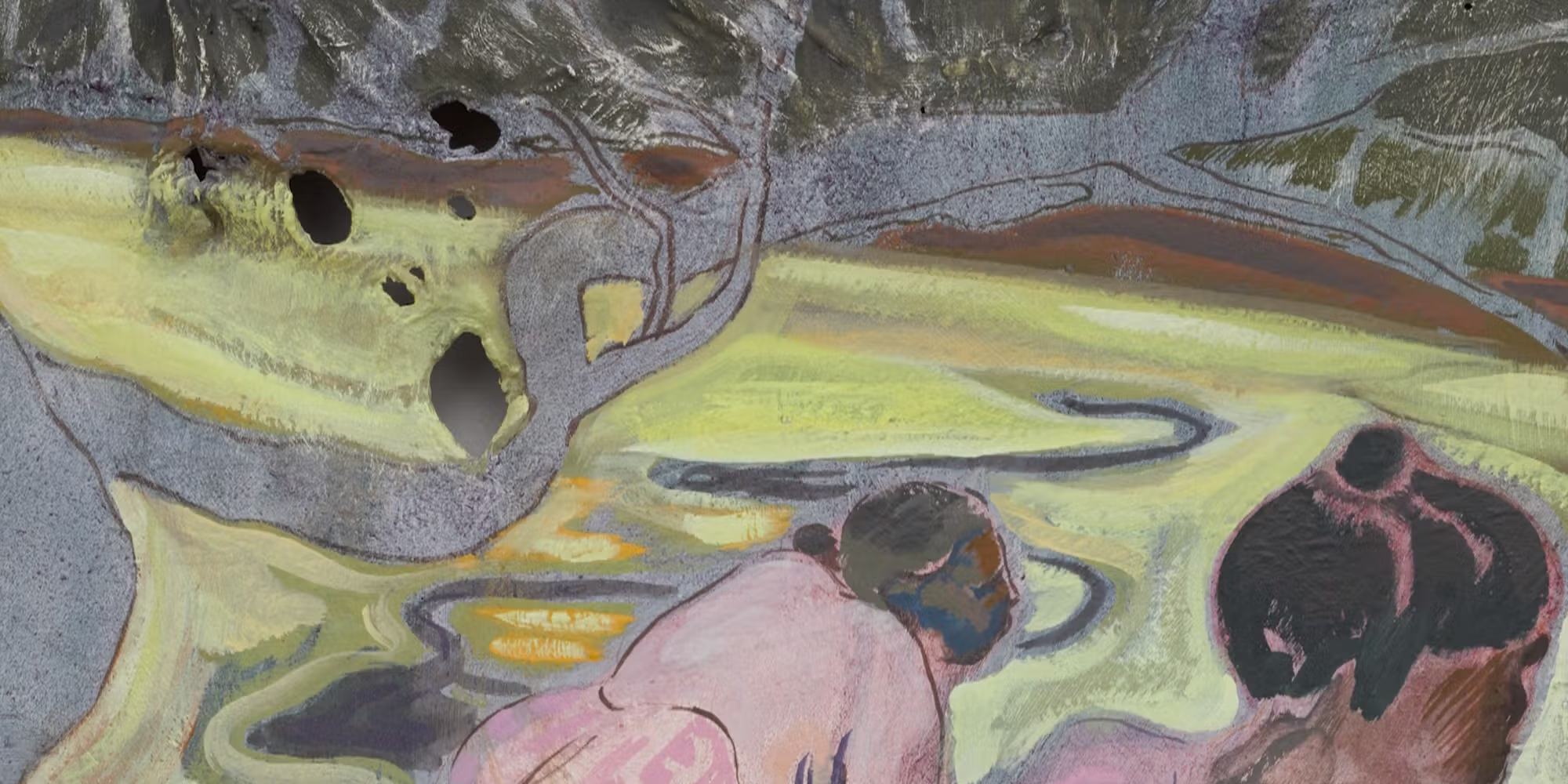
Micheal Armitage, detail of a painting. Lubugo bark cloth is a traditional non-woven textile made from the inner bark of the Mutuba tree (Ficus natalensis) handmade by the Baganda people in Uganda. In a MoMa interview with Hanna Girma, the artist Michael Armitage discusses why and how he paints on bark cloth. Armitage describes it as ‘basically the outer layer of bark of a ficus tree called ficus natalensis. It’s actually called lubugo bark, which translates to “funeral cloth” or “shroud.”’ Image showing detail of a painting with a hole in the bark cloth, Micheal Armitage. Image: White Cube
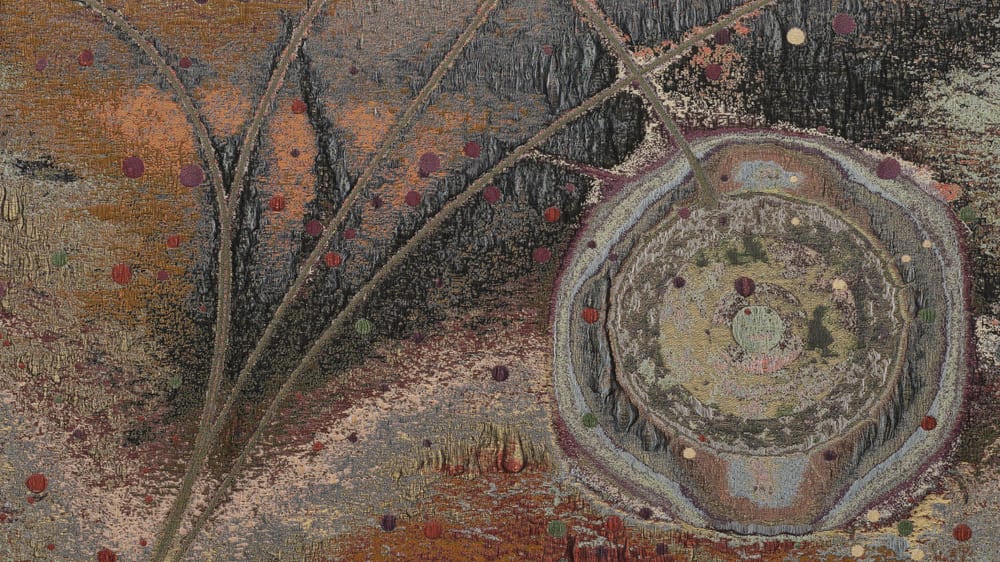
Sunburst, Otobong Nkanga, 2024, woven textile, 130 x 356 x 2 cm, Lisson Gallery. " a God’s-eye view of a circular form, part heat-hazed sun, part pulsing, unstable atom, hovering above a parched and inhospitable landscape." - ArtReview
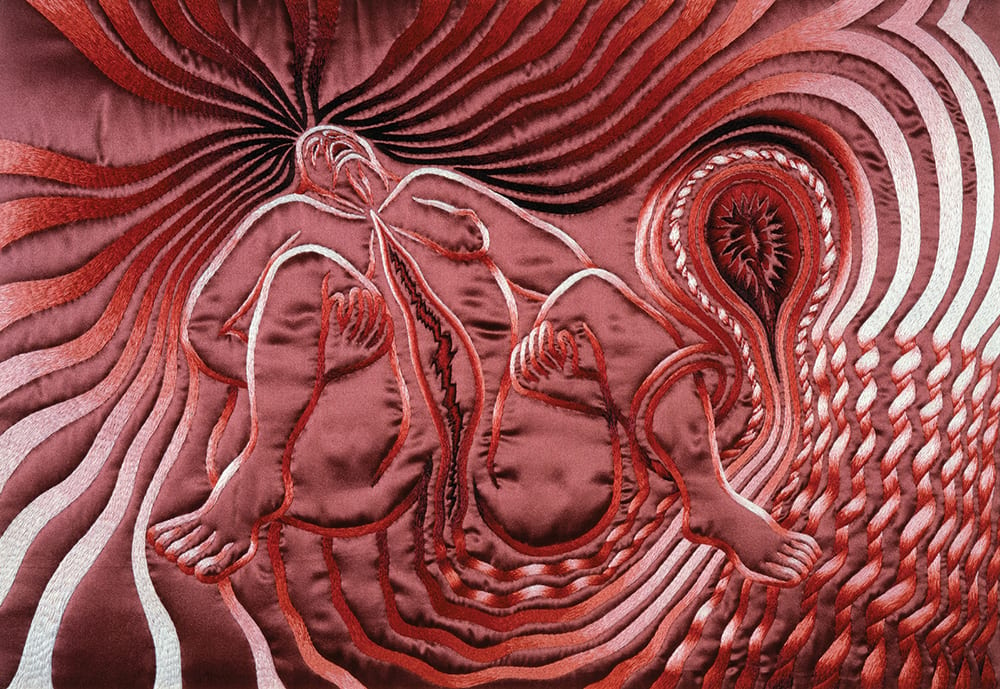
Judy Chicago, from The Birth Project, 1980-85. "The Birth Project was stitched by 150 women needle workers who joined Chicago over the five-year period of its production to complete approximately 84 textiles for a series of “exhibition units.” Chicago worked with needle workers, providing under paintings, cartoons, drawings, mock-ups, color specifications and written directions for the transformation of her images. One needle worker summarized the process: “We are creating within Judy’s creation.” Every needle worker receives public credit for her work. The medium of textiles, quilting and embroidery, associated with craft since the Renaissance, was returned by Chicago to its medieval standing as an art medium. Chicago’s ability to transform the “discriminated-against” status of textile and needle media encouraged the use of such media by other artists." - Extracted from the curators statement: Viki D. Thompson-Wylder, Judy Chicago's Birth Project: Born Again, The Catherine G. Murphy Gallery (2018)
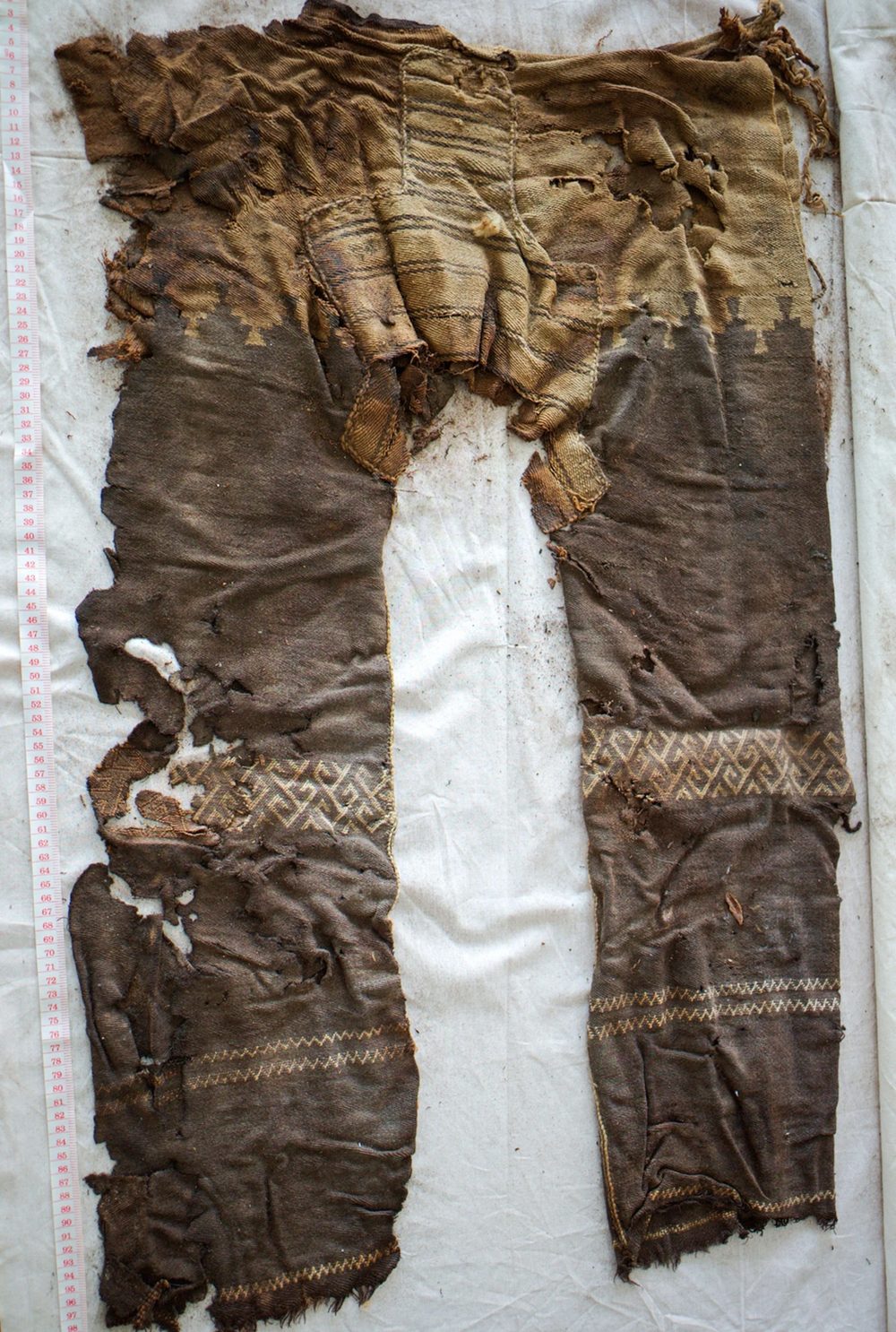
3,300 year old trousers found in China. ‘What little rain that falls on a gravelly desert located in western China’s Tarim Basin evaporates as it hits the blistering turf. Here, in this parched wasteland, lie the ancient remains of people who made one of the biggest fashion splashes of all time.’ .. “A diversity of textile techniques and patterns of different local origins, traditions and times merged into something new in this garment,” says archaeologist and project director Mayke Wagner of the German Archaeological Institute in Berlin. “Eastern Central Asia was a laboratory where people, plants, animals, knowledge and experiences from different directions and sources came … and were transformed.” - Science News, The world’s oldest pants stitched together cultures from across Asia
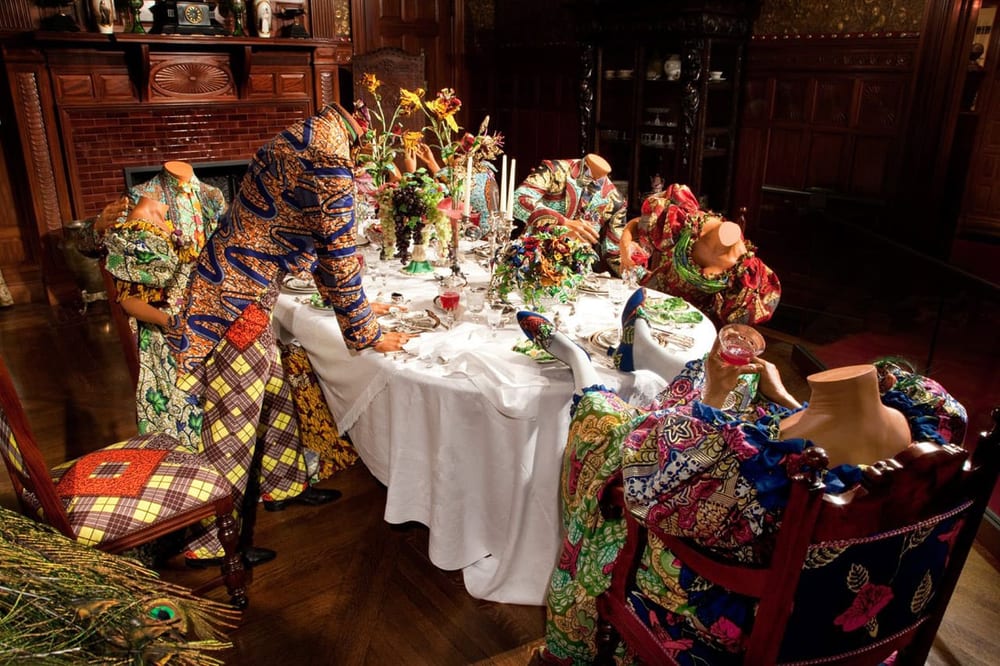
Yinka Shonibare RA, Party Time: Re-imagine America, 2008. Nine lifesize fibreglass mannequins, Dutch wax printed cotton textile, leather boots, table, eight chairs, and other mixed media. "I then went to Brixton market in search of my so-called authenticity and started talking to people about the fabrics. I thought the fabrics were entirely of African origin. I didn’t realise that the Dutch were influenced by Indonesian batik and I thought that was really fascinating – given that the idea of authenticity was being projected. Why is it then as Africans, we are not seen as global citizens who can be influenced by anything? That’s kind of how the whole journey actually began." - quote from It's Nice That, a conversation between Yinka Shonibare and Yinka Ilori. Image © The Newark Museum of Art.
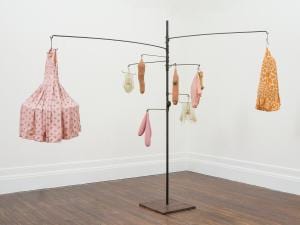
Untitled, 1996, Louise Bourgeois (1911–2010). Clothing, rubber, steel and other materials. Image: Tate
We are wrapped in cloth when we’re born and enshrouded in it when we die.
— Unravel: The Power and Politics (2024)
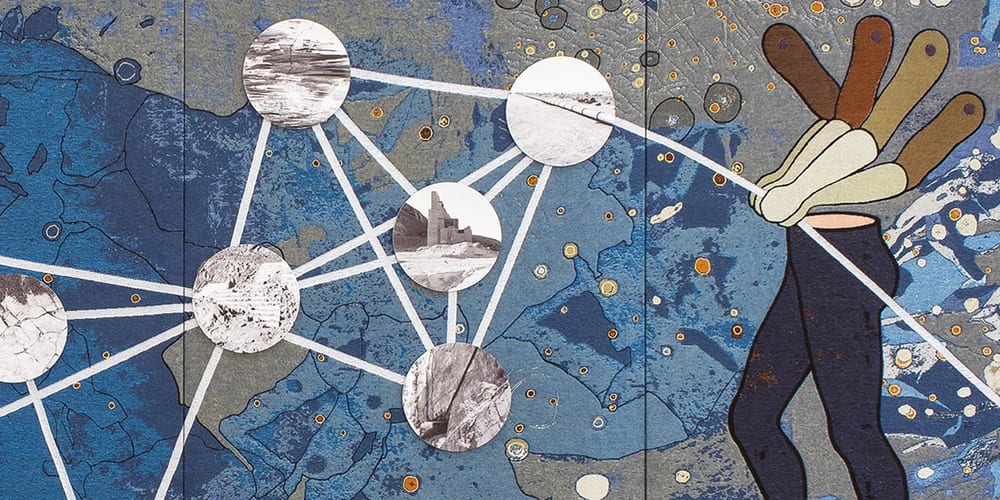
Artwork | Otobong Nkanga, The Weight of Scars detail (2015), woven textile (yarns: viscose, wool, polyester, mohair, acryl, and cotton), inkjet prints on ten lasercut forex plates, four parts, 251.5 × 612.1 cm.
Speaking on 'A Brush With', Nkanga described how she is interested in the histrories of Flemish, African, South East Asian, Japanese tapestries to name a few, and the yarns, colours and patterns from each place. How her tapestries are about an "understanding of material, and how those materials really relate to what the land can offer. So if we’re thinking of Indigo and we’re looking at the African tapestries and African fabrics you’re seeing actually the history of the land within the tapestry. If we look at the Flemish tapestry, we can see the discovery of greens. You can see periods in which the chemistry and the technology becomes apparent. [..] certain colours that were not there before start becoming part of the fabric"
About this work: A combinitation of textiles and photographs in which two 'fragmented figures are connected to a network of ropes and pipelines that converge at photographs of abandoned mines. Their arms are shown in multiple positions suggesting the ‘push and pull’ of shifting relationships as land is consumed and changed. The ‘scars’ in the title suggest damaged and vulnerable bodies within a landscape devastated by the extraction of knowledge, people and resources.' - tate.org.uk