← Back
Link
1
Image
2
Image
3
Image
4
Image
5
Image
6
Image
7
Link
8
Link
9
Image
10
Image
11
Image
12
Quote
13
Quote
14
Quote
15
Quote
16
Quote
17
The Mater Podcast
18
Story
19
Submit an entry
Conservation
19 items
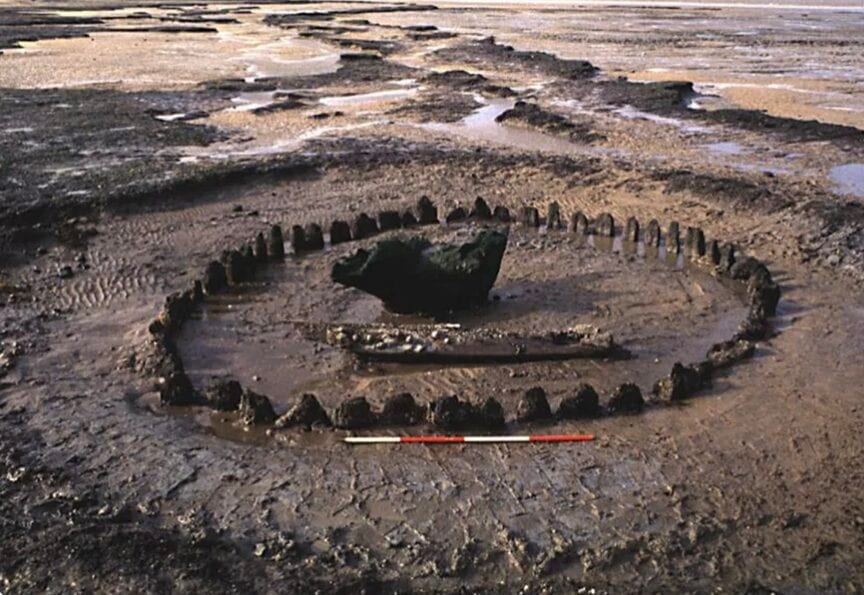
Seahenge | Bronze Age timber circle with upturned tree root in the centre. It had been buried under waterlogged anaerobic layers of peat and sand within a protective salt marsh but rising sea levels and coastal erosion pushed the shoreline inland. The remains were discovered in 1998, and controversially dug out to preserve from exposure to air.
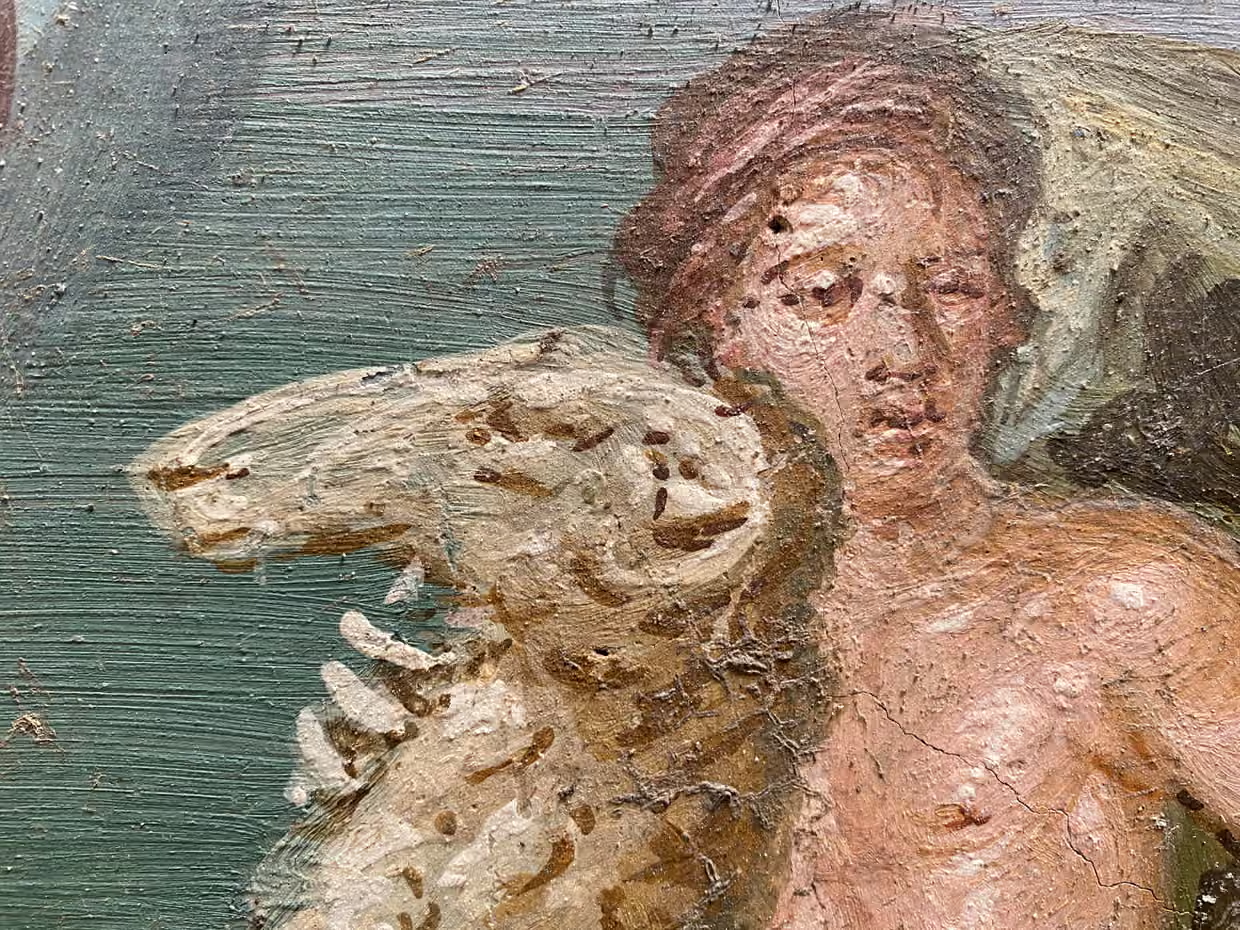
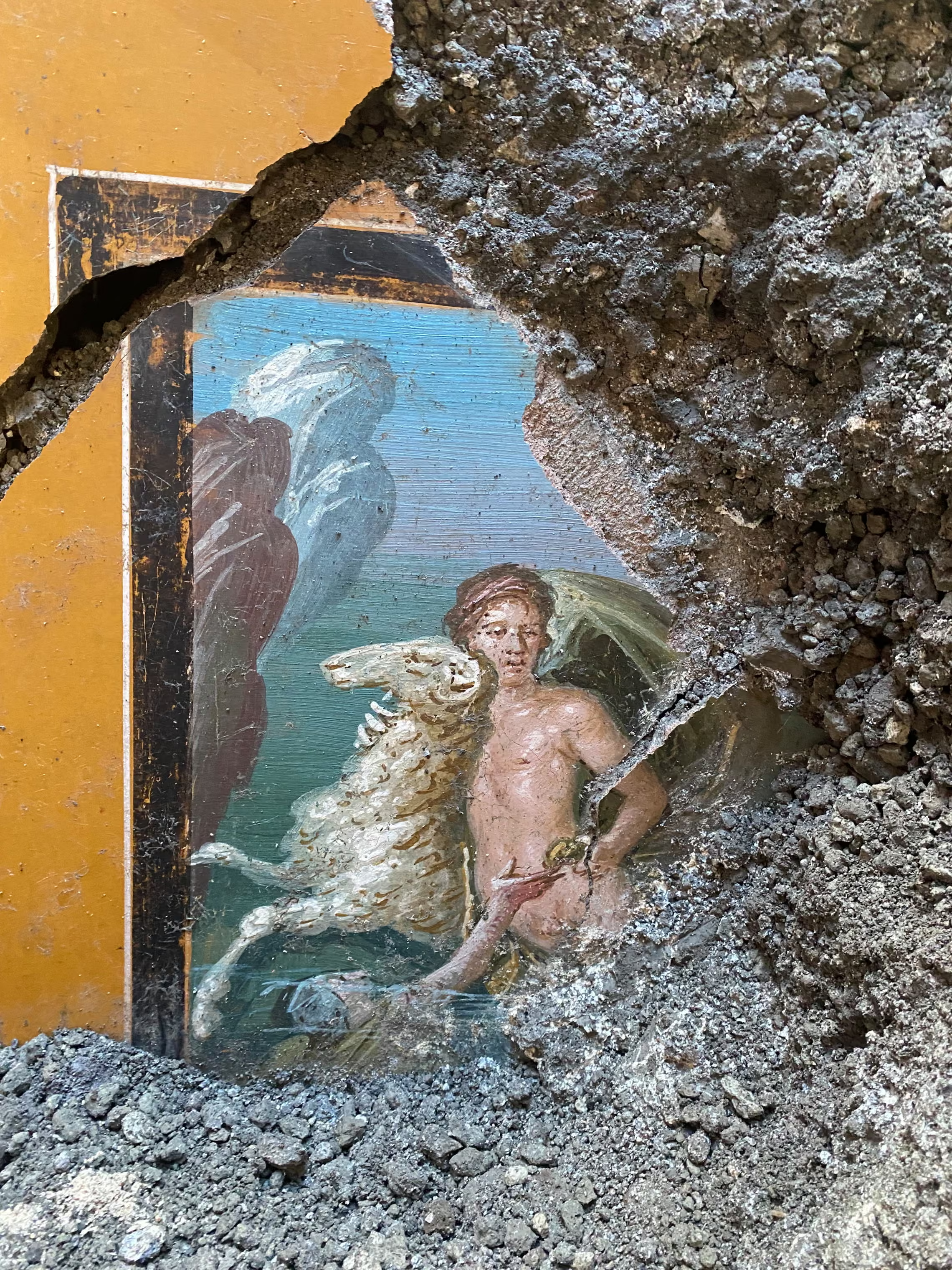
Pompeii pt1 | Detail of a Pompeii fresco. In love with the thickness, texture, pallette, and the crumbling details of Pompeii frescoes. Photograph: Pompeii Archaeological Park
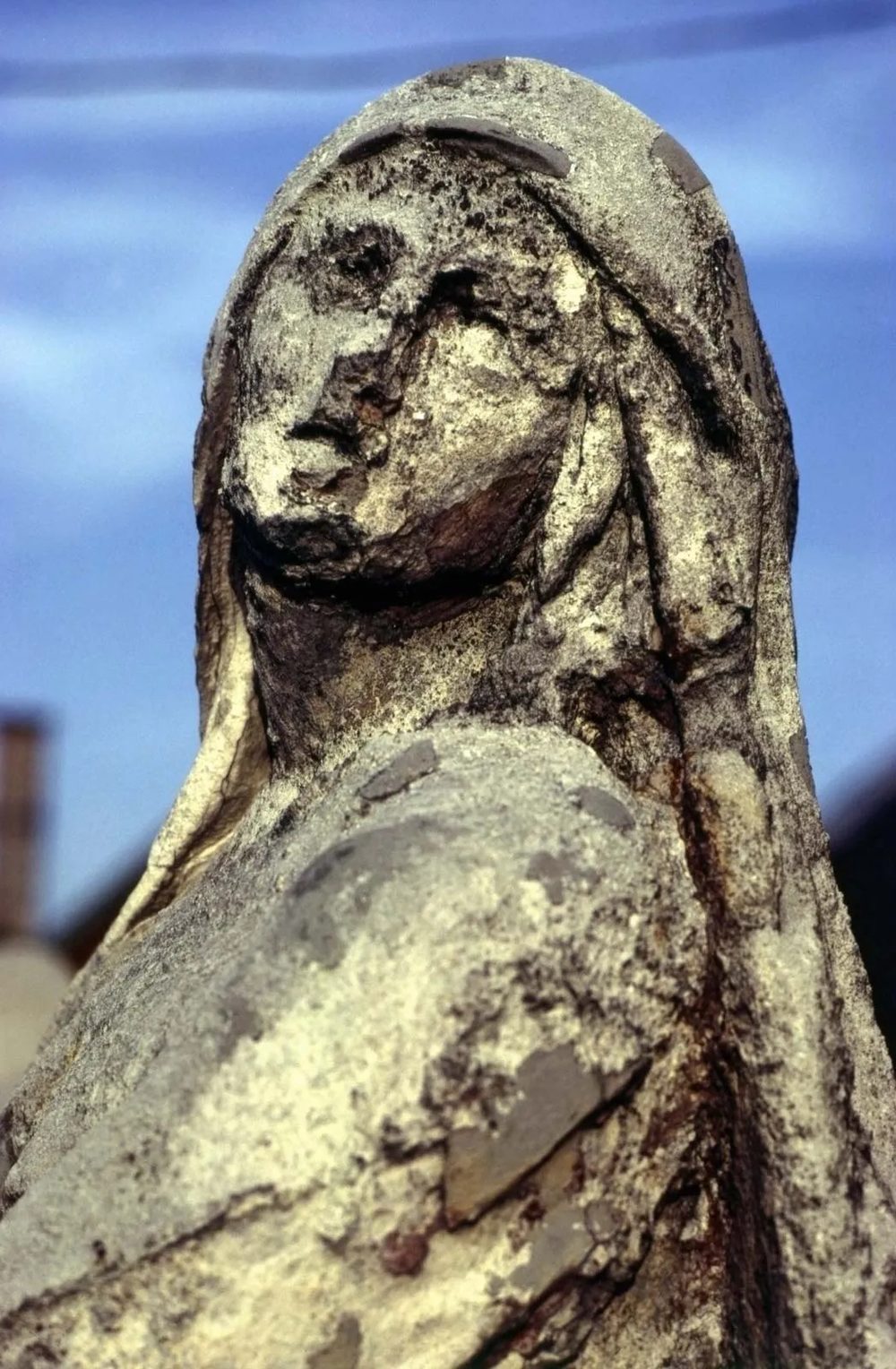
The effect of corrosion of statues. Acid rain can dissolve limestone and marble through direct contact.
Pompeii pt 2 | Seeing the whole image in the rubble of a recent discovery we see the full scene where Helle is about to drown, her face under the sea, reaching out to her brother Phrixus. This wider setting is so powerful becasue the painting intself looks like it's drowing once more amongst the rubble of Pompeii. Photograph: Pompeii Archaeological Park
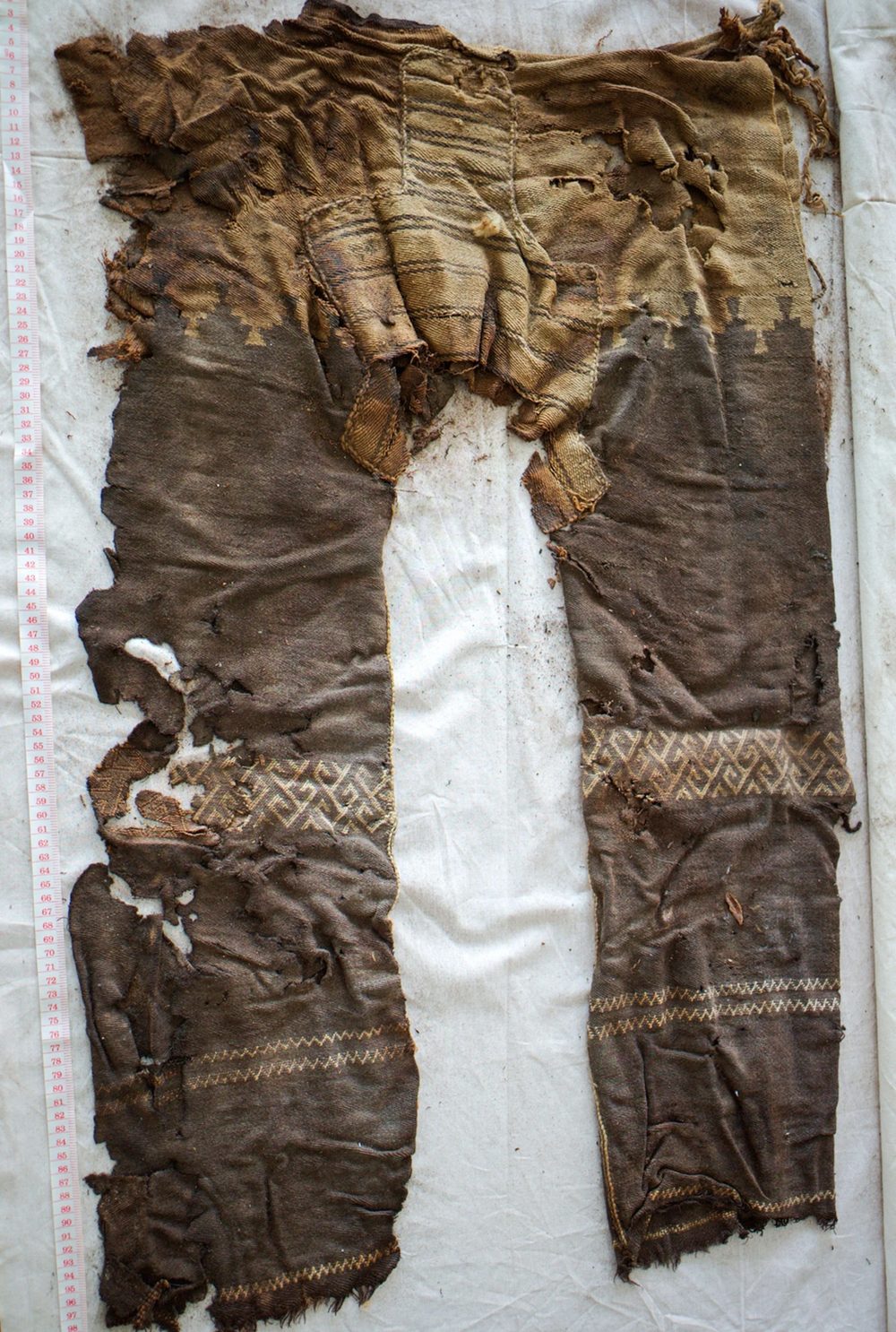
3,300 year old trousers found in China. ‘What little rain that falls on a gravelly desert located in western China’s Tarim Basin evaporates as it hits the blistering turf. Here, in this parched wasteland, lie the ancient remains of people who made one of the biggest fashion splashes of all time.’ .. “A diversity of textile techniques and patterns of different local origins, traditions and times merged into something new in this garment,” says archaeologist and project director Mayke Wagner of the German Archaeological Institute in Berlin. “Eastern Central Asia was a laboratory where people, plants, animals, knowledge and experiences from different directions and sources came … and were transformed.” - Science News, The world’s oldest pants stitched together cultures from across Asia
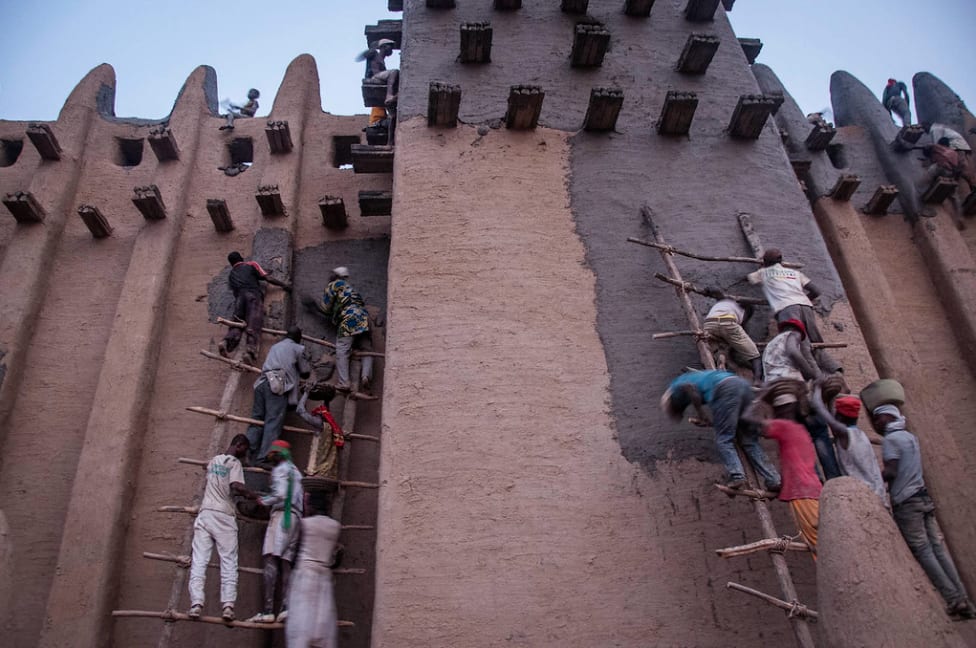
Djenne’s Great Mosque
Almost 20m tall, built from sun-baked mud (clay-rich soil and sand), with palm beams as structural support and permanent scaffolding support. Because the walls are between 16 and 24 inches thick, it stays cool inside during the day. Each year during the Crépissage, the residents of Djenné gather together to repair and re-clay the mosque. Present are ‘the master builders who are revered for their expertise and artistry in Malian society’. “Mud is very malleable and it responds to the changing demographics of a home." - Trevor Marchand.
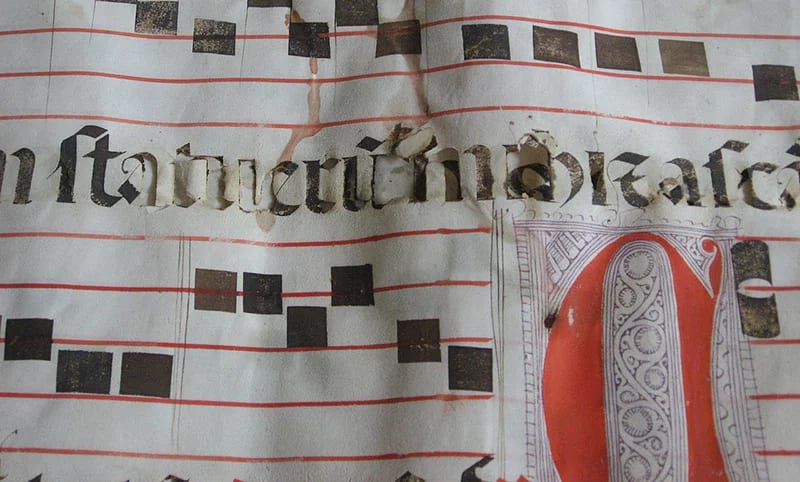
Iron gall ink corrosion on a manuscript from the Church of St Francis, Évora, Portugal
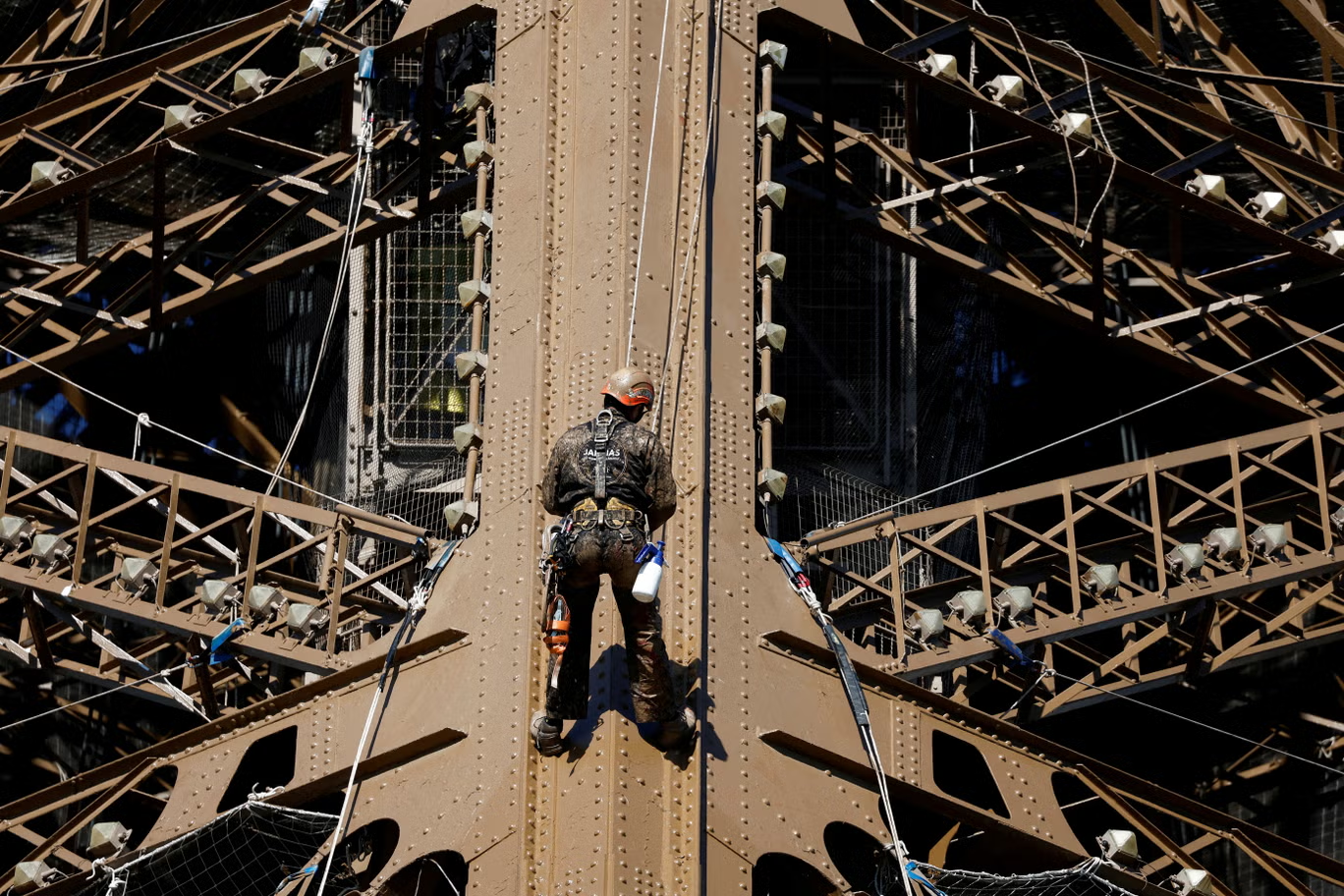
The Eiffel Tower, wrought-iron 324-metre, built by Gustave Eiffel in the late 19th century for the world fair. According to Reuters, "The Eiffel Tower is riddled with rust and in need of full repairs, but instead it is being given a cosmetic 60 million euro paint job ahead of the 2024 Olympic Games in Paris, according to confidential reports cited by French magazine Marianne." At the time of it's design, Eiffel himself stated that “Paint is the essential ingredient for protecting a metallic structure and the care with which this is done is the only guarantee of its longevity. The most important thing is to prevent the start of rust.”
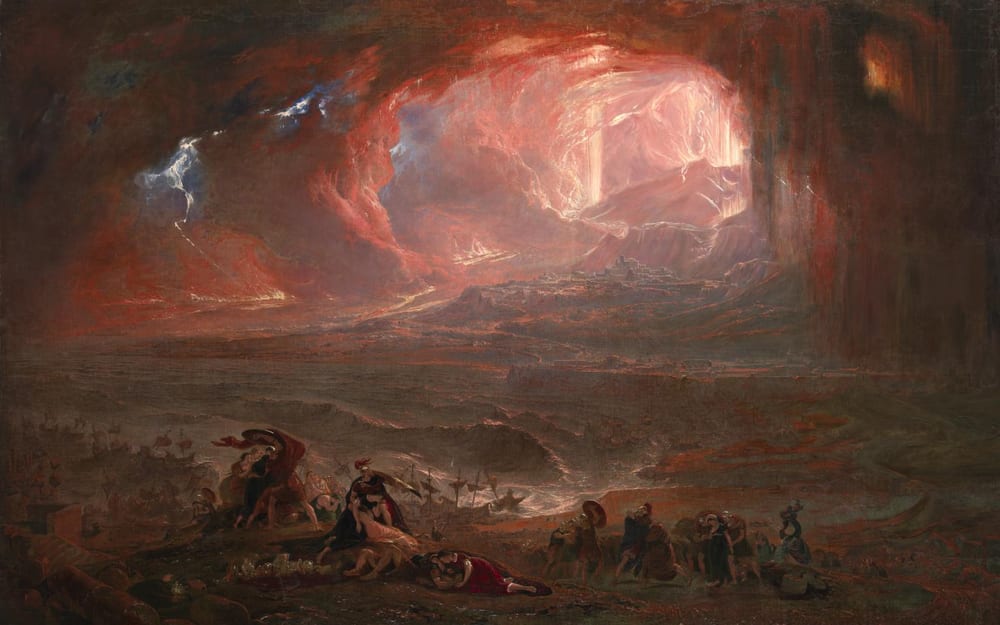
Artwork | The Destruction of Pompeii and Herculaneum, John Martin, oil paint on canvas, 1822. The painting imagines the eruption of Mount Versuvius, 24 August AD 79 which famously destroyed the cities of Pompeii and Herculaneum. "In 1928 the painting was in basement storage when the Tate suffered a disastrous flood. The picture was badly damaged and effectively written off but was extensively restored in 2011" - Tate.
Earthy vivianite deposits are found in peat bogs where iron-rich waters can react with phosphate in the organic matter to form the mineral. This seems the most likely source of the pigment used by Cuyp, since not only was peat abundant in the Netherlands but there was an active peat industry around Dordrecht as well as elsewhere in the Netherlands
— National Gallery Technical Bulletin, 2009. Albert Cuyp’s 'The Large Dort': Colour Change and Conservation. Marika Spring and Larry Keith
restoration actually destroys or hides historical evidence, just as preservation attempts to freeze the authentic, natural evolution of the object. In this sense, historical truth (the imprints of history upon the object) is a victim of restoration, and very often of preservation as well: it is the price to pay for converting the object into something more functional, more valuable, more meaningful.
— Contemporary Theory of Conservation, Salvador Munoz-Vinas (2004), Routledge
truth is not the final goal of conservation
— Contemporary Theory of Conservation, Salvador Munoz-Vinas (2004), Routledge
"Through these microscopic cross-sections of thirteenth-to twentieth-century paintings, Spike Bucklow unearths the hidden processes, materials and techniques of Rembrandt, Carravaggio, Artemisia Gentileschi, Walter Sickert, Claude Monet, Marianne North and more. Within one sample of paint, the size of a pin prick or full stop, lies a vast and complex geological strata; a masterpiece by Titian becomes an abstract landscape of yellowing varnish, crunchy blue lapis, a silken slab of lead white, sea shells floating in chalk, egg mingling with oil atop of taut canvas. The Art Beneath, reorients painting as three-dimensional and durational, revealing the painter’s patient assembling (and conservators’ quiet retracing) of an artwork from ground up.”
— The Art Beneath, Spike Bucklow
“We see the building and not the plaster of its walls, the words and not the ink with which they were written. In reality, of course, the materials are still there and continue to mingle and react as they have always done, forever threatening the things they comprise with dissolution or even ‘dematerialization’. Plaster can crumble and ink can fade. Experienced as degradation, corrosion or wear and tear, however, these changes – which objects undergo after they are ‘finished’ – are typically attributed to the phase of use rather than of manufacture. As the underbelly of things, materials may lie low but are never entirely subdued. Despite the best efforts of curators and conservationists, no object lasts forever. Materials always and inevitably win out over materiality in the long term.”
— Tim Ingold, Materials against Materiality, Cambridge University Press, 2007