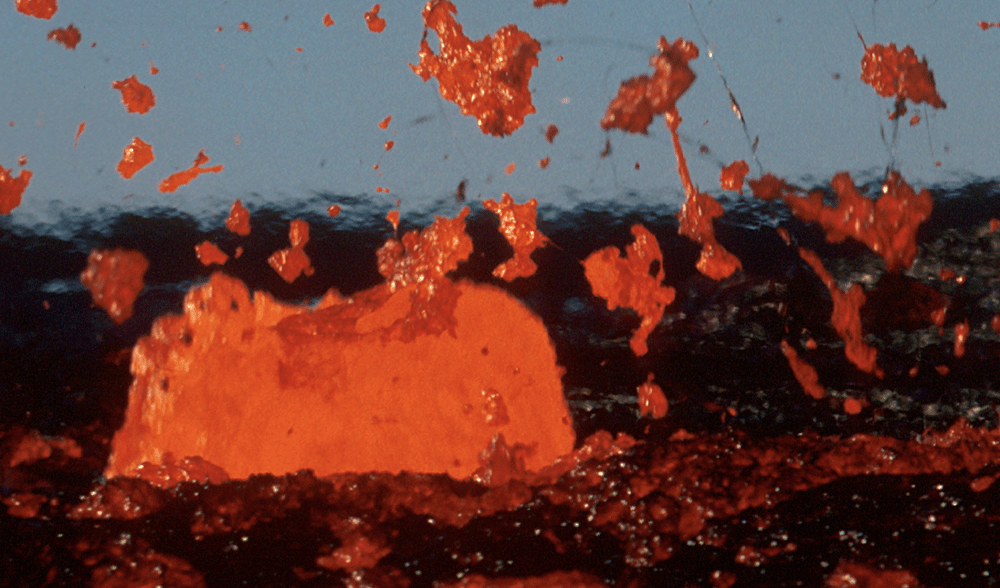
While the extereme heat of lava causes it to set fire to surrounding environments, it is a ground element (molten rock), as opposed to a fire element (combustion process). Image: Still from Fire of Love (2022). "Fire of Love tells the story of two French lovers, Katia and Maurice Krafft, who died in a volcanic explosion doing the very thing that brought them together: unraveling the mysteries of our planet, while simultaneously capturing the most explosive volcano imagery ever recorded." - Sandbox Films.
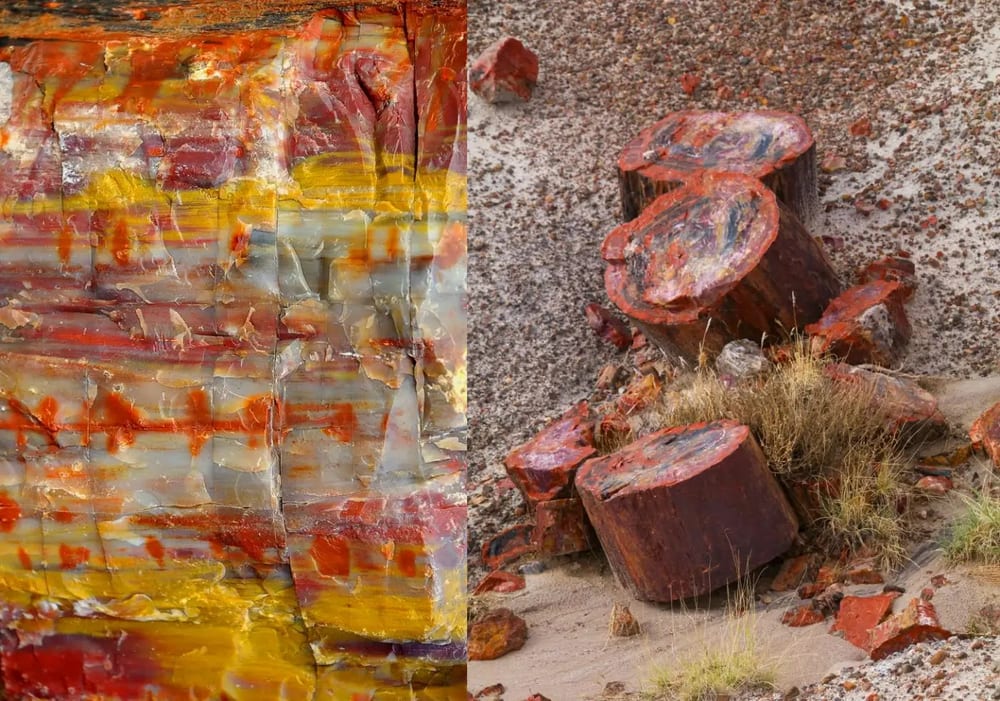
Petrified Wood | "the fossilized remains of ancient trees that have undergone a process known as silicification, where organic material is replaced by minerals, transforming the wood into stone." - EBSCO
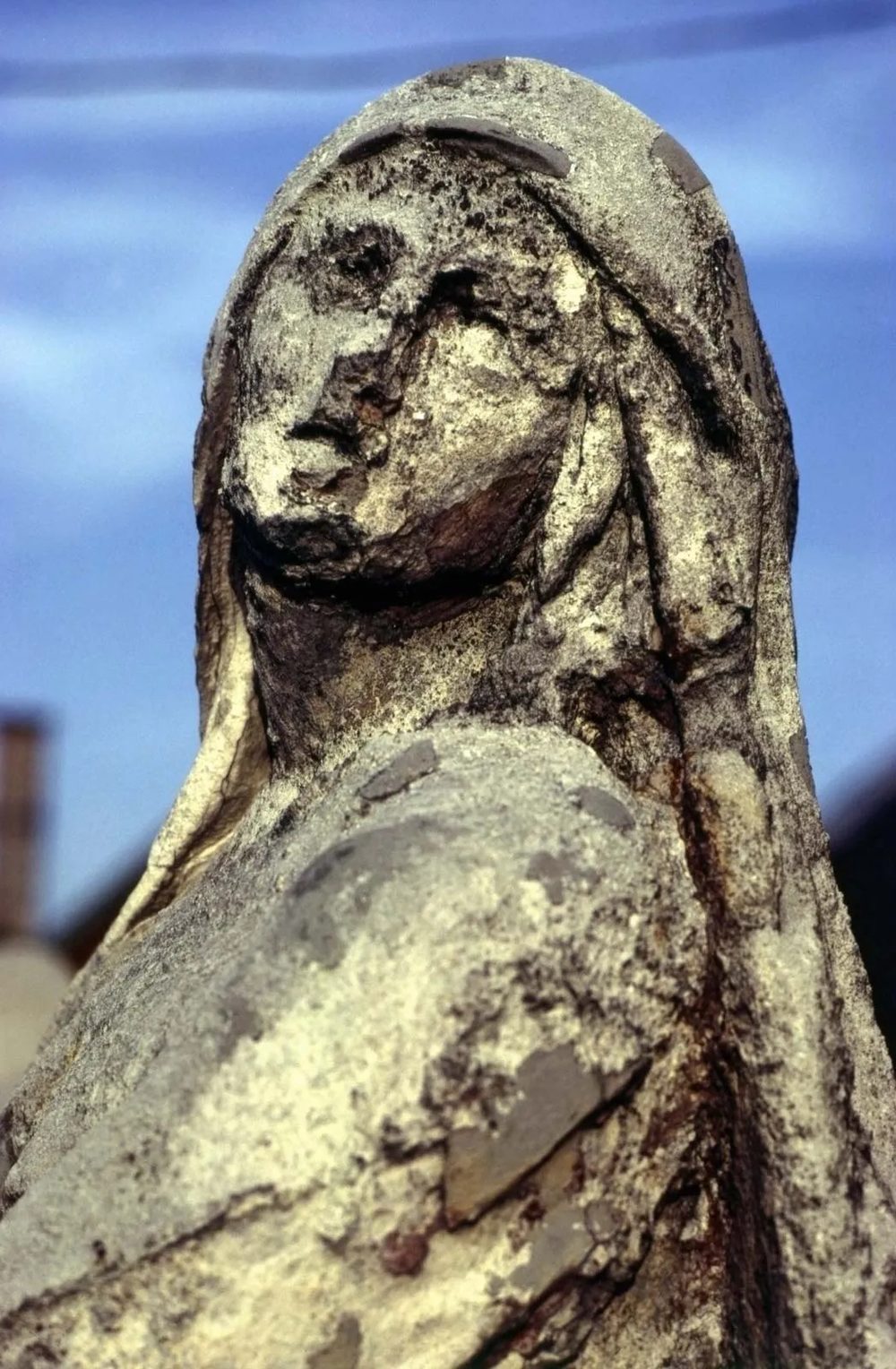
The effect of corrosion of statues. Acid rain can dissolve limestone and marble through direct contact.
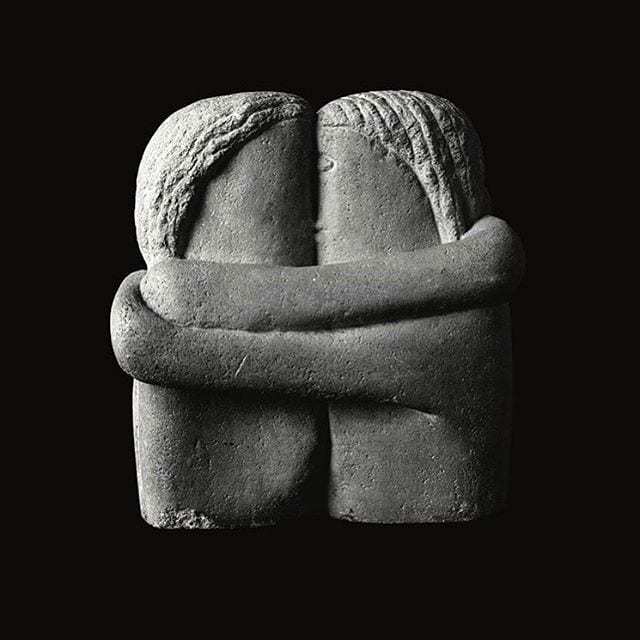
Constantin Brâncuși, The Kiss, 1907, carved into a single piece of limestone. "All the Kisses are in rough stone. Not one is polished and not one is platonic." - Artforum. Photograph by Dan Er. Grigorescu, 1967.
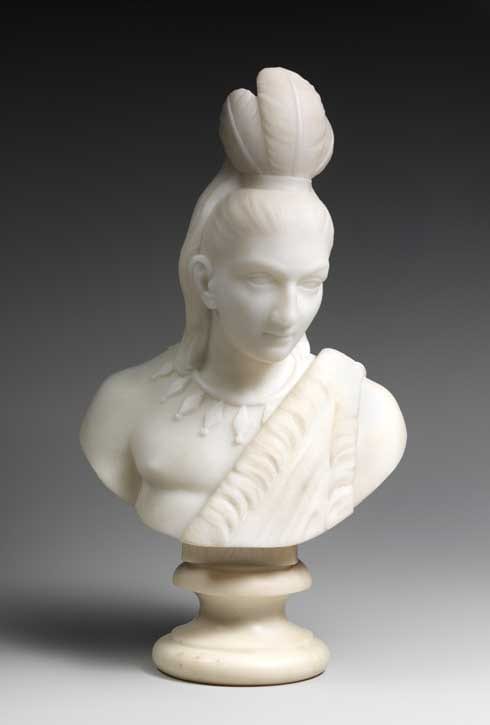
Edmonia "Wildfire" Lewis, Hiawatha, 1868, marble by Edmonia Lewis (c.1844–1907). "Forgotten amongst the list of prominent artists of her era, many people still do not know her name. Yet Lewis' story is one that never ceases to amaze, no matter how often you hear it. Edmonia 'Wildfire' Lewis is speculated to have been born in 1844, and was of Black American and Native American Ojibwe heritage. Her mother was a talented crafter, whose influence may have ignited her love and drive to pursue art. Orphaned by the age of five, Edmonia Lewis' brother Samuel is said to have played a vital role in her upbringing, with enough finances to pay for her formal education and provide her with a comfortable life. Funded by her brother and several abolitionists, Lewis' artistic endeavours flourished while at Oberlin College, Ohio in 1859." - Art UK, Who was Edmonia 'Wildfire' Lewis? by Hermenia Powers (2020). Image credit: The Metropolitan Museum of Art, New York, public domain
The difference between a marble statue and a rock formation such as a stalagmite, for example, is not that one has been made and the other not. The difference is only this: that at some point in the formative history of this lump of marble, first a quarryman appeared on the scene who, with much force and with the assistance of hammers and wedges, wrested it from the bedrock, after which a sculptor set to work with a chisel in order, as he might put it, to release the form from the stone. But as every chip of the chisel contributes to the emergent form of the statue, so every drop of supersaturated solution from the roof of the cave contributes to the form of the stalagmite. When subsequently, the statue is worn down by rain, the form-generating process continues, but now without further human intervention.
— Tim Ingold, Making: Anthropology, Archaeology, Art and Architecture, (2013), p21
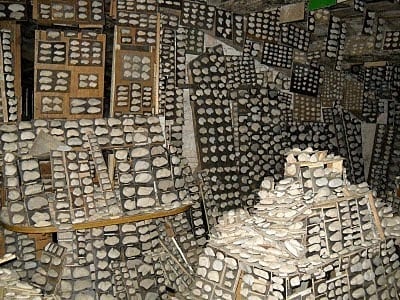
Luigi Lineri has built a vast collection of stones from the Adige river near Verona in northern Italy, collected over 50 years
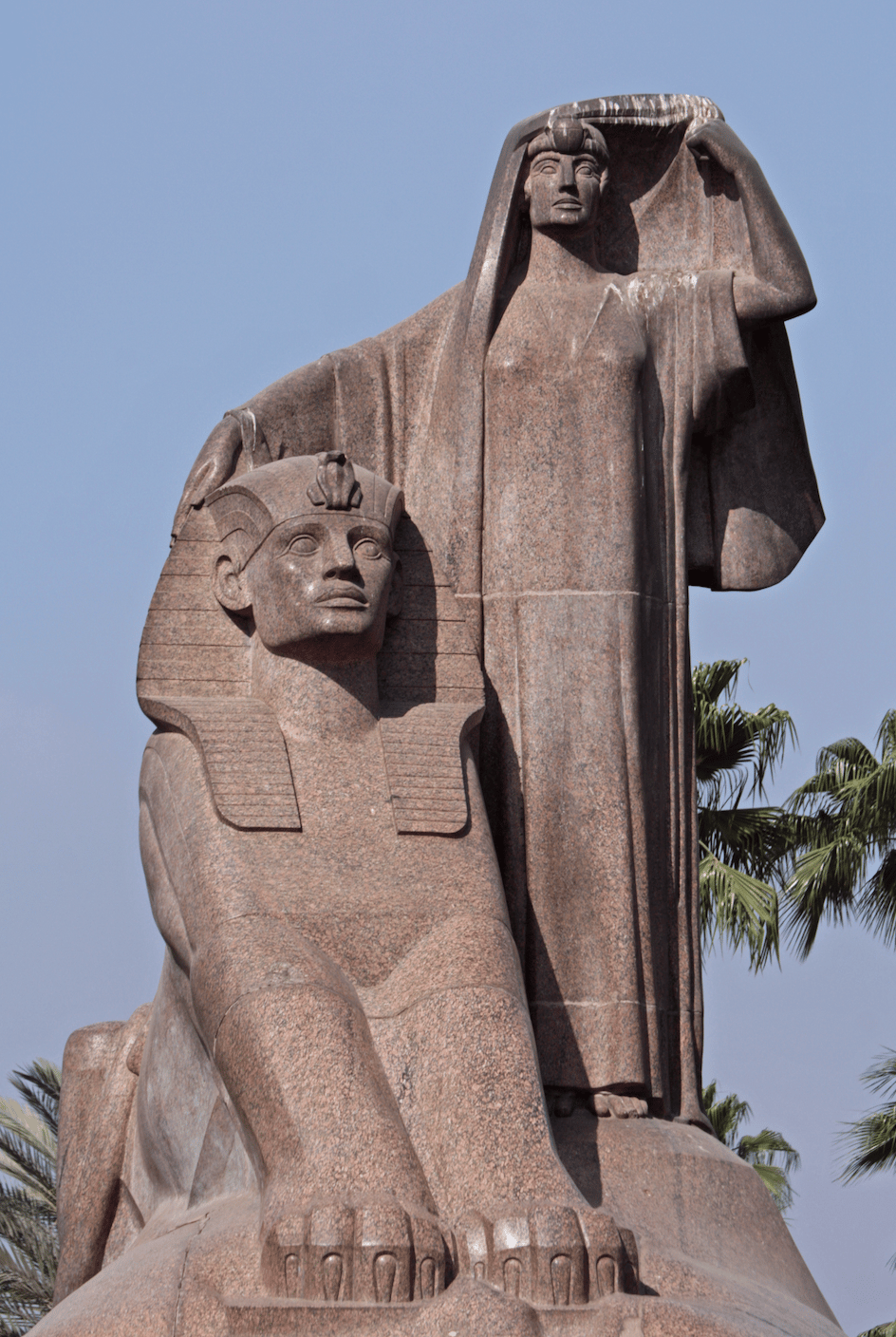
Mahmoud Mukhtar, Nahdet Masr, pink granite mined from quarries in Aswan, Upper Egypt
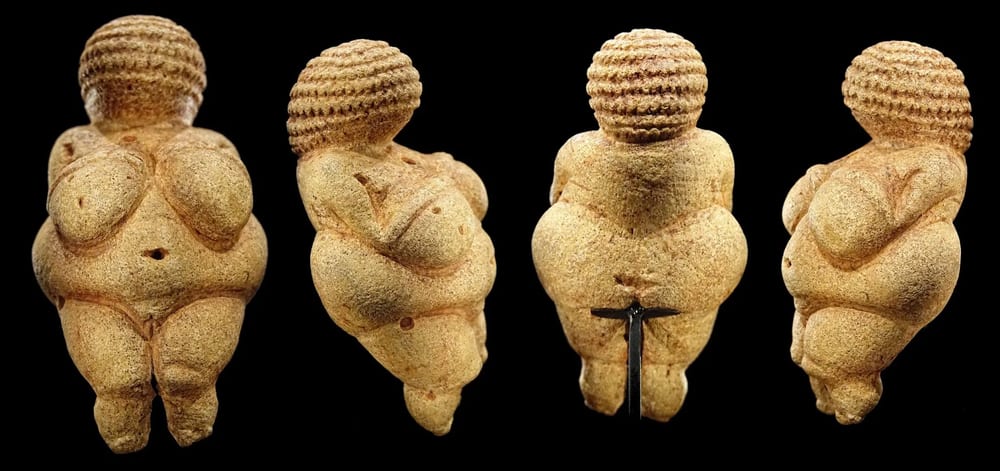
The Venus of Willendorf, Limestone. From the collection of the Naturhistorisches Museum in Vienna, Austria. "Using micro-computed tomography scans, they were able to analyze the limestone’s mineral composition without taking a physical sample. Checking this composition against limestone deposits across Europe, they concluded that the closest match wasn’t located in Austria, the Czech Republic, or Ukraine, but northern Italy". Tim Brinkhof, Artnet
“One evening in Edinburgh, Sara Barnes approached me and said: “I have been thinking about your work lately, I came across something that I think you might be very interested in—it’s a collection of body stones.” “Body stones?” “Body stones—gall stones, kidney stones—they are all made of geology.” Out of this conversation grew a totally unexpected line of enquiry, the idea that we as humans are also geological agents—we form geology.”
— Physical Geology / The Library. Written by Ilana Halperin, in Art in the Anthropocene, 2015. Davis, H
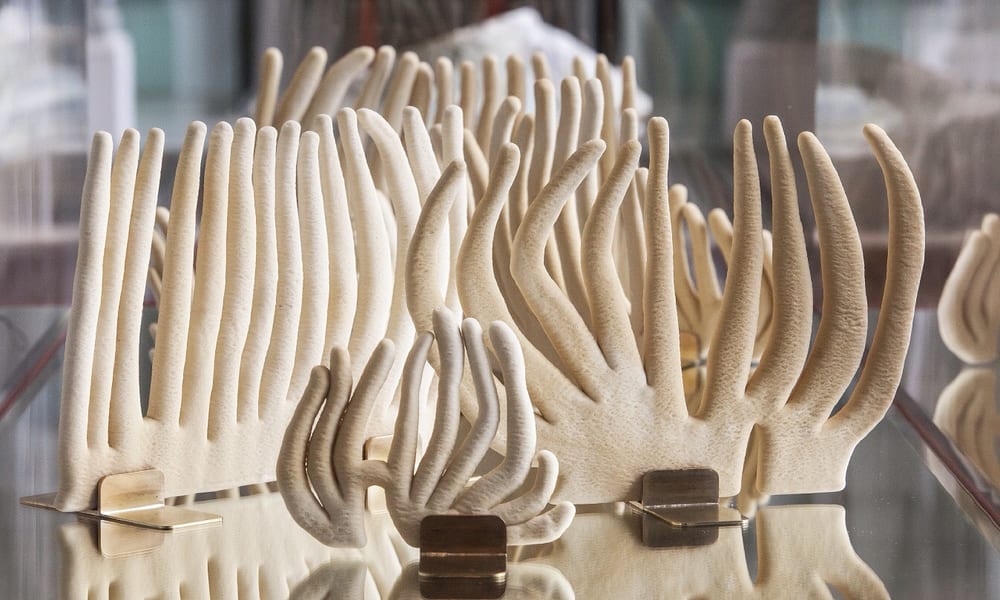
The Mineral Body, Ilana Halperin, wood encrusted in limestone. Part of the solo exhibition at The Library at National Museum of Scotland, 2013. Photograph: Neil McLean, National Museums Scotland. Courtesy of Patricia Fleming Projects.