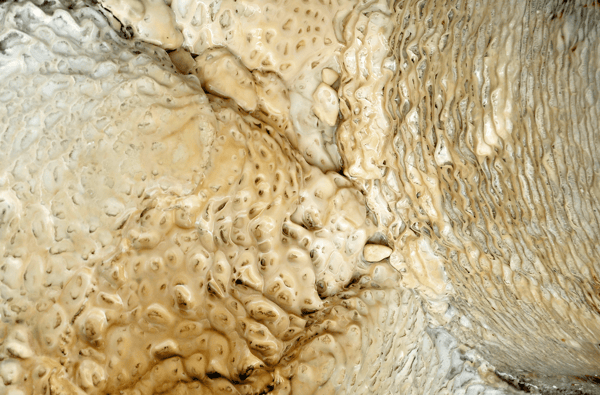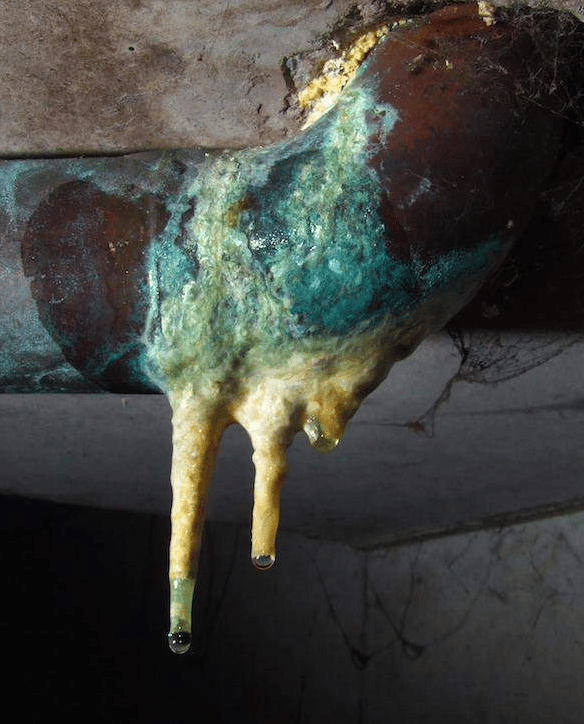
Calthemite formations with traces of copper and calcite. Found in an underground carpark.
Calthemite formations with traces of copper and calcite. Found in an underground carpark.
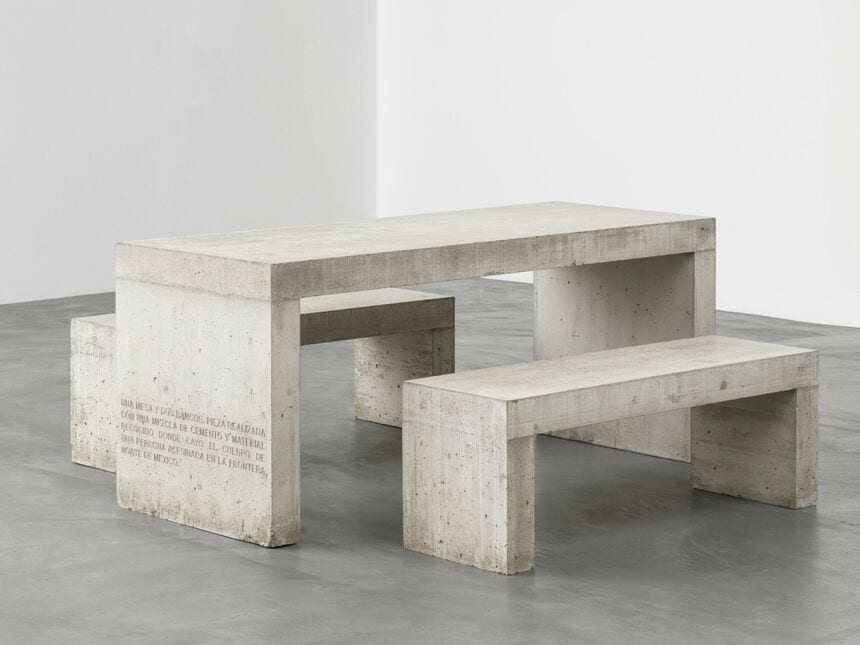
Artist | Teresa Margolles (b. 1963, Culiacán, Sinaloa, Mexico) investigates 'the social and aesthetic dimensions of conflict', creating art across a range of disciplines which is 'imbued with material traces of death'. In the early 1990s Margolles worked as a mortician in Mexico City, and was a trained forensic pathologist. In this role she was in close proximity to 'nameless victims of drug-trafficking violence whose unidentifiable bodies passed in numbers through the morgue, largely regarded as “collateral damage.”' Margolles has worked with 'blood-stained sheets, glass shards from shattered windshields, bullet-ridden walls, or used surgical threads' as well as the 'fog of vaporized water previously used to wash corpses'. The work pictured here, *Mesa y dos bancos* (2013), features a table and benches made out of concrete which has been combined with organic material taken from where there lay a body of a person who was murdered on the Northern Mexico and US border. Words from James Cohan gallery website on the artist
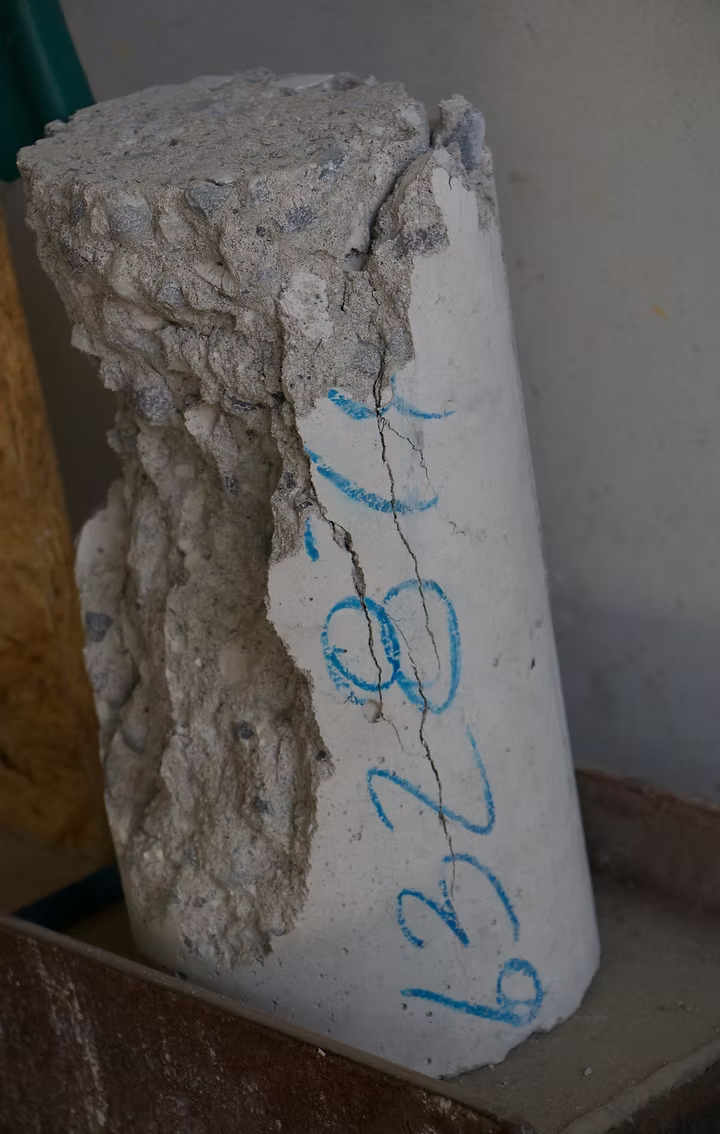
Liquid Rock
Artwork | Liquid Rock: If the concrete could speak | The piece consists of a destroyed concrete test cube, accompanied by an audio recording of its manufacture and destruction. Listen to a piece which resulted from the perfomance via the link below. From December 2017 to March 2018, 'Liquid Rock', an art/anthropology object, created by Cristián Simonetti, Rachel Harkness and Judith Winter, was exhibited at the UC Innovation Center.
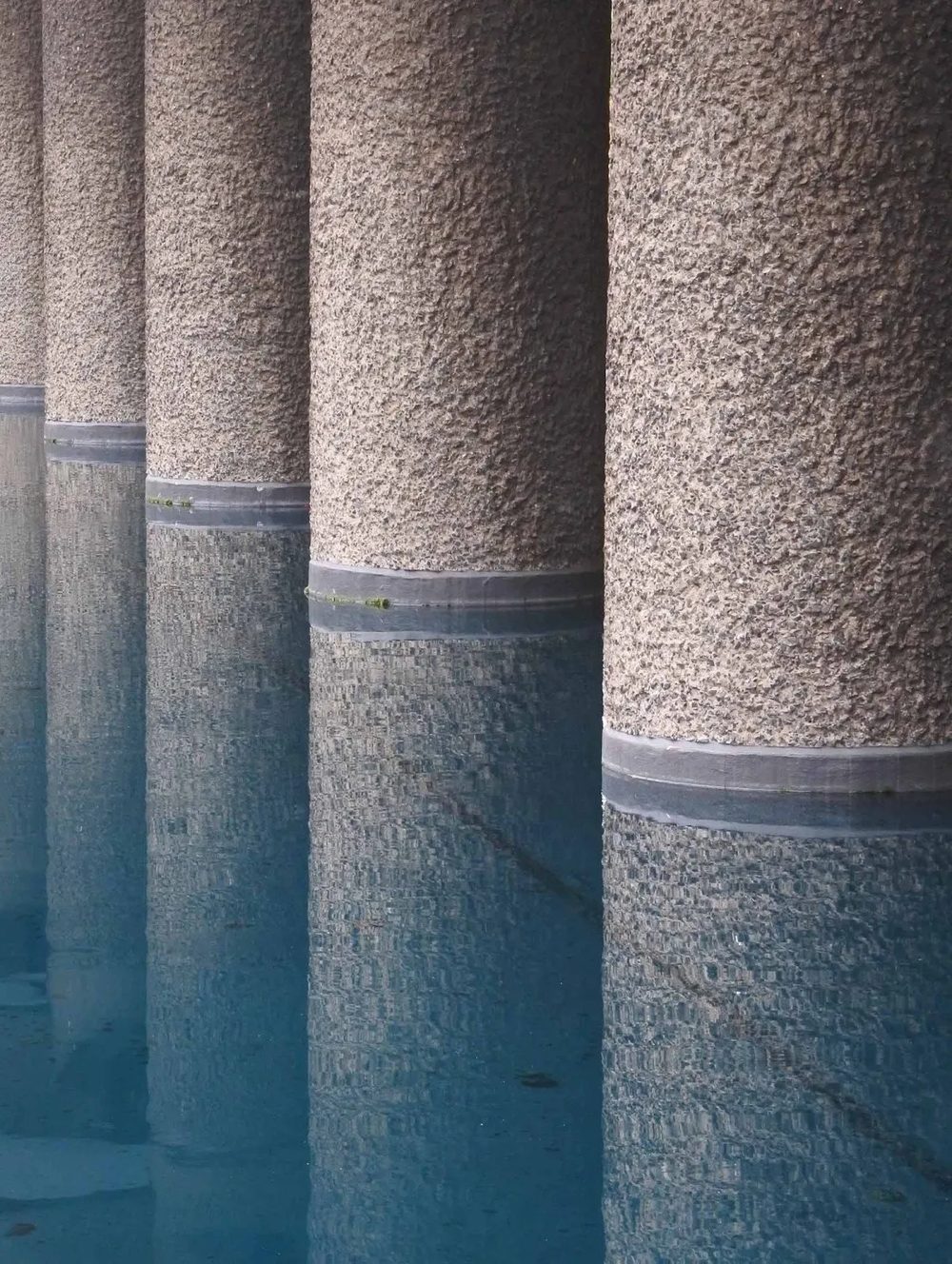
Barbican brutalist architecture: An unsustainable relationship with concrete?
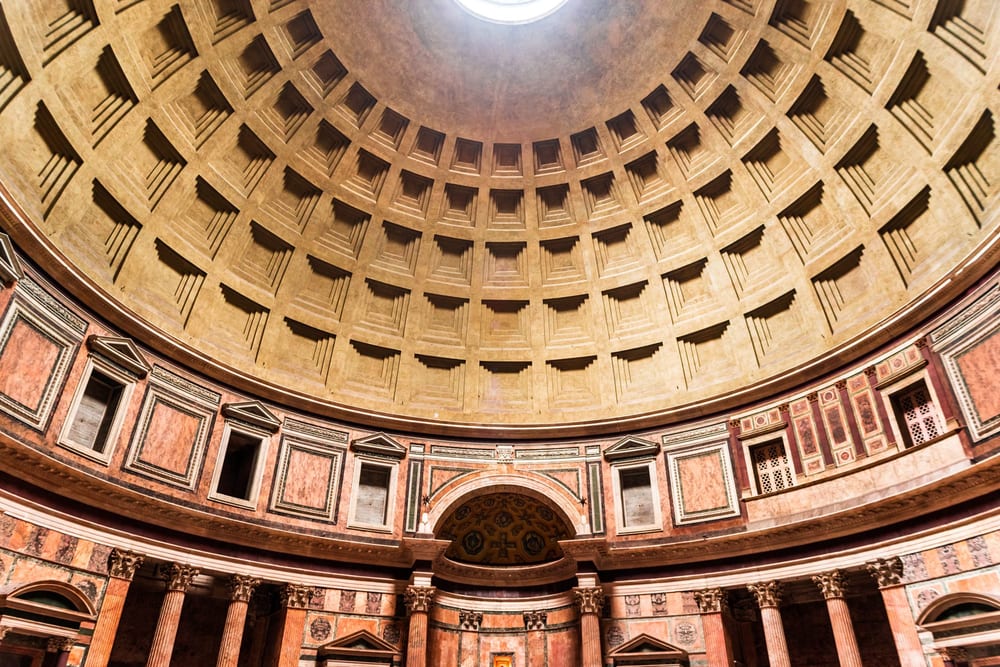
The Pantheon in Rome, finished 128 AD, the largest unreinforced concrete dome in the world. 'The Romans made use of pozzolana (a type of volcanic ash) to make concrete from about 300 BCE. [..] The Romans used concrete right across Europe up until the fall of the Empire in the fifth century.'
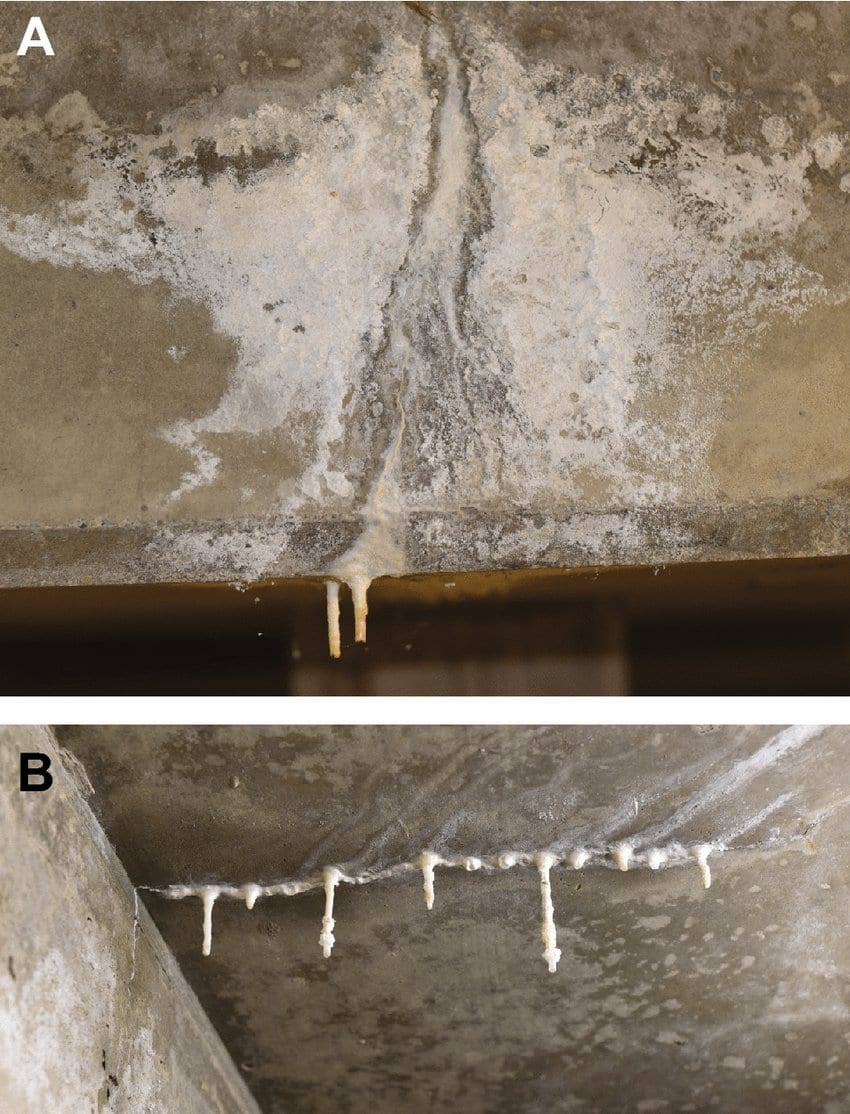
Calthemite deposits accumulated below cracks in a concrete ceiling
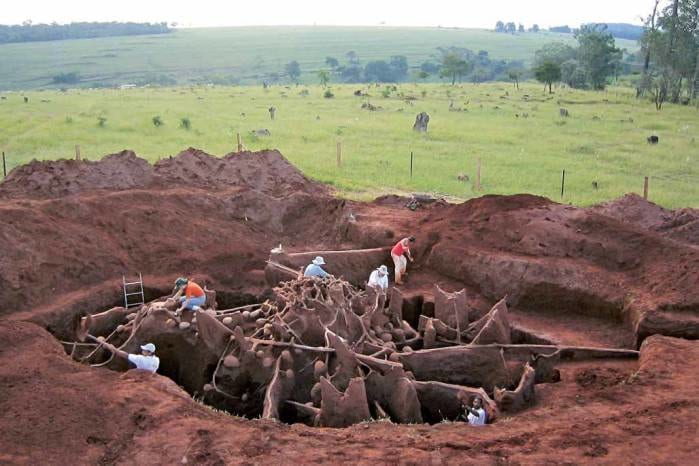
Concrete poured into the subterranean portion of a giant leafcutter ant nest in Brazil
Today, Chernobyl’s Nuclear Reactor Unit 4 is itself entombed within a metal-clad concrete structure that is ominously named the “Sarcophagus”, both a burial chamber to the many ‘volunteers’ who died trying to quell the fire and seal-off escaping contaminants, as well as a form of architectural embalmment aimed at mummifying its radioactive contents.
— S. Shuppli, The Most Dangerous Film In The World, (2010). in Tickle Your Catastrophe!, ed F. Le Roy, N.Wynants, and D.H.Vanderbeeken. (p131)
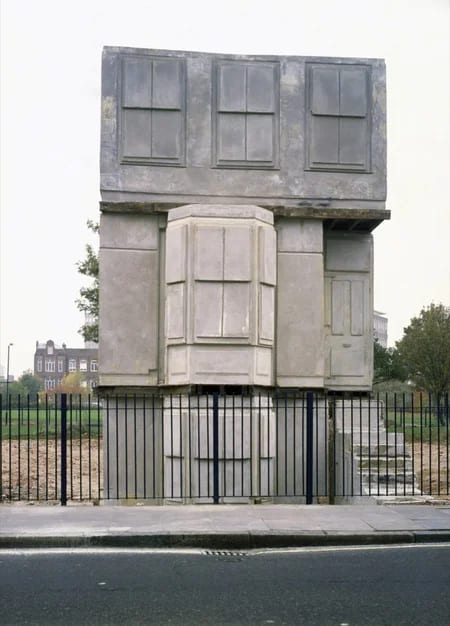
Rachel Whiteread, House, Concrete, East London, 1993.