← Back
Story
1
Image
2
Image
3
Link
4
Link
5
Link
6
Link
7
Image
8
Image
9
Image
10
Image
11
Image
12
,_by_Rosa_Bonheur_(Getty_109ME3).jpg)
Note
13
Note
14
Quote
15
Image
16
Quote
17
Quote
18
Link
19
The Mater Podcast
20
Submit an entry
Wood
20 items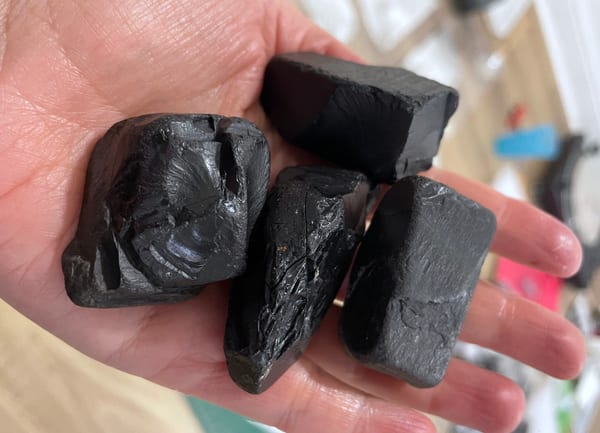
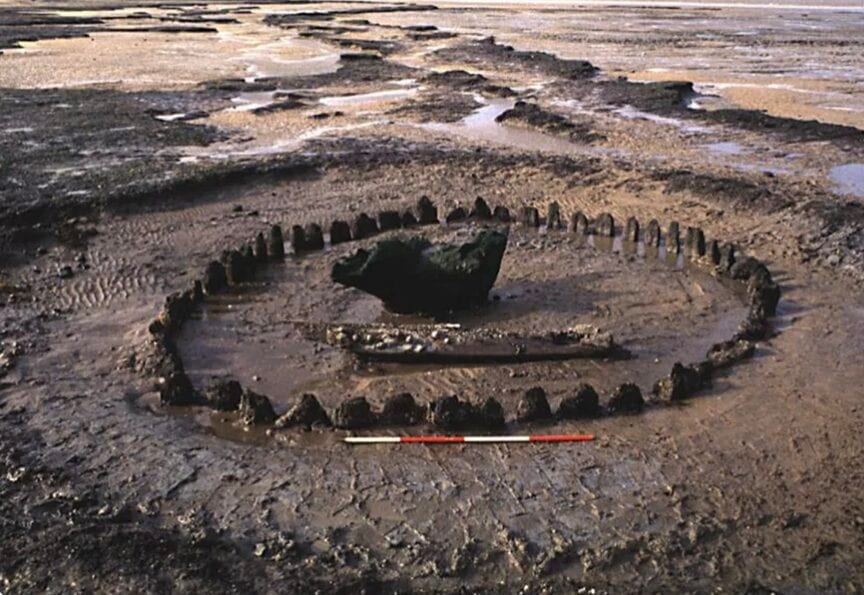
Seahenge | Bronze Age timber circle with upturned tree root in the centre. It had been buried under waterlogged anaerobic layers of peat and sand within a protective salt marsh but rising sea levels and coastal erosion pushed the shoreline inland. The remains were discovered in 1998, and controversially dug out to preserve from exposure to air.
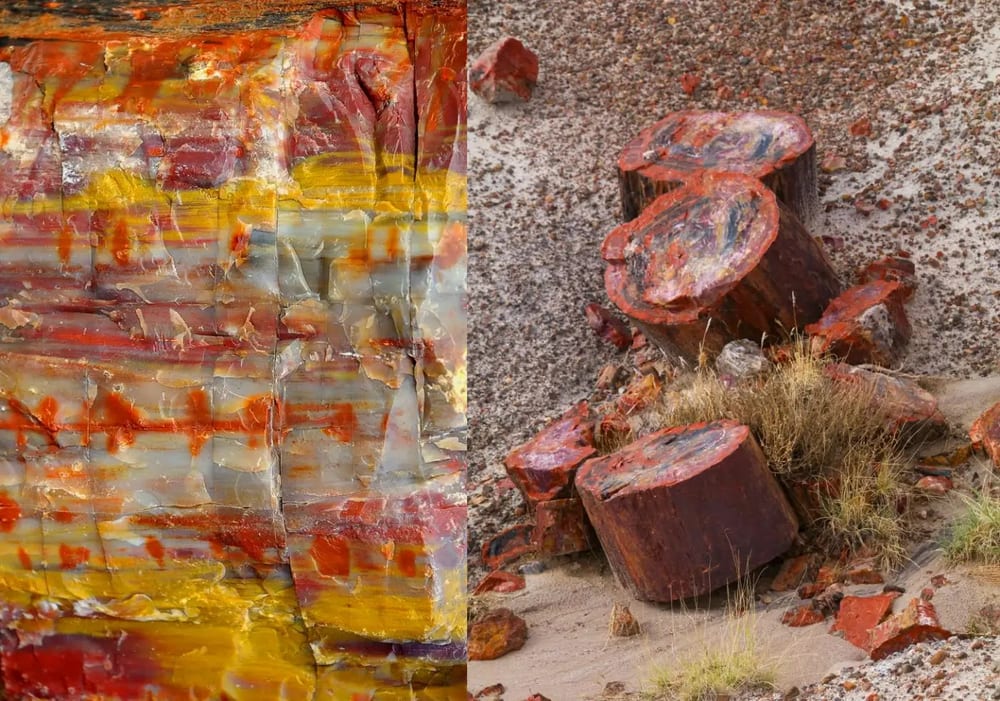
Petrified Wood | "the fossilized remains of ancient trees that have undergone a process known as silicification, where organic material is replaced by minerals, transforming the wood into stone." - EBSCO
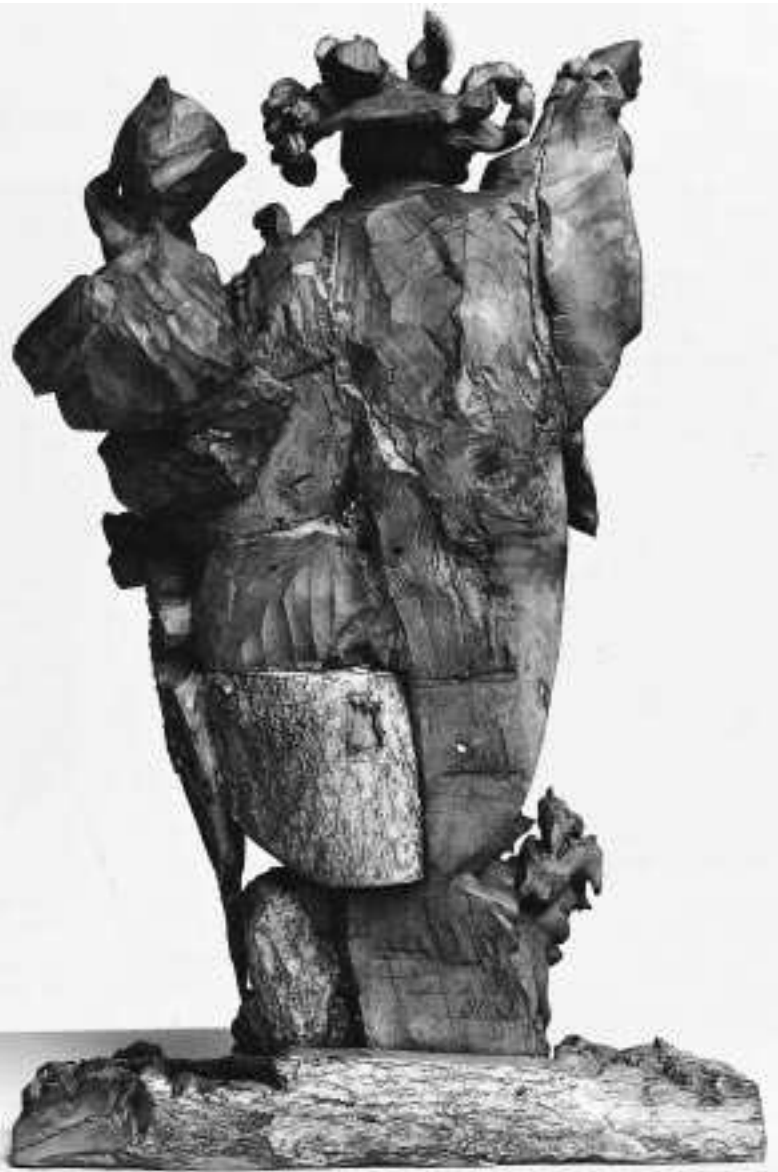
The backs of sculptures | St George, boxwood, Netherlandish (?), from the back. Limewood, c.1520. Victoria and Albert Museum, London.
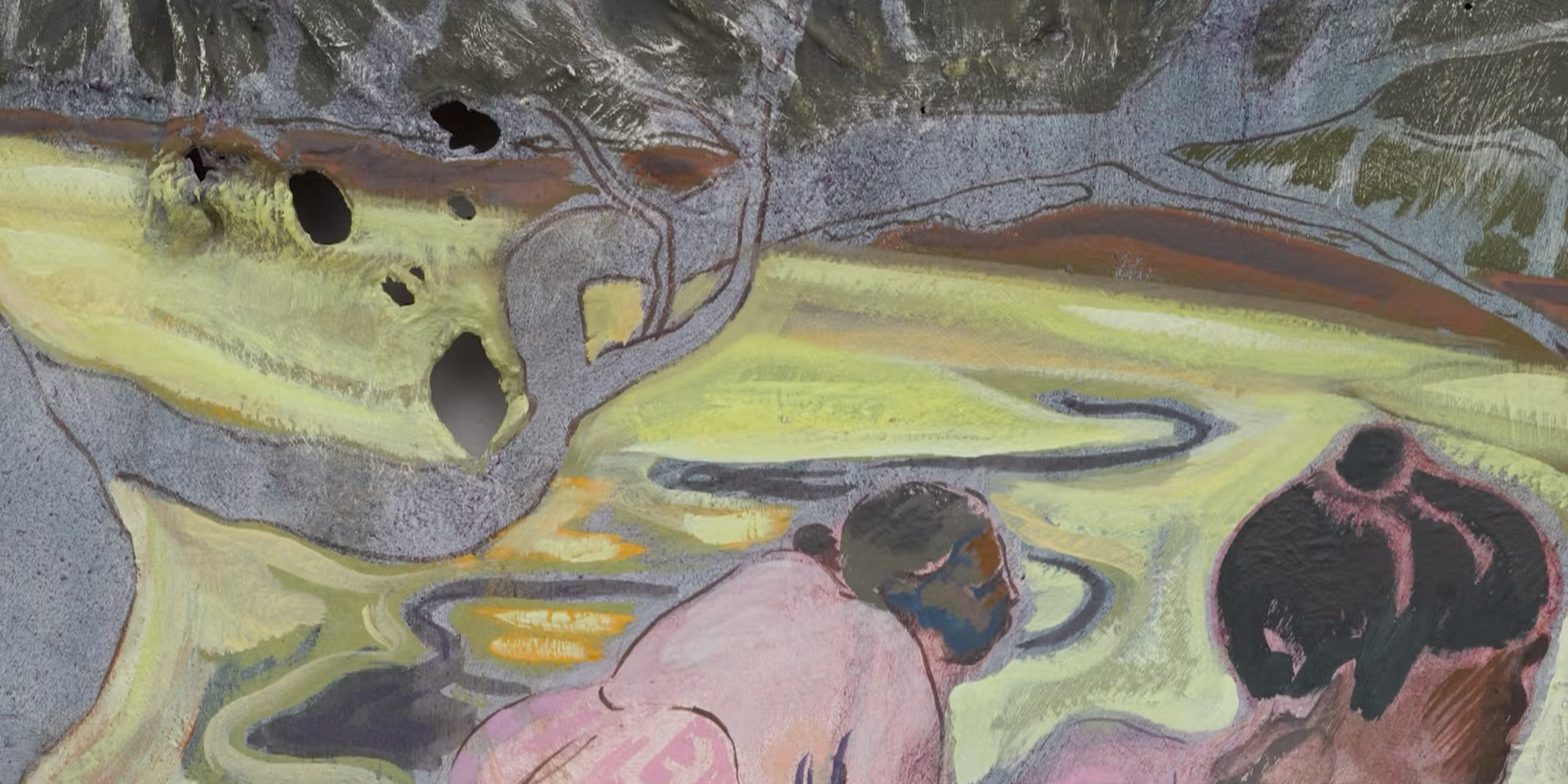
Micheal Armitage, detail of a painting. Lubugo bark cloth is a traditional non-woven textile made from the inner bark of the Mutuba tree (Ficus natalensis) handmade by the Baganda people in Uganda. In a MoMa interview with Hanna Girma, the artist Michael Armitage discusses why and how he paints on bark cloth. Armitage describes it as ‘basically the outer layer of bark of a ficus tree called ficus natalensis. It’s actually called lubugo bark, which translates to “funeral cloth” or “shroud.”’ Image showing detail of a painting with a hole in the bark cloth, Micheal Armitage. Image: White Cube
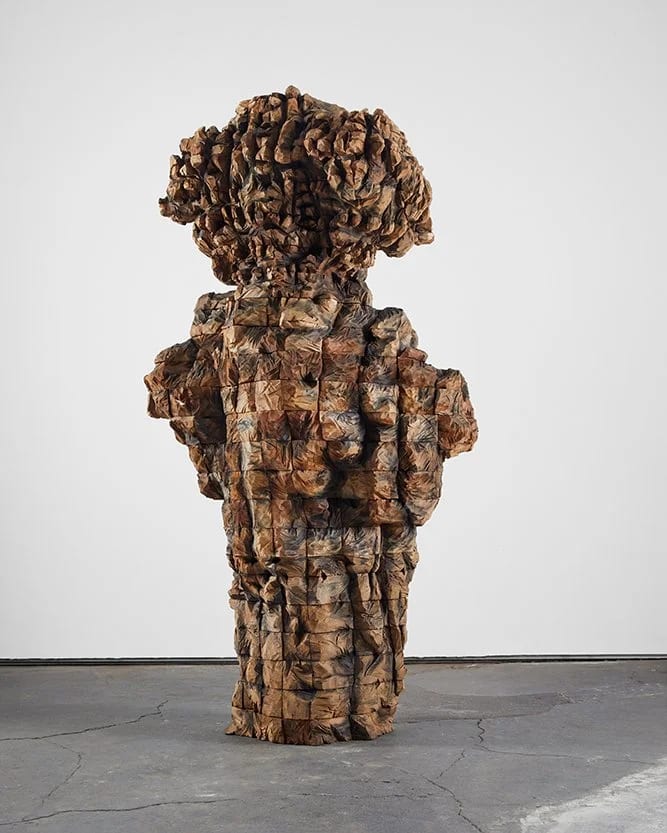
Ursula von Rydingsvard, Cedar and Graphite. "The daughter of a woodcutter from a long line of peasant farmers, von Rydingsvard spent several of her early years in the wooden barracks of refugee camps in Germany at the end of World War II." - National Museum of Women in the Arts
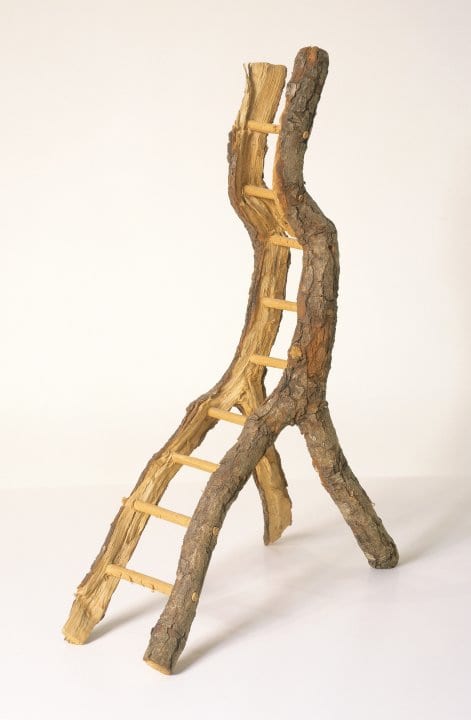
David Nash, Small Ladder, 1978, wood. Nash's unseasoned timber allows, according to Ingold, ‘the wood to live on beyond the life of the tree of which it was once a growing trunk or limb, without ever losing touch with its arboreal roots. Observing one of Nash’s ladders, for example, the wood appears to body forth from the thing made from it, rather than retreating back-stage as is the case with its factory-made equivalent in the showroom. [.. W]ith the passage of time the wood – as it seasons – splits, warps and cracks, eventually settling into a shape quite different from that given to it by the sculptor’s initial intervention.’ - Materials against materiality Tim Ingold 2007 Cambridge University Press
Charcoal Burners (Les charbonniers), 1880–1890s, Rosa Bonheur (1822 - 1899), "With an extraordinarily rich use of bold and soft applications of charcoal and white chalk, the artist has created a very powerful drawing concentrating on the rendition of the remarkable clouds of smoke from which the second charcoal burner figure emerges. Fundamentally important is also the removal of some of the medium in order to recreate the effects of smoke, and to this end, Bonheur seems to have purposely chosen a greenish paper to accentuate the contrast." - Getty
Our word ‘material’ derives from Mater (Latin, meaning mother). The word Mater became materia, which became matter, material, materiality, maternal, maternity, matrix. In Latin, Mater (perhaps originally?) is also wood. Tree trunk as mother, from which all else stems: branches, leaves, children.
Wood as art material: cardboard, paper, ink, charcoal, lamp black, wood-block printing, woodcut, painting panel, canvas frame, carving, dowels. From resin: turpentine & damar varnish
Limetrees are hardwood trees, which is not to say that they are hard but that they are dicotyledonous trees, not conifers or softwood trees like pines. It is an important distinction for the sculptor because hardwood has a more intricate structure than softwood and is more interesting in the working. Hardwood is an organization of four main types of element-storage cells, fibres, vessels and ducts-left behind by the cell-creating cambium between bark and wood as it moves outwards year by year.
— Michael Baxandall., (1981) The limewood sculptors of Renaissance Germany Yale Univ. Press
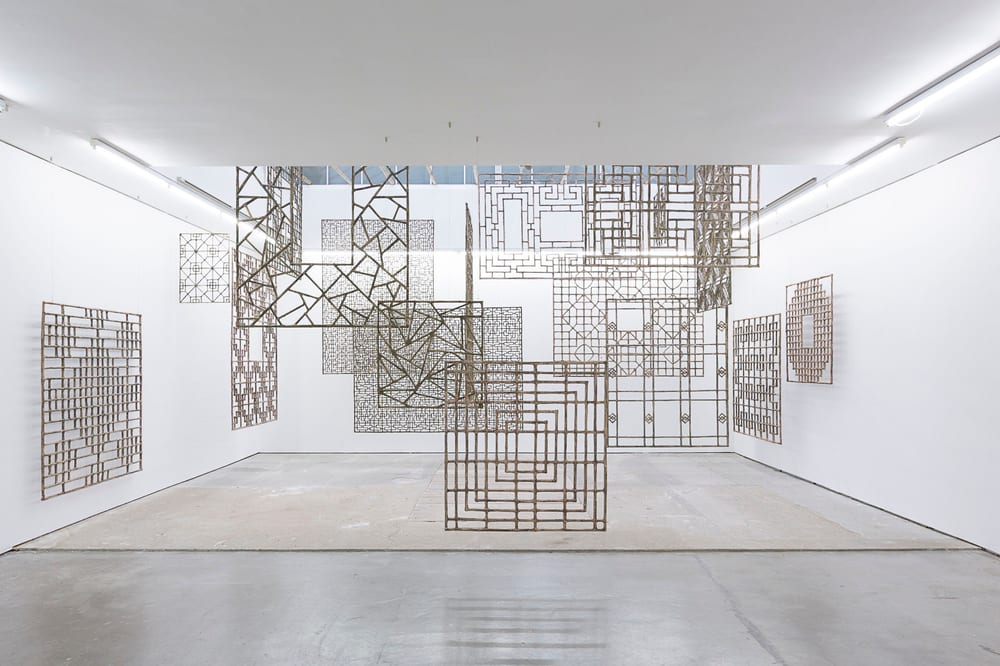
Gordon Cheung, Home, 2020, Edel Assanti, Financial Times stock listings, bamboo and adhesive
In Japanese, the Kanji character of black is written as 黒 and the four dots at the bottom represent fire as how the soot is fired and produced. While 墨, Sumi (black ink) is made by kneading animal glue and soot that is produced by burning oil or pinewoods, the character for Sumi is a combination of 黒 (black) and 土 (earth).
— Vintage Sumi Ink: Exploring the Beauty of Kogaboku. Pigment Tokyo
Lamp Black is a form of carbon black. It is essentially soot and is composed of finely particulate amorphous carbon. The pigment is cheap and easy to make; all you need is a flame and a fuel source and a surface for the soot to accumulate on. This pigment must have been recognised from the earliest dates of human cognition. It has been recognised in paintings of all periods and all regions and was also widely used as a cosmetic and as a tattooing ink. Lamp Black has been the main ink used for writing and calligraphy in many cultures (although iron gall inks and sepia have also been used from the Roman Periods onwards). Nevertheless, Lamp Black was the main constituent of India Ink (but note that modern India Inks are made with a mixture of organic dyes). The best lamp blacks are made from burning tree resins, pitch or tar, or burning the wood of resinous trees such as pine’ ‘‘Blackness’ depends on factors including particle size and the degree of reflectivity/absorption of light. Ivory black has always had the reputation as the finest of black pigments, but lamp black is readily available, inexpensive and easy to make and is a fine, black ink
— Lamp Black: Digital Humanities, Ruth Siddall (2016), The Pigment Timeline Project, UCL