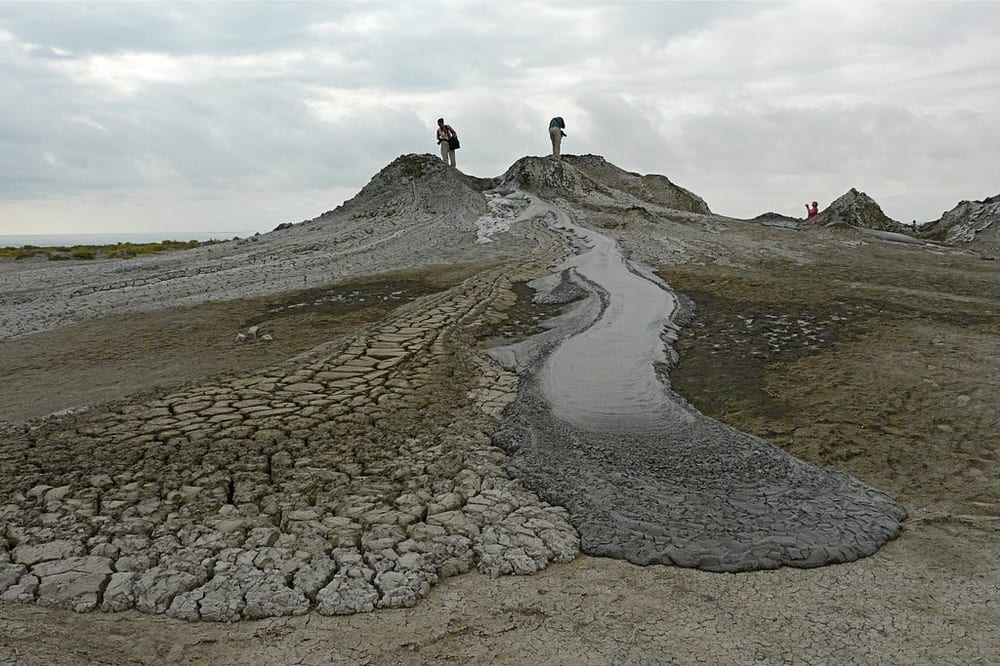
Mud Volcanoes
Mud Volcanoes
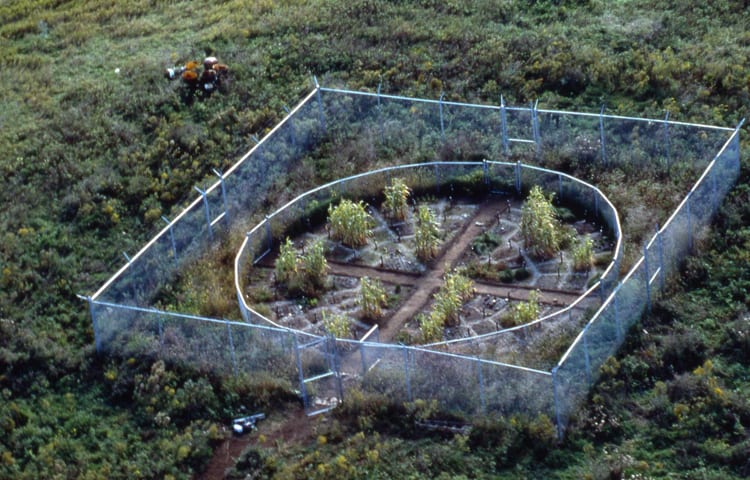
Mel Chin, 1991-ongoing, plants, industrial fencing on a hazardous waste landfill. An ongoing project in conjunction with Dr. Rufus Chaney, senior research agronomist, USDA. "field test using special hyperaccumulator plants to extract heavy metals from contaminated soil. Scientific analysis of biomass samples from this field confirmed the potential of “Green Remediation” as an on-site, low-tech alternative to current costly and unsatisfactory remediation methods. Despite soil conditions adverse to metal uptake, a variety of Thlaspi, the test plant with the highest capacity for hyperaccumulation, was found to have significant concentration of cadmium in its leaves and stems." - Mel Chin website
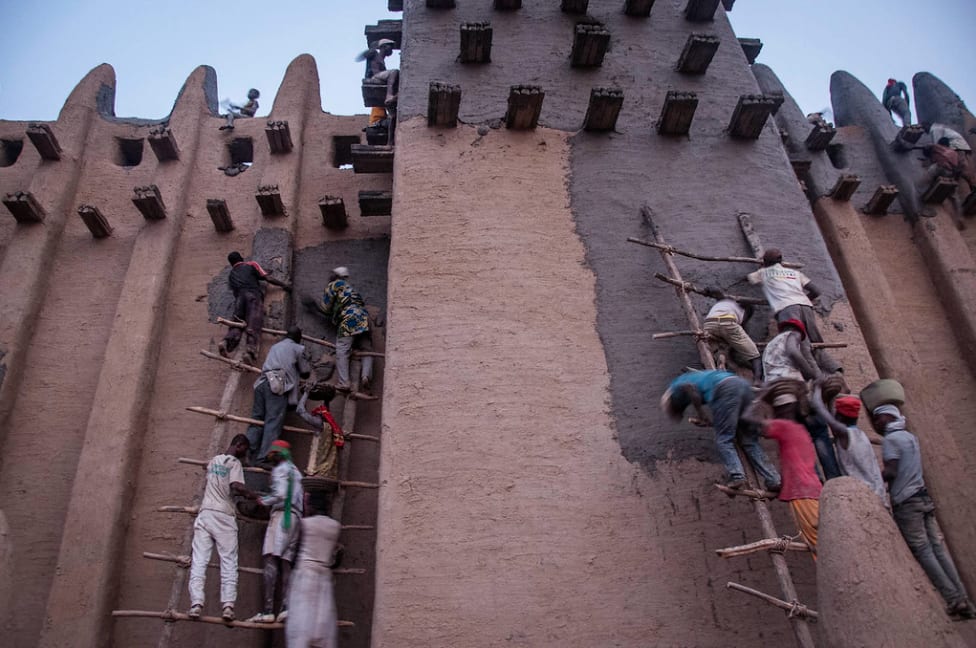
Djenne’s Great Mosque
Almost 20m tall, built from sun-baked mud (clay-rich soil and sand), with palm beams as structural support and permanent scaffolding support. Because the walls are between 16 and 24 inches thick, it stays cool inside during the day. Each year during the Crépissage, the residents of Djenné gather together to repair and re-clay the mosque. Present are ‘the master builders who are revered for their expertise and artistry in Malian society’. “Mud is very malleable and it responds to the changing demographics of a home." - Trevor Marchand.
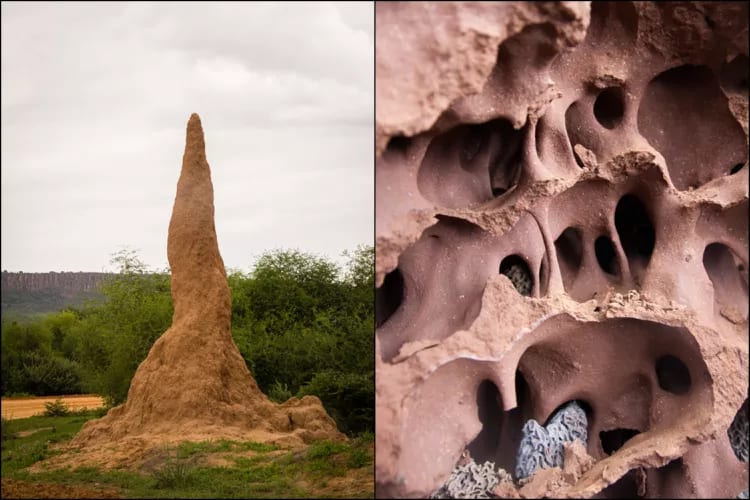
Termite mound in Waterberg, Namibia / detail of the egress complex. Credit: D. Andreen. The climate controlled, stunningly sculptural structures of termites. Mounds enhance local plant/animal activity and elevate nutrient levels.
A handful of soil has more living organisms in it than there are people on the planet. Billions of organisms. That’s healthy soil. The soil is made up of particles that come together, and they are held together by a sticky gluey substance that is excretions and exudates from both plants and also insects and microbiology that live in the soil. The microorganisms that live in the soil depend on air as much as we do, and so having air pockets in the soil which comes from healthy roots, healthy plants, tapping down into the soil, allowing airways to develop. And also those airways being created by things like worms crawling their way through the soil.
— Journey Through a Cow, BBC R4 (2026)
Permeance is a conceptual lens emerged through a rhizomatic artistic research which follows the traces of cadmium contamination upstream and into the past, unearthing a chain of events which talk about river ecosystems and soil pollution, extractive industries, and modern colonialism. The notion of permeability enables us to trace pollutants and understand the ruins we inhabit, encouraging us to notice the entanglements of earhtly life.
— Permeance, Steffie de Gaetano, 2022
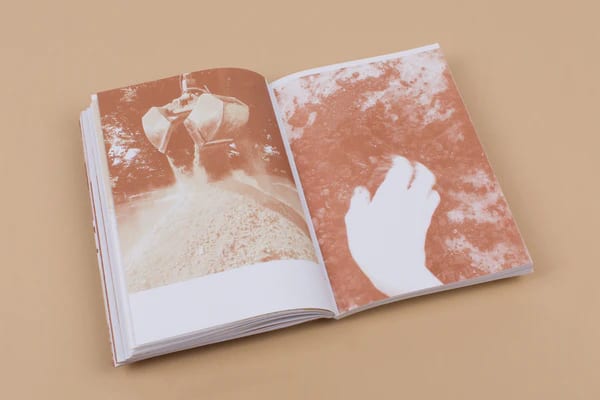
*Displace*, by the artist Elena Khurtova is a book which has been riso printed with soil. Taking soils from different locations around the world, each page of the book shows the tonal varieties of soils - due partly to the different ochres staining some redder and some subtly yellow. The book is filled with expertly printed photographs of Khurtova working with soil, as well as the landscapes which she collects soil. The appearance of the images are subtly faded, but other than this one might never immediately recognise that this book was printed with soil instead of typcial printer ink. The book contains an essay Khurtova, descirbing her sculptural practice of gathering soil to create her large spherical works. She writes "A handful of soil. I grind and wash, I sieve, I sieve gently, I shake and sieve, I sieve rigourously, I sieve some more. I like it. The finest particles float around me. I breath them in. I lick my lips and taste the red powdery land."