← Back
Link
1
Image
2
Image
3
Image
4
Note
5
Quote
6
Link
7
Link
8
Image
9
Link
10
Image
11
Note
12
Note
13
Quote
14
Image
15
Image
16
Story
17
Story
18
Submit an entry
Paper
18 items
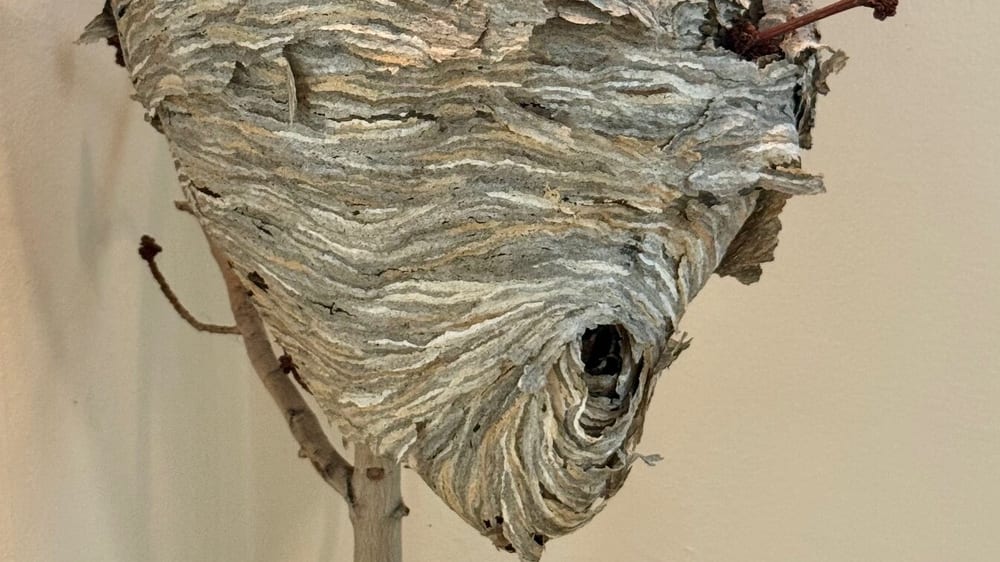
Wasp nest | I often think about how insects created the technology of paper millions of years before humans. Wasps scrape dead fibres from trees and human-made wooden structures. They use their saliva to chew the fibres before regurgitating them and spreading the strips to form a nest.
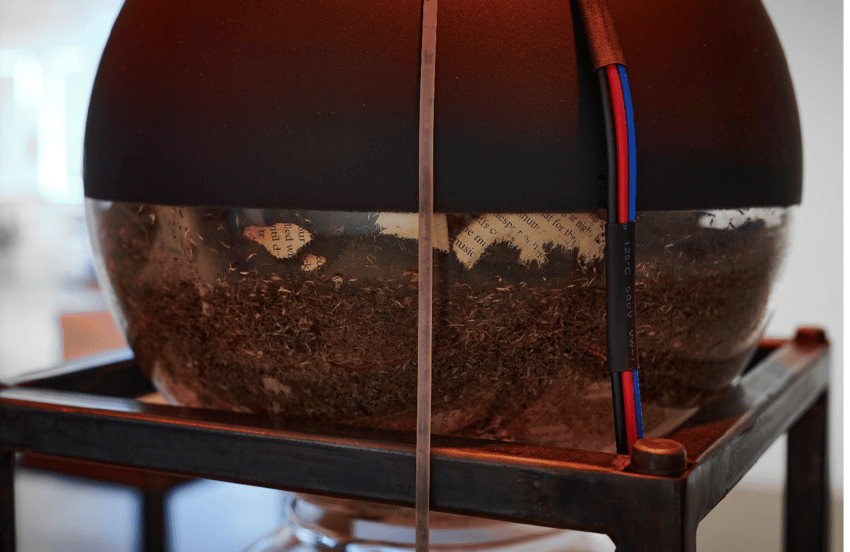
Nolan Oswald Dennis, Garden for Fanon, 2021. A sculpture comprised of "a set of steel stands, glass globes, izinkhamba pots, machine and human protocols for caring for a community of earthworms. The installation is assembled to provide an ideal environment for the community of earthworms to work through the body of the Pan-African philosopher and psychologist Frantz Fanon’s final book, ‘The Wretched of the Earth’. This garden is an ideal environment in the sense of a utopia. It sits apart from the world. A fabricated island as a model for a kind of landlessness that writhes and recreates the land, let’s say the world, on its own terms. Our role here is not to observe or contemplate the garden as a work of art but to tend to the conditions that make the garden possible. Simply, one must feed the worms, one must maintain a conducive temperature, humidity and illumination. What comes at the end is a result of what we put in, and what we don’t. Some soil and leachate and more worms and some time spent together caring.” - Goodman Gallery
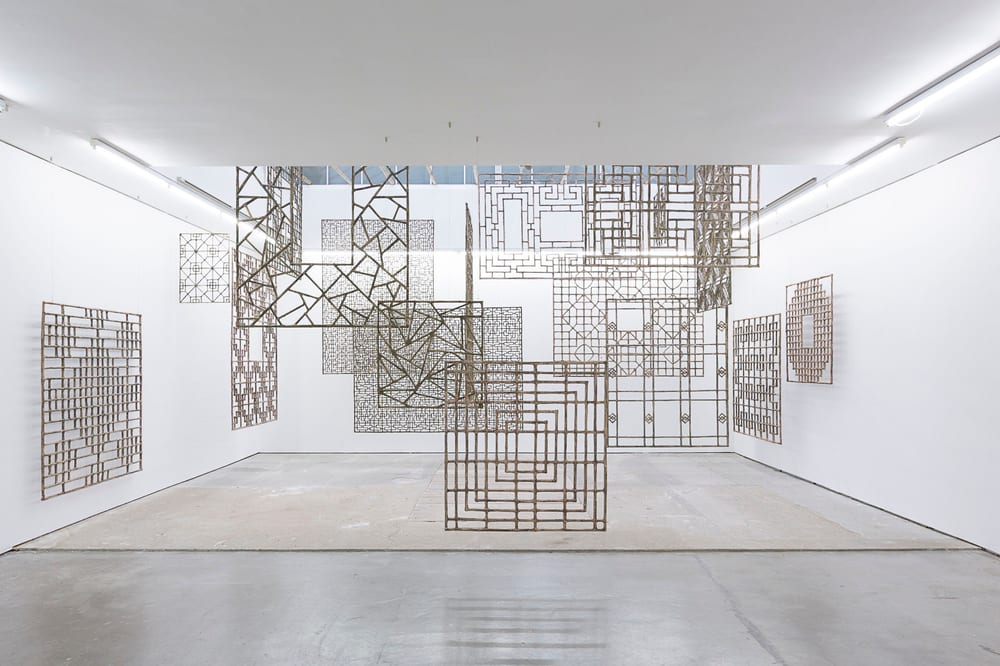
Gordon Cheung, Home, 2020, Edel Assanti, Financial Times stock listings, bamboo and adhesive
Two Rivers are paper-makers dedicated to mainting English traditional processes. They formed in 1976 and relocated to Pitt Mill, Somerset in 1988. They are now one of the few commercial hand-mills operating in Europe. Their traditional skills have been recognised by The Heritage Crafts organisation as being critically endangered.
How easy it is to take paper for granted. A substance composed simply of the interlacing of fibres into a compact web. […] How could it be so versatile in all its forms? So easily destroyed? So ‘entirely human’ in its weaknesses and faults? So beautiful in its variety? Every sheet reflects the inherent qualities of the materials used in its making and the skills of its maker: paper is in no sense a uniform commodity
— Silvie Turner, The book of fine paper: a worldwide guide to contemporary papers for art, design and decoration. (1998) London: Thames and Hudson
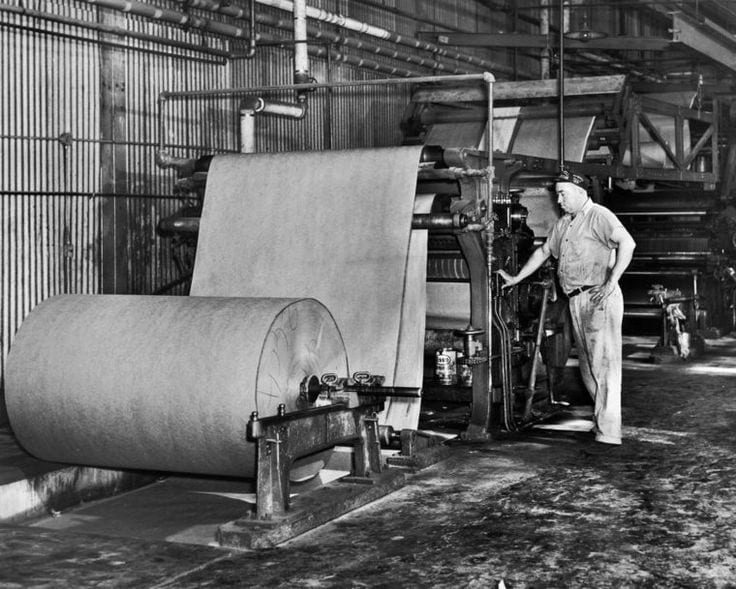
1946 image. Heavy kraft paper made from wood pulp being converted into drinking cups at a Richmond factory.
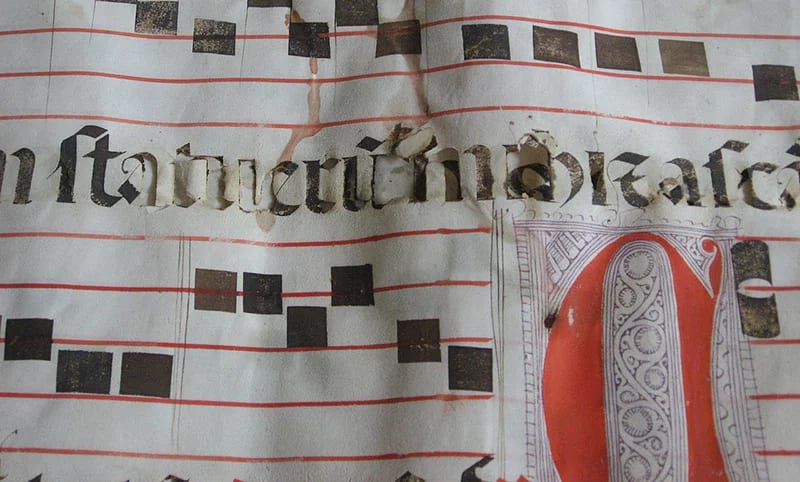
Iron gall ink corrosion on a manuscript from the Church of St Francis, Évora, Portugal
When pulping, you get an idea of the strength of different papers. Loo roll breaks apart instantly in water, newsprint is next. A sheet of printer paper needs a bit more help, soaking for about a day and then using hands to mush it and break it apart. With cardboard I had to rip it into small pieces and soak it for several days, then a lot of intervention was required to truly turn it into pulp, a blender made it much easier.
In her book Papermaking with Garden Plants and Common Weeds, papermaker Helen Hiebert outlines some of the ways one can find raw materials for paper-making, if they don’t have a garden. She writes, ‘I collect onion skins from the bottom of the bin at the local grocery store, for instance, and get corn husks at the neighbourhood farmer’s market. Nurseries and flower shops often have plant waste lying around, and roadside weeds such as cattails and phragmites are adundant and suitable for papermaking.’
Making the decision was easy, but carrying it out was more difficult. Now that it is over it seems matter-of-fact: I gathered together from various locations all my paper works which had not been sold, and assembled them in chronalogical order. I pulped down this material, and from it, in a new measurement, made as many sheets of paper as possible. […] The old papers had been pulped and added to the vat in their original chronalogical order. […] Their histories were different, but once tied together they share everything. They lost their variety to share their commo ground. They are now less specific but more mythic, their standards are the same.
— Joel Fisher, Museum of Modern Art Oxford, 1977
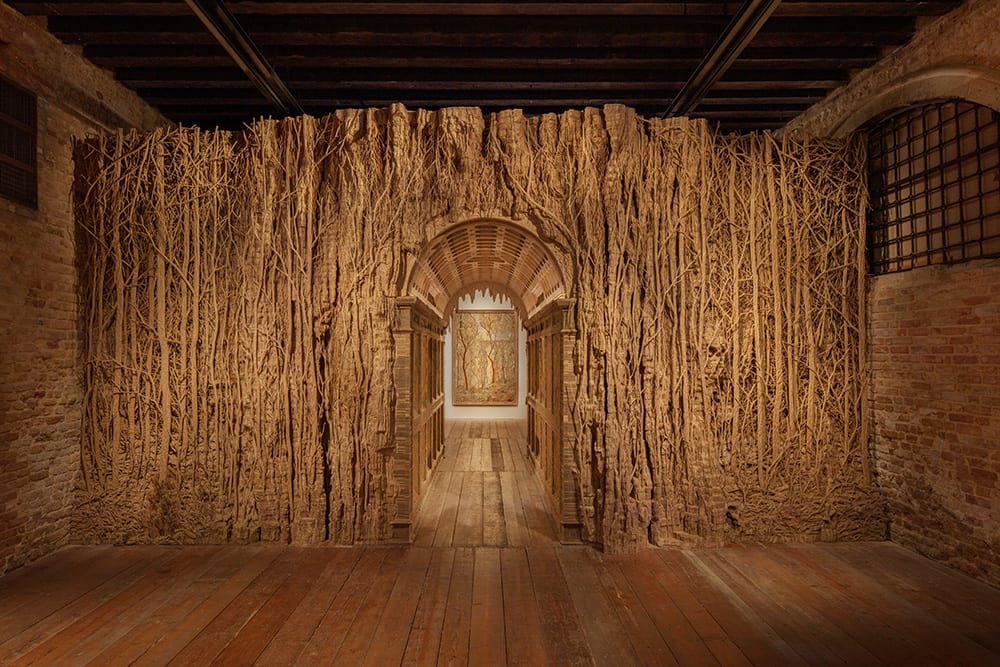
Eva Jospin's exhibition 'Selva' at Museo di Palazzo Fortuny, 2024. I had the joy of seeing this incredible exhibition. The Selva publication says of Jospin's materials: 'Cardboard - which Eva Jospin transforms into solid architectures from the classical repertory or into the thickly tangled fonds of dense forests'. These are works which replicate the 'forest at nearly life size with the brown of the wood and the texture of the cellulose fibre'.
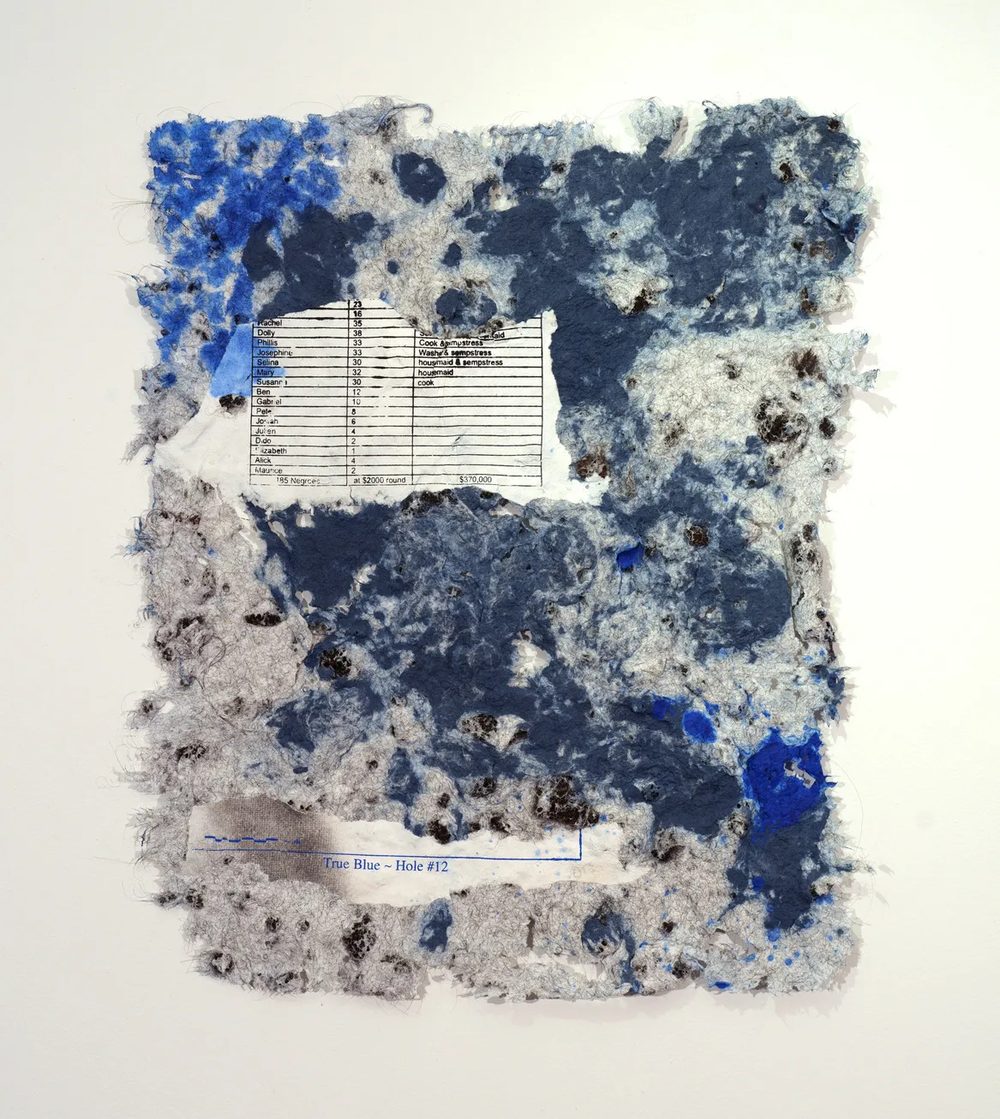
Artist | Adebunmi Gbadebo (b. 1992 in Livingston, New Jersey) is a multimedia artist. Human Hair features as a material across her sculptural and two dimensional works. Her website states, about the paper works: "When creating paperworks, she invokes the Japanese couching technique, preparing a vat of pulp made from donated hair and raw cotton, pulverizing the natural fibers in collected water from rivers at True Blue, pouring the pulp onto a screen, and hand treating the fiber—molding it into organic forms, dyeing it with indigo, and silkscreening fragments from True Blue’s plantation archives, her family’s nineteenth and twentieth century photographs, and other primary sources."