← Back
Story
1
Image
2
Image
3
Link
4
Image
5
Link
6
Note
7
Note
8
Quote
9
Story
10
Story
11
Story
12
Story
13
Text
14
Text
15
Text
16
Submit an entry
Media
16 items
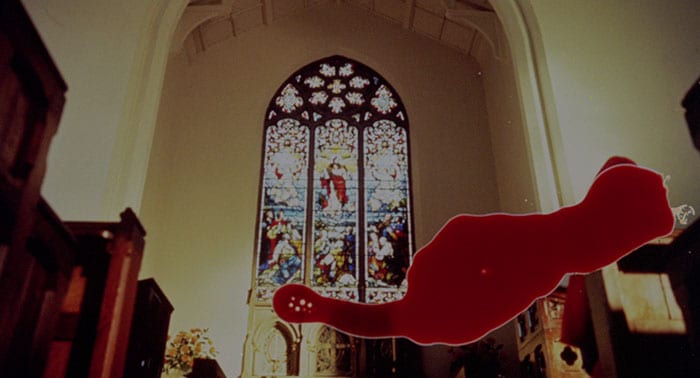
Still from Don't Look Now (1973). While John handles a photographic slide of a Venetian church, he knocks over a bottle of blood red ink which flows across the image, pooling over a small figure sitting in a pew. The panic of the accident causes him to instintively react to the danger (he is unaware of) currently taking place outside.
Image found online
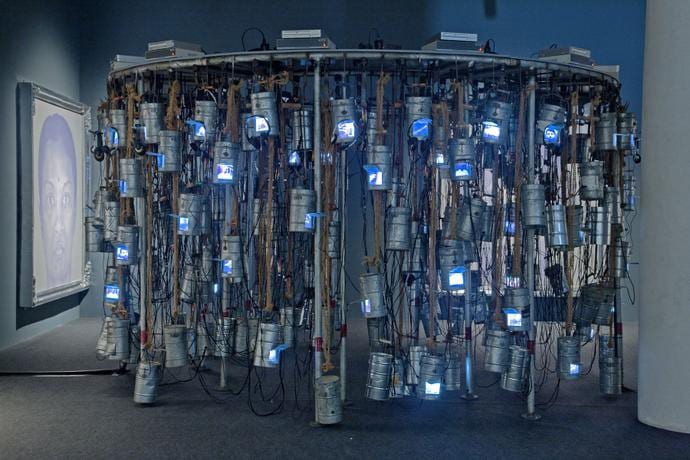
Ghost/Transmemoir, Bose Krishnamachari, 2006-2008. 108 used tiffins with LCD monitors, amplifiers, DVD players, headphones, cables, jute ropes, scaffolding, wood. "I capture the voices and images of the people who speak of their city; there is a sort of selected cacophony in this work. Adjacent to the image of a successful film star you see the image and voice of a peddler at the Church Gate railway station. What is it that they have in common? It is Mumbai."
Maddie: “Can you explain what you mean by the materiality of the internet?”
Victor Hwang: “I’m sure you’d get 10 different answers from 10 people about this – maybe that’s a good starting point though. That the internet is a massively fluid hyperobject that can’t be pinned down. I guess one point of interest that is pertinent for Mater is that the websites we make today are based on a model created over 30 years ago, which was developed for researchers to share documents. If you strip away the CSS, which is the code that ‘styles’ the underlying documents, most websites are really pretty similar underneath.”
— Victor Hwang is the designer of Mater's website