← Back
Story
1
Link
2
Image
3
Link
4
Image
5
Link
6
Image
7
Image
8
Link
9
Link
10
Link
11
Image
12
Image
13
Image
14
Quote
15
Quote
16
Quote
17
The Mater Podcast
18
The Mater Podcast
19
The Mater Podcast
20
The Mater Podcast
21
Story
22
Story
23
Story
24
Text
25
Text
26
Text
27
Submit an entry
Clay
27 items
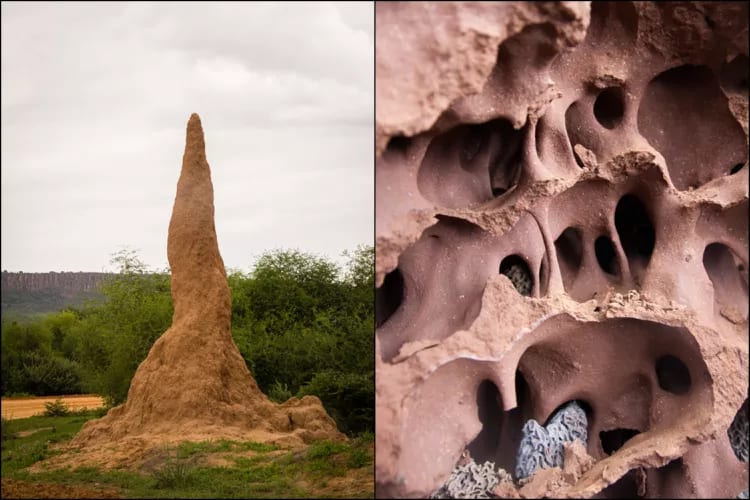
Termite mound in Waterberg, Namibia / detail of the egress complex. Credit: D. Andreen. The climate controlled, stunningly sculptural structures of termites. Mounds enhance local plant/animal activity and elevate nutrient levels.
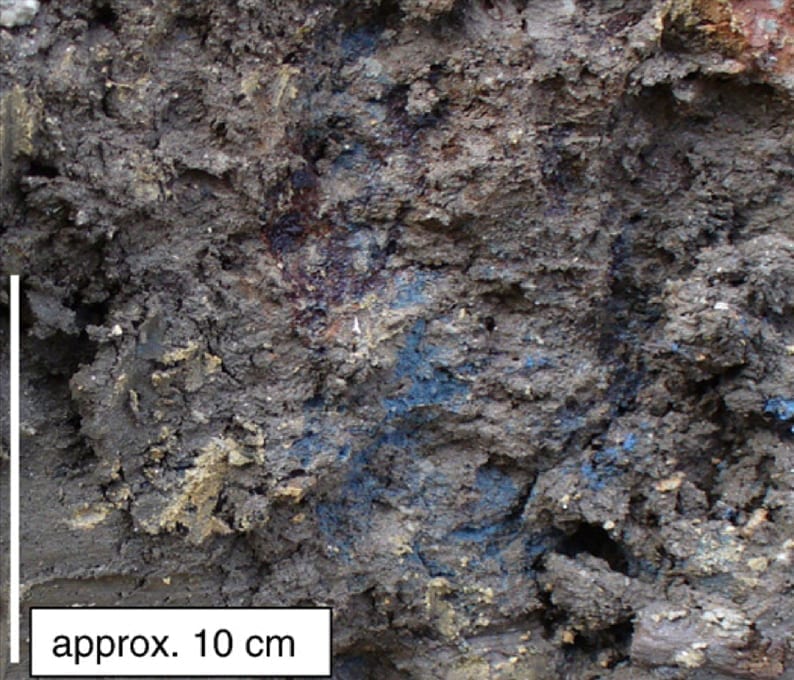
Vivianite forming in clays and silts in Bavaria, from Dill & Techmer (2009). The Pigment Timeline Project, Ruth Siddall, UCL
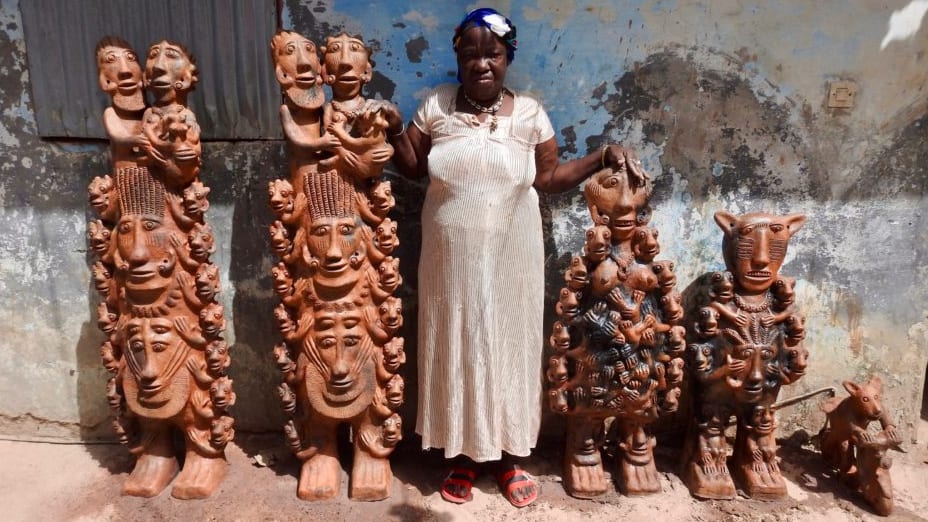
Artist | Seyni Awa Camara | These totemic clay sculptures were often unglazed, and fired in an open hearth kiln in front of her house. Camara was born into a family of potters in Basse-Casamance, Senegal.
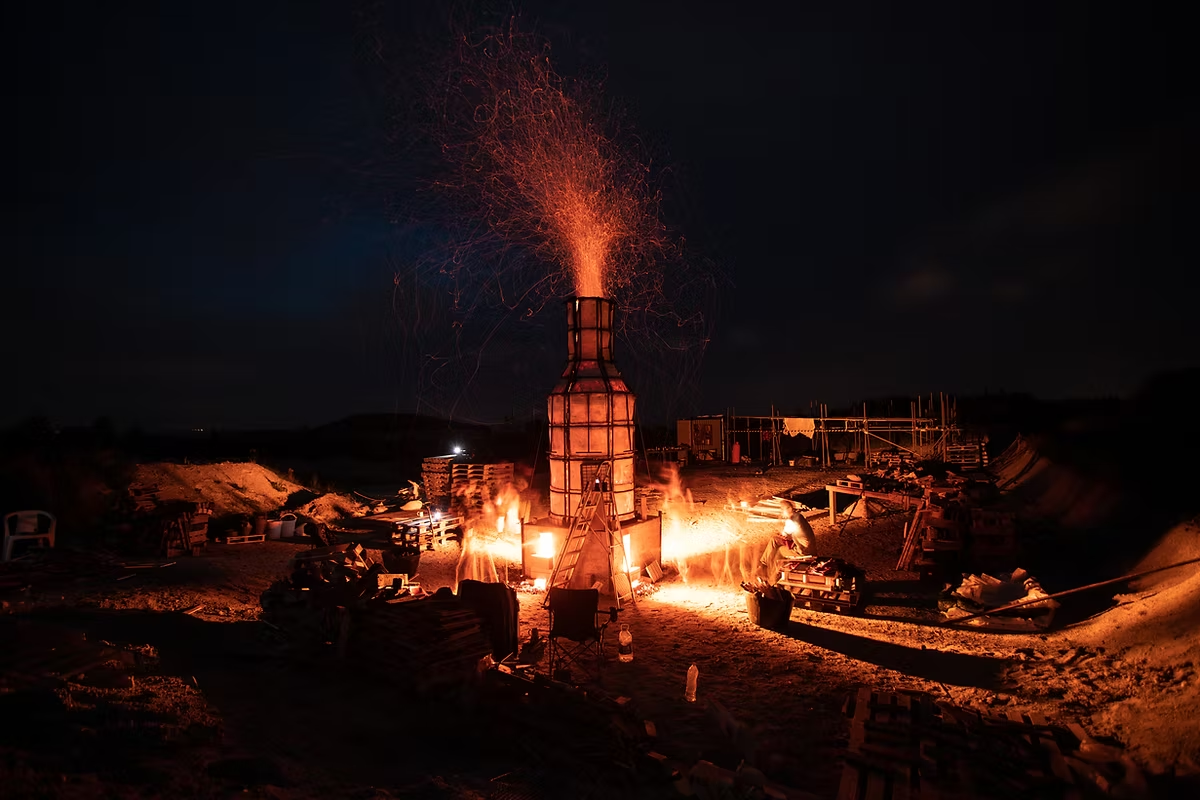
Artist | Robin Sulivan | And Everything And Nothing Has Changed, 2021, Cornwall, UK. Photograph of the group firing of a ceramic menhir: a monolithic sculpture co-designed and co-built with over 450 local participants. Fired in a 4.5m-high petal kiln in a public event below the iconic Sky Tip, this contemporary standing stone was both ritual and record, memorial and monument. It now resides permanently in the local area, gifted to the community that created it., 2021. “I wanted to build a monument to community — a symbol of what we can create together, in a landscape that has been continuously shaped, scarred, and softened by human hands.” — Robin James Sullivan
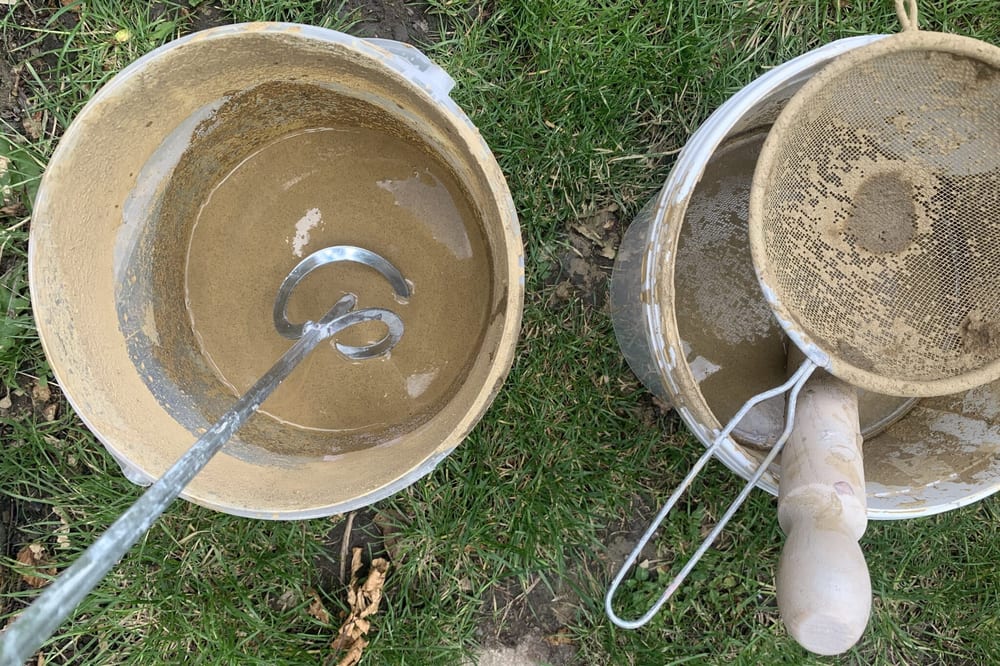
City & Guilds of London BA Fine Art alumna Emilie Fitzgerald desceibes her recent adventures digging and processing clay from her garden.
Clay is a Border of Nature, Time, and Space, an essay by Shelby Skumanich
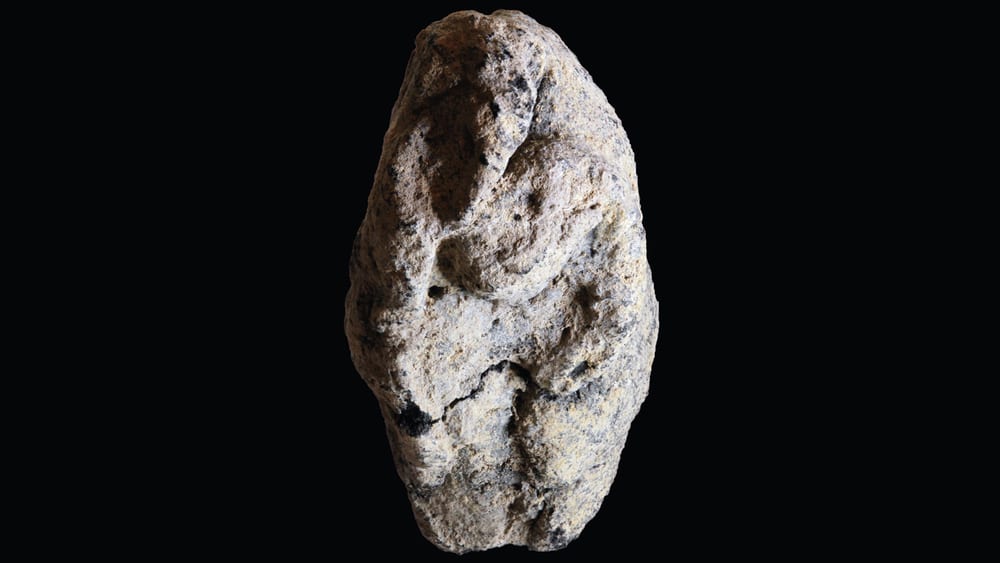
"This newly discovered clay figurine shows a goose interacting with a woman. It points to a shift in spiritually inspired artwork and storytelling around 12,000 years ago in the Middle East." - Bruce Bower
Just think of those caves in the Dordogne or in the Haut-Garonne such as at Montespan where there is this loosely modelled bear sculpture formed of wet clay - still wet! - and completely covered in holes where Cro-Magnon speared it ritually. […] Those ochre hand silhouettes in Peche Merle seem to celebrate the fact that clay is so formable. When I first began using clay I wanted something that actually carried the sign of touching, of an event between a receptive material and the hand. […] I have always used clay straight out of the ground. I get fantastic clay from a brickworks in Essex, just outside Southend. Its a lovely colour. When the loam comes off the surface you come across this sedimentary layer composed of the oldest igneous rocks that have been broken down to this very, very fine particulate and have sat there amalgamating over millions of years. I like that, it’s as if you’re touching the flesh of the earth, just like those paleolithic hand impressions
— Anthony Gormley in: 'Gormley in conversation with James Putnam' (2004). Cited in Materiality (2015), Co-published by Whitechapel Gallery and The MIT Press.
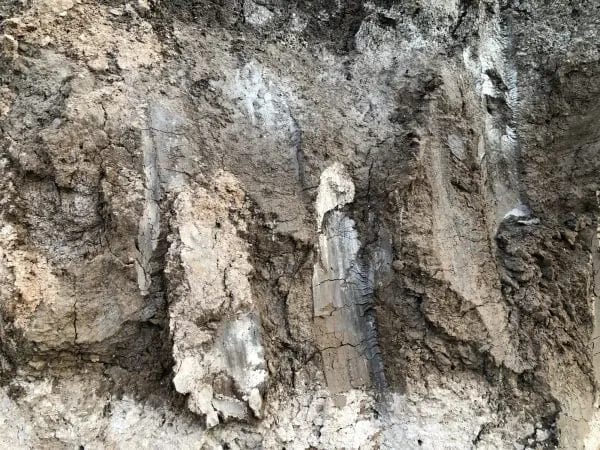
It took a while to sink in, but I’m digging up clay now. It’s so different from the other layers. Darker. Heavier. How did I not notice?
— Ignace Cami
Clays form from millions of years of mineral erosion. Mountains break down into boulders, boulders into rocks, rocks into pebbles, sand, silt and eventually, when the silt reaches a certain size of fineness, an amazing transformation occurs. Instead of just being a loose mix, the fine particles manifest an attraction for water and each other at a molecular level. Clay can be thought of less as a material and more of a behavior, the phenomenon of very finely eroded minerals to agglomerate.
— Webb, Patrick “From Dust We Come: A Look at Clay.” Traditional Building. Feb 14, 2017