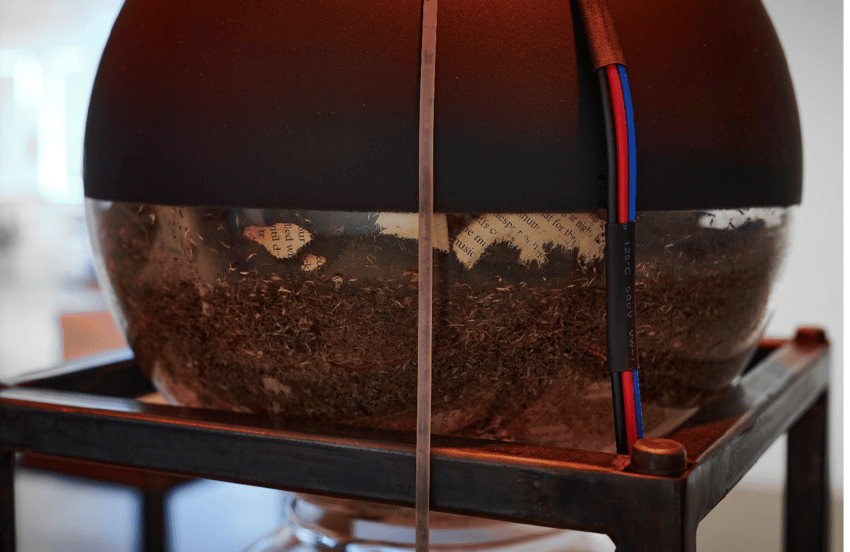
Nolan Oswald Dennis, Garden for Fanon, 2021. A sculpture comprised of "a set of steel stands, glass globes, izinkhamba pots, machine and human protocols for caring for a community of earthworms. The installation is assembled to provide an ideal environment for the community of earthworms to work through the body of the Pan-African philosopher and psychologist Frantz Fanon’s final book, ‘The Wretched of the Earth’. This garden is an ideal environment in the sense of a utopia. It sits apart from the world. A fabricated island as a model for a kind of landlessness that writhes and recreates the land, let’s say the world, on its own terms.
Our role here is not to observe or contemplate the garden as a work of art but to tend to the conditions that make the garden possible. Simply, one must feed the worms, one must maintain a conducive temperature, humidity and illumination. What comes at the end is a result of what we put in, and what we don’t. Some soil and leachate and more worms and some time spent together caring.” - Goodman Gallery
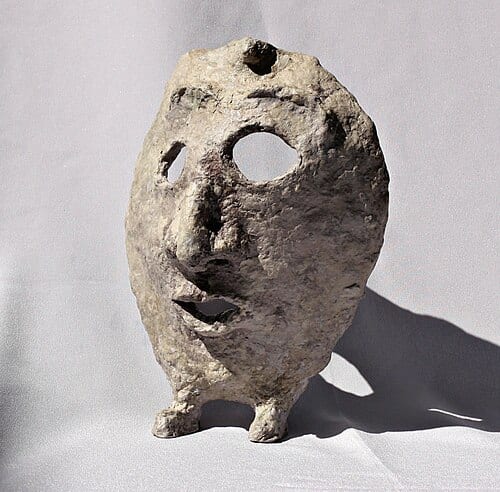
Papier mache mask created with the pulp method
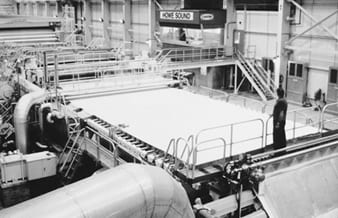
Wet end of pulp machine showing fibre mat on the wire. Encyclopedia of Occupational Health and Safety
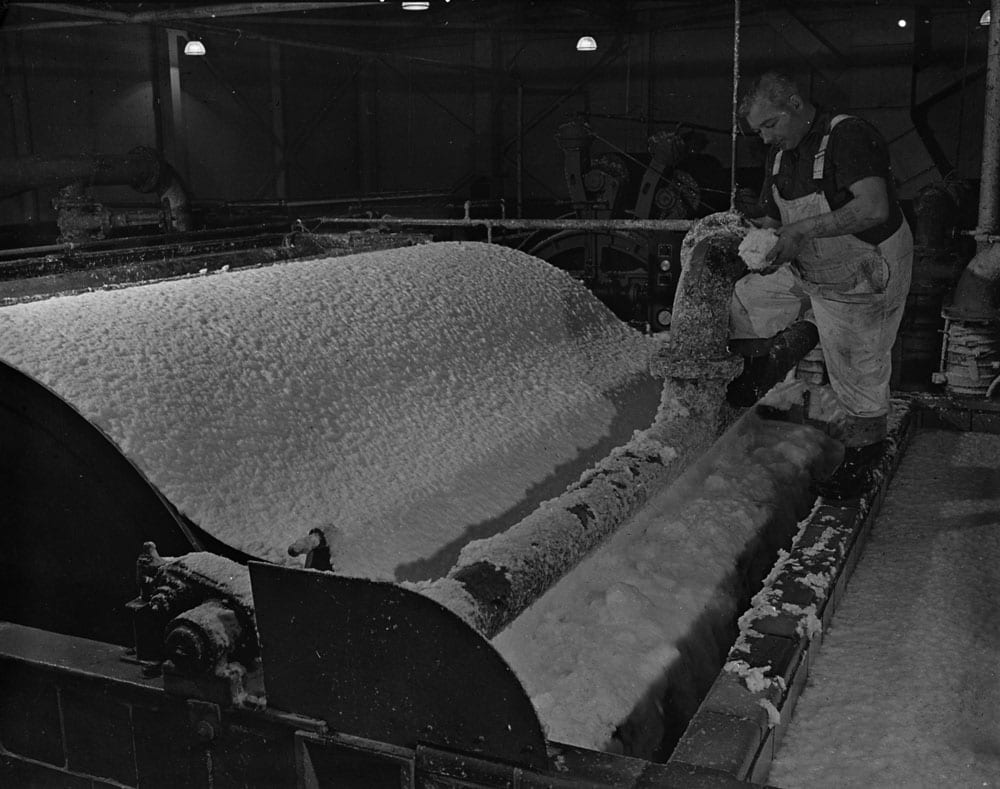
Pulp machine, c. 1956. (courtesy Library and Archives Canada/National Film Board fonds)
Making the decision was easy, but carrying it out was more difficult. Now that it is over it seems matter-of-fact: I gathered together from various locations all my paper works which had not been sold, and assembled them in chronalogical order. I pulped down this material, and from it, in a new measurement, made as many sheets of paper as possible. […] The old papers had been pulped and added to the vat in their original chronalogical order. […] Their histories were different, but once tied together they share everything. They lost their variety to share their commo ground. They are now less specific but more mythic, their standards are the same.
— Joel Fisher, Museum of Modern Art Oxford, 1977
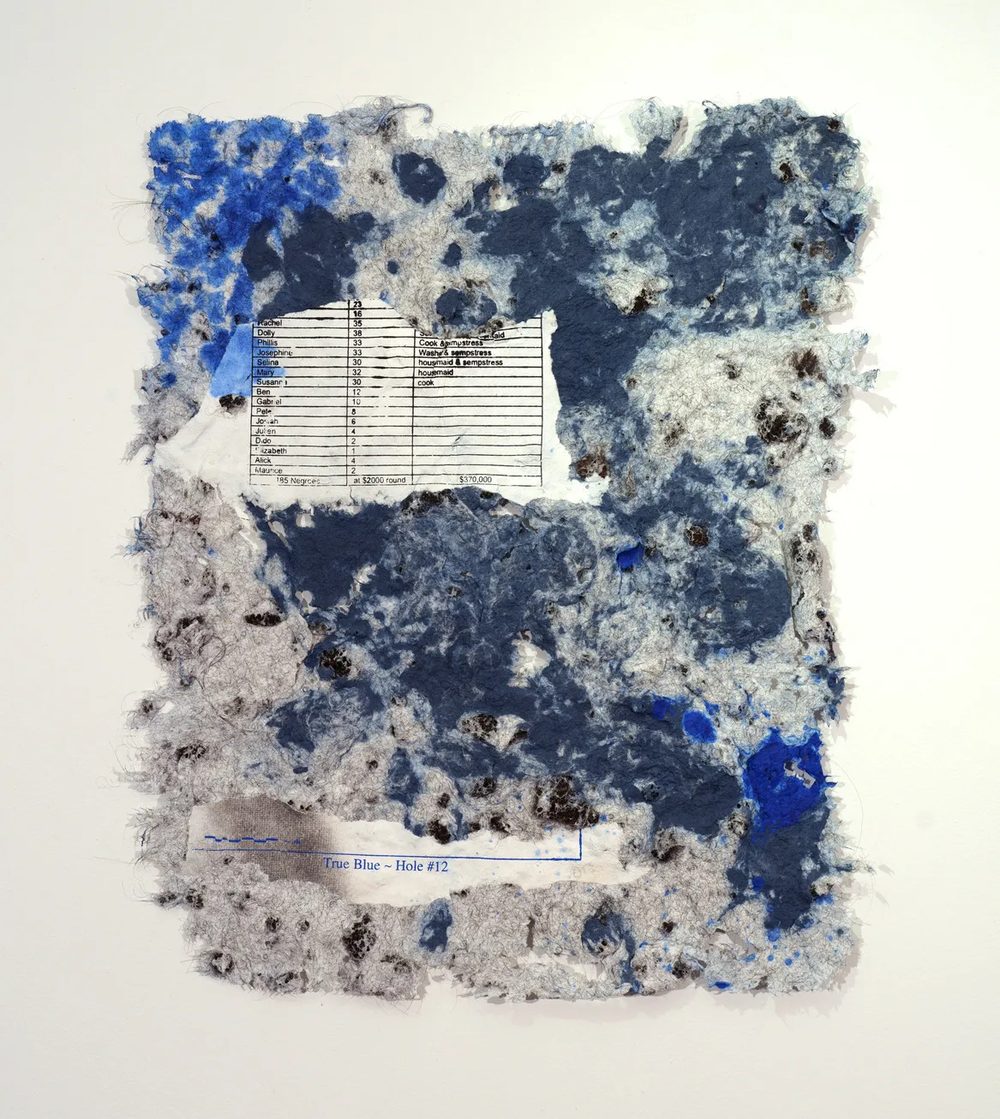
Artist | Adebunmi Gbadebo (b. 1992 in Livingston, New Jersey) is a multimedia artist. Human Hair features as a material across her sculptural and two dimensional works. Her website states, about the paper works: "When creating paperworks, she invokes the Japanese couching technique, preparing a vat of pulp made from donated hair and raw cotton, pulverizing the natural fibers in collected water from rivers at True Blue, pouring the pulp onto a screen, and hand treating the fiber—molding it into organic forms, dyeing it with indigo, and silkscreening fragments from True Blue’s plantation archives, her family’s nineteenth and twentieth century photographs, and other primary sources."