In Collaboration With Woad
Louisa Chase
In Collaboration With Woad by Louisa Chase
Published 24 June 2026
Working closely with woad in my ecosomatic art practice over the space of a year; historical, sociocultural and ecological researches and embodied explorations with/in the liminal terrain of the Fens.
This essay was first published by Wort Journal, and is reproduced by Mater with their permission.
“Blue is the invisible becoming visible.” Yves Klein
Blue. This mystical colour has long been an obsession of the artist, me included. Earth, with its endless blue of sky and ocean, does not yield many natural blue pigments. Once rare and expensive, created from mineral sources including lapis lazuli and imbued with mystical associations, there are now many shades of blue available as synthetic chemically-manufactured pigments.
French artist Yves Klein (1928-1962) worked extensively and famously to develop one of these pigments - a particular shade of blue, now known as International Klein Blue, or IKB - which he used in multiple contexts, including on huge monochromatic canvases and in collaboration with women models who he directed as ‘living brushes’ to create bodyprints within performance pieces. It is widely speculated that the repeated inhalation of toxins from pigments and chemicals contributed to his early death.
Klein described blue as “the invisible becoming visible”. His work was complex, contradictory, and often controversial in the art world, evading categorisation and encompassing themes of immateriality, the emptiness of the void, the inseparability of art and life, and the dissolving of boundaries and divisions. He proposed that artists “pass by art itself and work individually on the return to real life, the life in which a man[sic] no longer thinks he is the centre of the universe, but in which the universe is the centre of each man[sic]”1 .
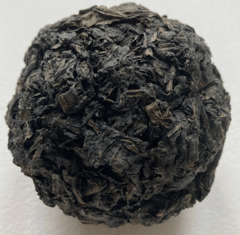
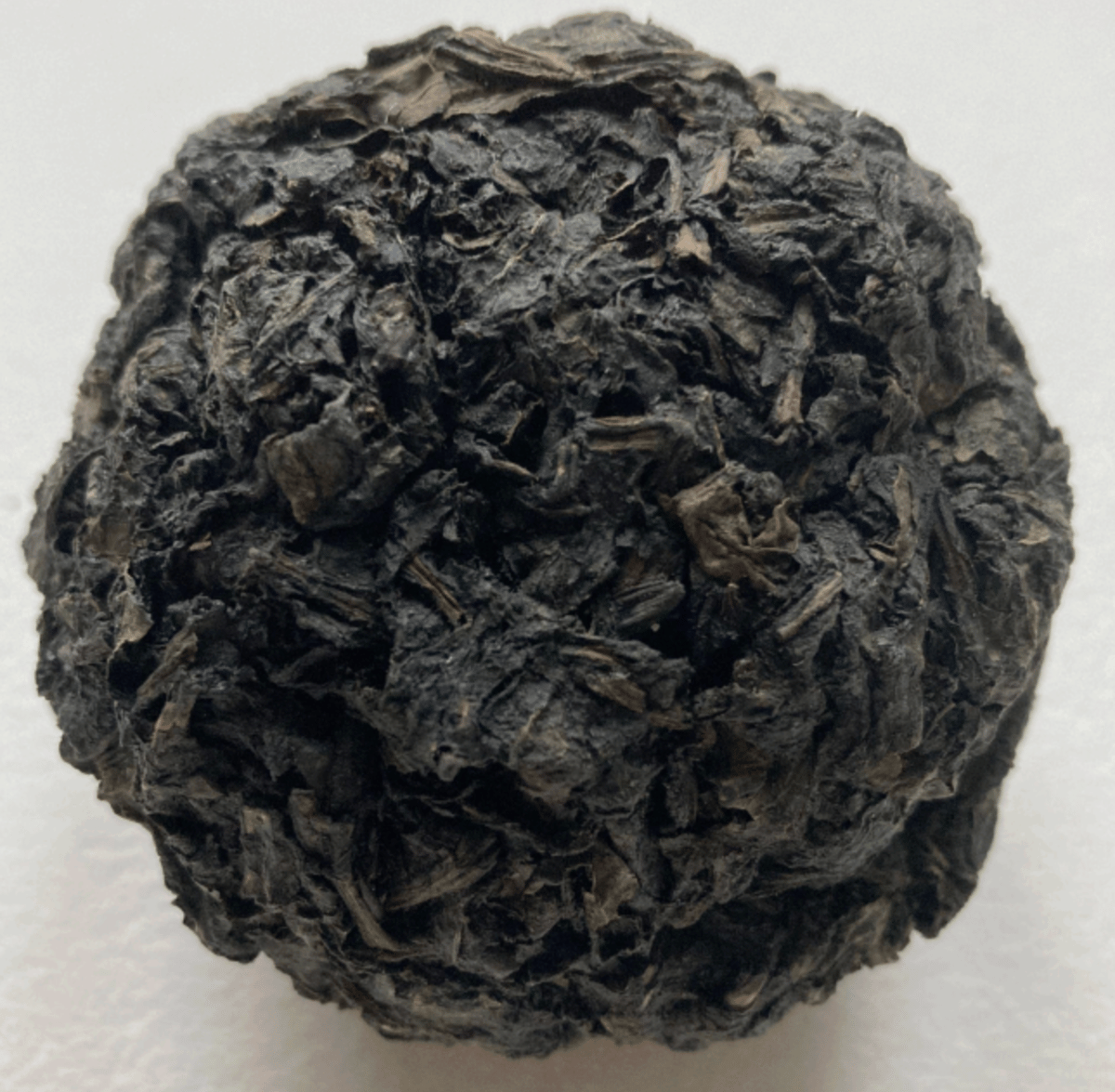
In the last couple of decades an ancient natural blue pigment has been quietly re-emerging from the spiralling mists of time. Woad is a biennial with bluish green leaves decreasing in size towards the top, where the plant branches out into clusters of small yellow owers followed by clusters of blackish seed pods. Woad largely disappeared from cultivation in Britain in the early 20th century, but has recently seen a resurgence of interest from dyers, artists and scientists alike. It has a long and well-documented history as a medicinal plant in ‘Traditional Chinese Medicine’ (TCM) where it is known as bǎnlán’gēn 板蓝根 (Isatis indigotica) and also in ‘Western herbal medicine’ (Isatis tinctoria). Its medicinal properties have been extensively described in a number of Renaissance and Baroque herbals. Woad was recommended for the treatment of wounds, ulcers and tumours, haemorrhoids, snake bites and various inammatory ailments (Hurry, 1930). 2. In Nicholas Culpeper’s (1616-1664) words: “the chief use of this plant is among the dyers, but it is possessed of virtues which claim our regard for their medical eects. The tops of the plant possess those in the greatest perfection, and a strong infusion of them is the best method of giving them”, although he warned that “the herb is so drying and binding, that it is not t to be given inwardly. An ointment made thereof stanches bleeding. A plaister made thereof, and applied to the region of the spleen which lies on the left side, takes away the hardness and pains thereof”3.
Modern in vitro and in vivo scientic studies have shown anti-inammatory, anti-tumour, antimicrobial, antiviral, analgesic, and antioxidant activities 4. Studies have also conrmed that it is rich in glucobrassicin, which has been found to be eective against breast cancer 5.
But woad is perhaps better known in Europe for its colourful history as the plant that yields a light-fast blue pigment. Prized for its ability to retain the xity of its colour, woad was used since Mediaeval times for illuminated manuscripts 6 and for textiles, including the blue threads of the Bayeux tapestry. It is also believed to have been used as far back as the Iron Age and early Roman period as a body paint for Iceni and Pictish warriors and women and girls attending sacricial rituals 7. In more contemporary times there has been a revival as a blue dye for textiles. Originating from the Middle East and Turkey, woad is believed to have grown in Europe for at least 10,000 years. From the late Middle Ages, it was slowly replaced by the less expensive indigo from Asia, and coupled with the eventual introduction of cheaper synthetic pigments it became more or less obsolete in England by the 1930’s. With the declining importance as a dye and the disappearance of woad cultures, the plant also fell into oblivion as a medicinal herb 2.
When I began working with woad in Aotearoa (New Zealand) in 2021, the world was still largely in the grip of a global pandemic. Times of disintegration demand new ways of being and thinking, and, although I was already using a non-toxic blue pigment xed onto natural clay, I began to wonder what it would be like to collaborate with woad and allow myself to be led by its agency: a kind of apprenticeship. I knew that to do this I needed to be in close proximity to woad plants in order to listen, watch, and learn. So I planted some in the garden and also began making paint with woad powder ordered from Teresinha Roberts in the UK. 8.
Less than a month later, woad and circumstances combined to call me back to the vast at landscape and endless woad-blue skies of the Lincolnshire Fens where I grew up.
During my research, I had found that the last working woad mill in Britain, which was dismantled in 1932, had been in this at English bioregion that raised me. The landscapes through which I cycled daily as a teenager would once have been yellow with woad owers rather than oil seed rape; both are brassicas, and both commercial crops which, since the widespread drainage of the Fens, have shaped this landscape. Here there are few visual boundaries. The landscape is devoid of markers with which to orientate oneself; the vast and endless horizon elicits feelings of emptiness, and the physical sensations of expansion and exposure can be both exhilarating and unsettling.
One of the most fascinating aspects of woad is that the leaves themselves do not contain a blue pigment. Instead they contain a chemical precursor which can be transformed into blue pigment through the introduction of oxygen, a characteristic which connects woad not only with the element of air which is so dominant in the vast skies of the Fens, but also with Yves Klein’s idea of blue as ‘the invisible becoming visible’.
Wandering the places where woad had once grown and the sites that the woad workers would have moved between seemed to release a ood of information and synchronicities, including meeting Jane Keightley, who had written an article on woad for Lincolnshire Life magazine 9 and who generously lent me her copy of Woad in the Fens, written in the 1970’s by Norman T. Wills 10.
The cultivation of woad was traditionally carried out by whole families who devoted their lives to it, hiring land in dierent districts and leading a transient life with their families, passing specic woad-farming jobs down through the generations. It was hard physical labour, protable for some but harmful for many others. Woad could not be grown successfully on the same piece of land for more than two years. It required good loam soil in healthy condition, repeatedly ploughed and harrowed from Autumn until the following August, when the seeds would be sown, helped by a good dose of manure. Later on, many farmers devoted a portion of their land to woad, alternating with other crops year after year 7.
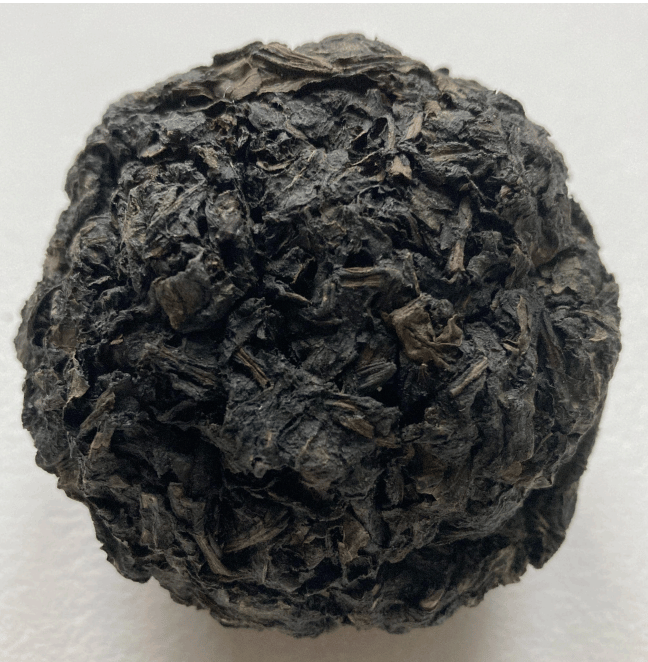
I became particularly entranced by the story of the lost hamlet of Isatica. Built during the 18th century by Mr J. Cartwright near Brothertoft, it consisted of cottages, a school, and a woad mill. The name Isatica was derived from Isatis, which has its origins in the Latin word “Isazein” and the Greek word “Isadso”, both of which are linked to the ancient use of woad to treat wounds. The second part of the Latin term for woad, tinctoria, refers to its use as a dye5. When woad farming ended in Isatica and Mr Cartwright subsequently left for London, the hamlet became deserted and today there is no trace. Apart from a brief mention in the literature there is nothing to mark its existence. It has, like so many things in the marshy liminal fenlands, emerged and then disappeared once again into the mists of time. In this ethereal landscape full of myth and folklore, transience and ephemerality are the guiding forces.
The Fen landscape was drained and re-claimed through the building of large networks of dykes and drains in long straight lines, imposing geometric linearity on this wild place and drying out the surface. As a medicinal plant, woad is considered to be drying and binding. It was commonly used topically, to dry out ulcers, as well as to staunch bleeding. Culpeper states that "the ointment is excellently good for such ulcers as abound with moisture” - a medicine to dry out wet places. It was often applied to the region of the spleen, which TCM understands to cause an accumulation of damp and phlegm when it isn’t functioning properly. 11
Even as land drainage made large-scale food production possible, and contributed to the elimination of malaria or fen ague - a major cause of illness and death in the area from the 15th to 19th centuries, the drying out of the land caused the disappearance of the indigenous fenland way of life that had survived for thousands of years and was based on wildfowling, shing, eeling and reed-cutting, reliant upon the rich natural biodiversity of the region. Indigenous fenlanders were widely regarded by outsiders as ‘primitive’, ‘wild’ 13 and sickly due to the fen ague and the associated practice of using opium to relieve the pain. There was a drive to tame this wild environment and the perceived wild people who lived there. Huisman (2017) quotes an anonymous source from 1685 which “describes the change of men and manners” when “souls of sedge shall understand discourse, new hands shall learn to work” and “new legs shall go to church, new knees shall kneel”. The erce resistance of the Fenlanders to the drainage plans and loss of their common land and livelihood was legendary and went on for centuries 12. The unocial Fenland ag created in 2017 features a tiger - a reference to the Fen Tigers who often violently resisted the drainage work of Vermuyden in the 17th century. But after centuries of resistance they were eventually worn down, and the large-scale drainage schemes were fully realised.
Today this much drier and apparently solid land belies the fact that it is slowly shrinking and sinking and already beginning to merge once again with the vast blue of the sea. Just like the old Mesolithic land mass of Doggerland that once linked Britain with the rest of Europe but is now drowned beneath the North Sea, the Fens too are likely to eventually disappear. Roads and houses suer from subsidence and the threat of inundation is very real. Ecological zones here are ever-shifting. There is a steadily growing call to allow the natural wetlands to return. The value of their biodiversity and the natural ood protection they provide is being recognised, along with the realisation that drainage and intensive farming of the peat fenlands has not only caused erosion of the peat, but has been releasing vast quantities of stored carbon into the atmosphere as carbon dioxide13.
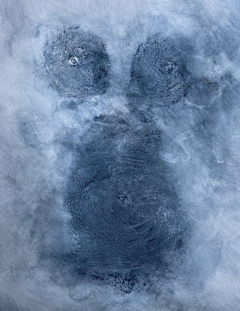
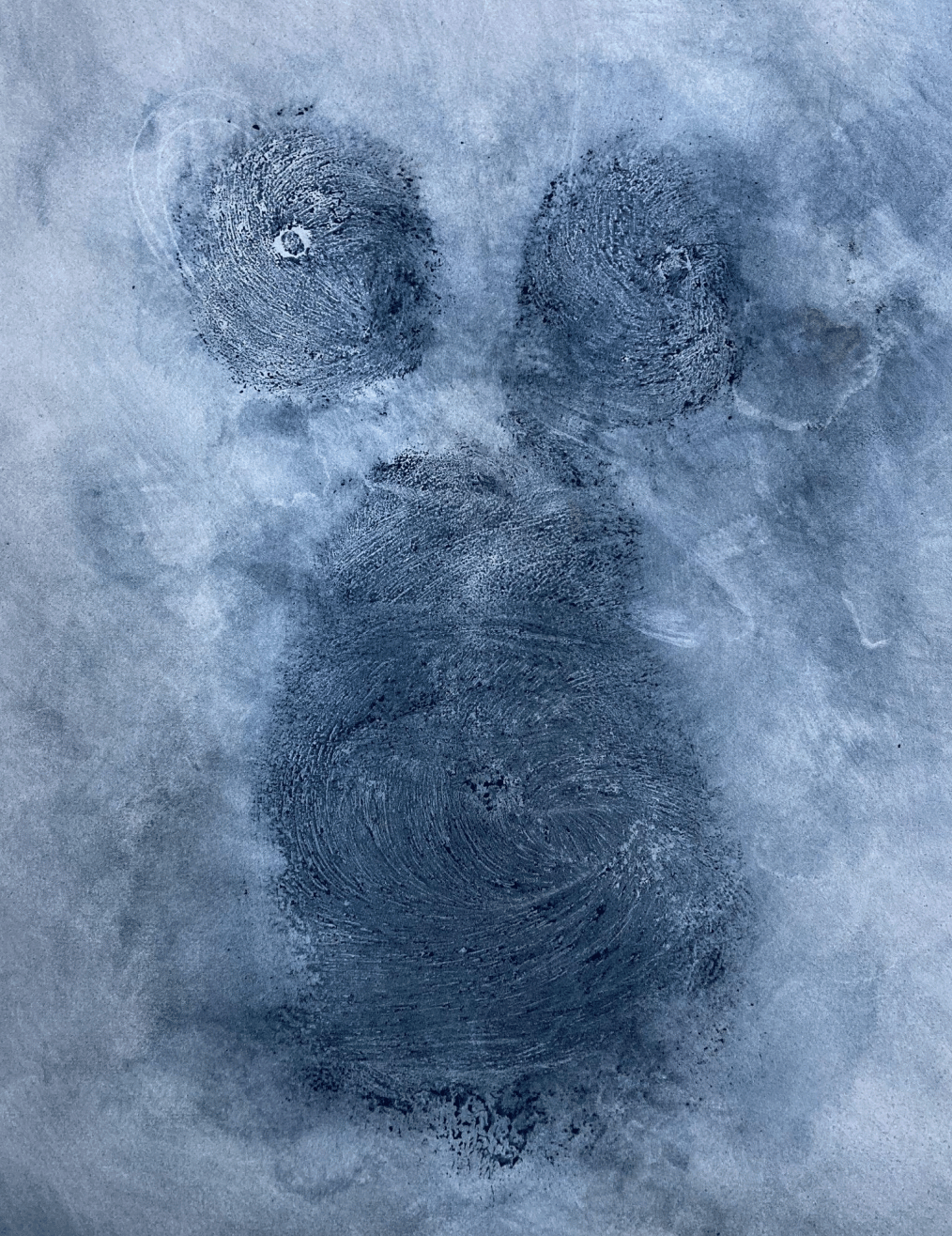
As my work with woad deepened, I felt drawn to make body prints as a way to integrate the history, uses and memory that seemed to emerge from the plant itself combined with my research. To begin with, these were stark body prints on paper, unintegrated, the paint sitting on the surface. But the innite woad-blue skies and limitless horizon of my Fenland walks seemed to elicit a merging of body and space, appearance and disappearance. The process invited attention to the integration of the surface of the body and what lies beneath and within, down through the layers of skin and history, an integration with the layers of peat and silt now that the history of the and and its people had become more visible to me. The invisible becoming visible.
It was, at times, a deeply melancholic and therapeutic process: one that seemed to blur the illusory boundaries between body and landscape, and past, present and future. The ritual application of paint to the skin, imagining how this might have been done in the Iron Age, highlighted the corporeality of existence. I relished the opportunity to reect on mortality: on the transience of life, and the appearance and disappearance not only of human bodies, buildings, stories and ways of life, but the bodies and lives of countless other beings and entire landscapes. And perhaps, through bringing awareness to voices and histories from inside the Fenlands themselves, through making the invisible visible, woad also invites a reconsideration of the multiple dichotomies in our world which create articial boundaries -; between wild wetlanders and domestic drylanders, and between many other peoples 14.
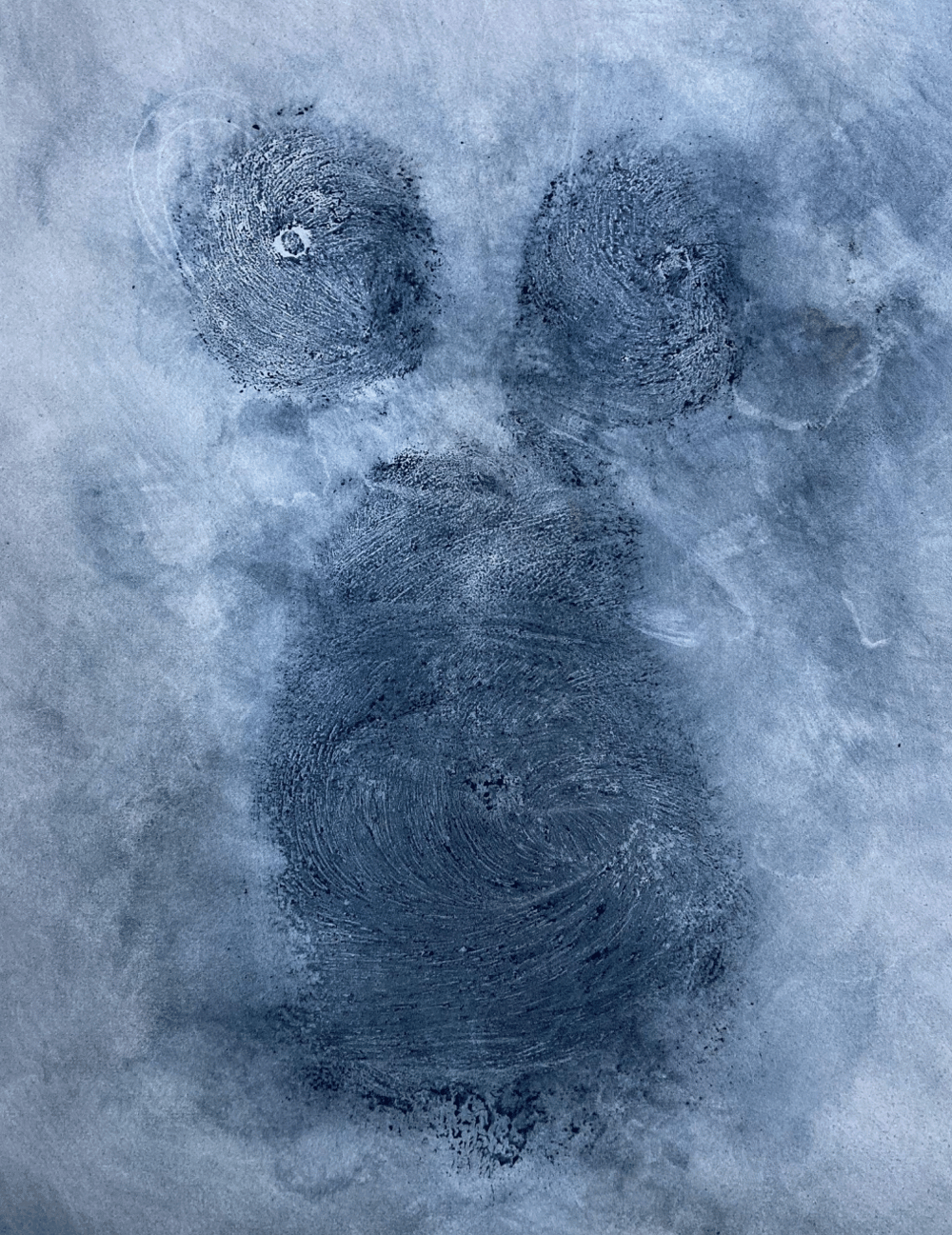
Following the repeated application of woad, my skin, body and soul felt revitalised, renewed, reorientated and reintegrated with the land; a healing down through the layers. Disrupted and emptied, heart, mind and eyes opened. For that I am deeply grateful to the teachings and strong medicine of Isatis tinctoria.
My references to Yves Klein’s work were taken from this website, which provides an extensive archive of his ideas together with writing, images and videos https://www.yvesklein.com/en/bio/,Hamburger, M. (2002). Isatis tinctoria – From the rediscovery of an ancient medicinal plant towards a novel anti-inflammatory phytopharmaceutical. Retrieved March 25th, 2024 from chrome-extension://efaidnbmnnnibpcajpcglclendmkaj/https://www.researchgate.net/prole/ Matthias-Hamburger/publication/226137249_Isatis_tinctoria_-From_the_rediscovery_of_an ancient_medicinal_plant_towards_a_novel_anti-inammatory_phytopharmaceutical/links/5559 a59508ae980ca6107611/Isatis-tinctoria-From-the-rediscovery-of-an-ancient-medicinal-plant-tow ards-a-novel-anti-inammatory-phytopharmaceutical.pdf,Culpeper’s writing on woad retrieved from https://www.complete-herbal.com/culpepper/woad.htm,Speranza et al. (2020). Isatis tinctoria L. (Woad): A Review of Its Botany, Ethnobotanical Uses, Phytochemistry, Biological Activities, and Biotechnological Studies. Retrieved January 19th 2024 from https://www.ncbi.nlm.nih.gov/pmc/articles/PMC7154893/,Society of Chemical Industry. (2006, August 14). Ancient War Paint In Fight Against Breast Cancer. ScienceDaily. Retrieved January 19th, 2024 from www.sciencedaily.com/releases/2006/08/060814094901.htm,Fitzwilliam Museum. Illuminated Manuscripts in the Making. Retrieved January 19th from https://www.tzmuseum.cam.ac.uk/illuminated/lab/overview-of-artists-materials/indigo-and-w oad/type/material,Grieve, M. (1931). A Modern Herbal. Retrieved January 19th from https://www.botanical.com/botanical/mgmh/w/woad--28.html,Teresinha Roberts has extensive and comprehensive information about the history and use of woad on her website: https://www.woad.org.uk/,Keightley, J. (2015). Woad Farming in Lincolnshire. Lincolnshire Life. Retrieved January 19th 2024 from https://www.lincolnshirelife.co.uk/heritage/woad-farming-in-lincolnshire/,Wills, N. T. (1970). Woad in the Fens. Retrieved 20/1/24 from https://www.heritagesouthholland.co.uk/article/woad-in-the-fens/,Greenwood, M. (2017). Med Acupuncture. 2017 Jun 1; 29(3): 128–137. Dysbiosis, Spleen Qi, Phlegm, and Complex Diculties. Retrieved 22nd February 2024 from https://www.ncbi.nlm.nih.gov/pmc/articles/PMC5512334/,My understanding of the history of the Fens has been drawn extensively from Francis Pryor’s (2019) book: The Fens: Discovering England’s Ancient Depths. Head of Zeus Ltd, London.,Annie Proulx (2022). Fen, Bog and Swamp: A Short History of Peatland Destruction and its Role in the Climate Crisis. 4th Estate, London. References to Doggerland on Page 44 and a wider history of the English Fens in the chapter beginning on Page 35.,Huisman, F. (2017). Misreading the Marshes: Past and Present Perceptions of the East Anglian Fens, UK. Retrieved 22nd February 2024 from https://www.researchgate.net/publication/331152686_Misreading_the_marshes_past_and_pres ent_perceptions_of_the_East_Anglian_Fens_UK
References: In-person conversations:
● Angela Daymond, Textile Artist, Teacher and woad expert. Spalding, 29th July 2022.
● Ian Hoult, Curator, Spalding Gentlemen’s Society Museum. Private viewing of archives: woad-dyed smock, woad tools, and photographs. 14th June 2022.
● Ian Howard, Woad Farmer. Dereham, 12th June 2022. http://www.thewoadcentre.co.uk/
● Jane Keightley, Local Historian. Boston, 18th May 2022. Embodied Inquiry: April to July 2022 - visits and movement practice with the land at historical woad-growing sites, sites with woad in the road name, sites of woad farms and woad mills. Included Parson Drove, Tydd St Mary, Brothertoft, Algarkirk, Wyberton, Skirbeck, Fishtoft, and the unmarked site of the old woad market in Spalding town centre.