Reading by Osmosis, Nature Interprets Us
Semâ Bekirovic
Reading by Osmosis, Nature Interprets Us by Semâ Bekirovic
Published 24 June 2026
It’s not immediately clear what we are looking at: out-of-focus, dynamic, seemingly abstract dark green and black shapes accompanied by strange underwater sounds. Jerky camera movements add to the sense of disorientation. Then a sucker attaches itself to the lens. Slowly, the screen is engulfed by alien-looking tentacles.
This is a description of one of the works shown in an exhibition which I curated at the Glazen Huis/Zone2Source in Amsterdam in the spring of 2019, and which eventually evolved into a book. The exhibition, called ‘Reading by Osmosis’, was a group show with a somewhat unusual starting point: it featured the works of only non-human participants. Osmosis (the mixing of the molecules of a solvent through a semipermeable membrane) is a chemical process at the cellular level, and comprises the basis of all known life forms. The title, ‘Reading by Osmosis’, referred to the automatic/unconscious assimilation of information.
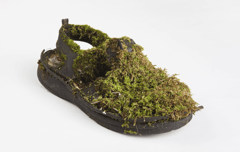
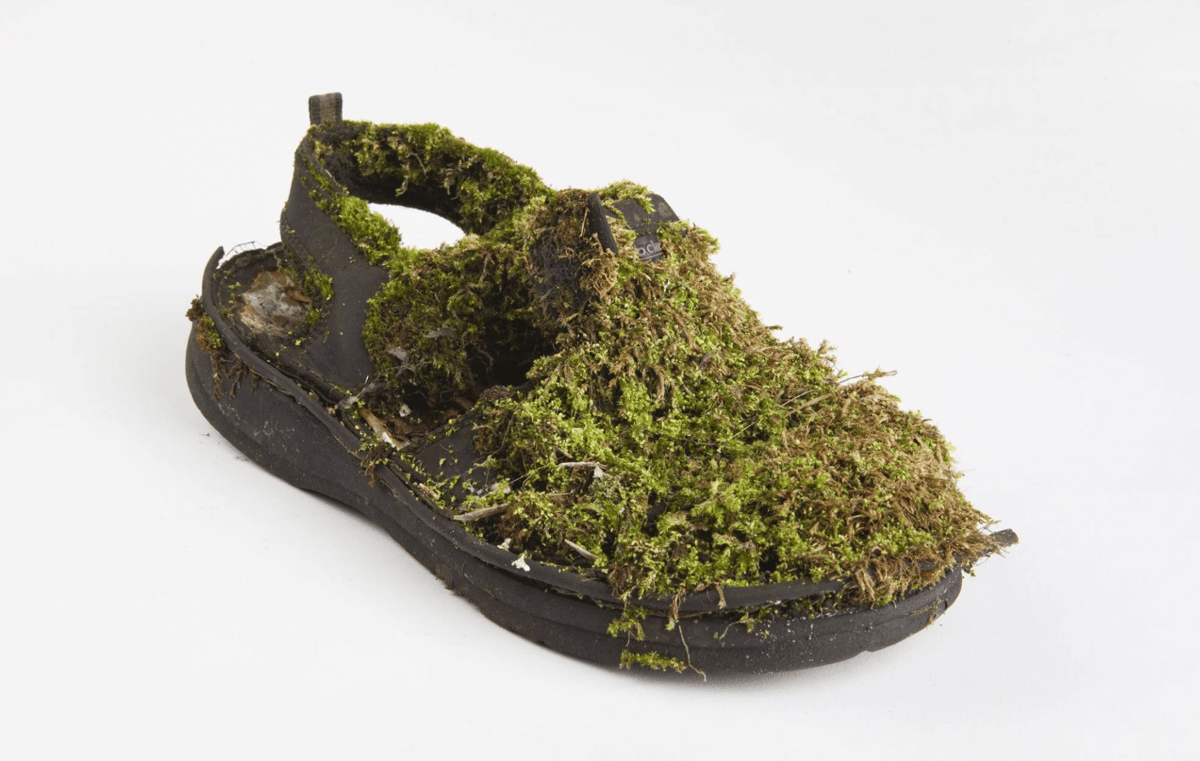
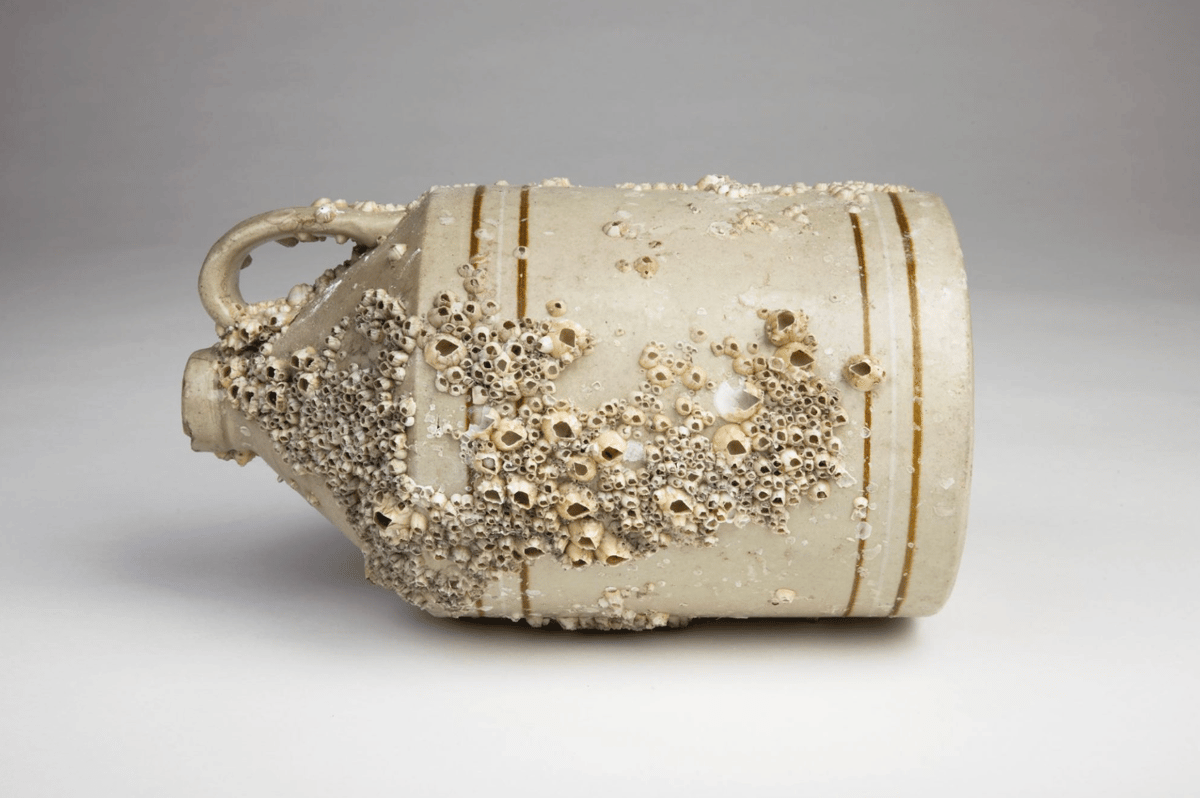
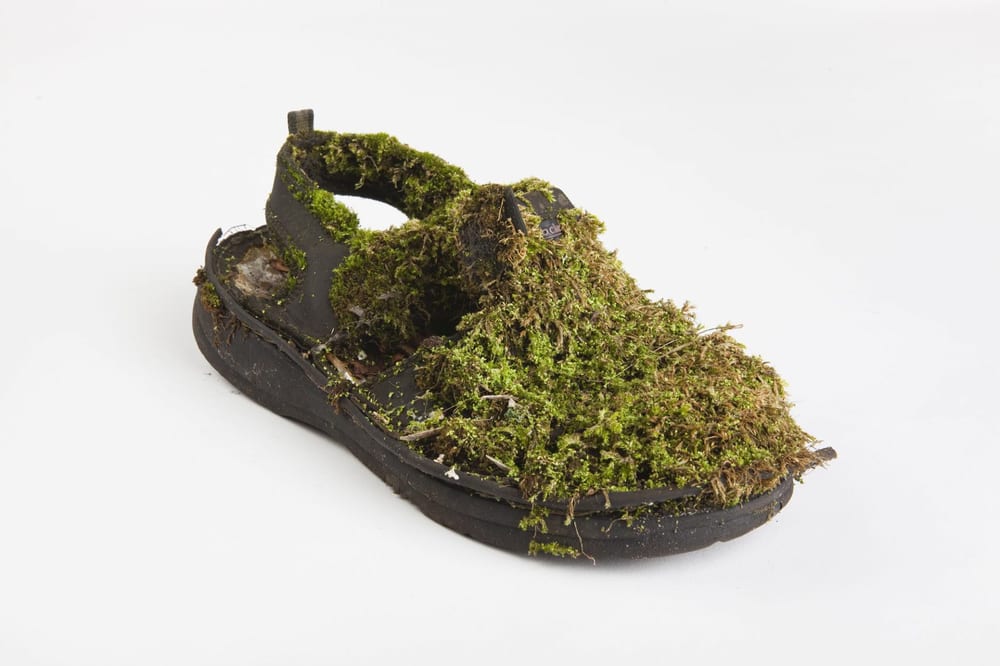
People have always turned to nature for inspiration and material. This time, it was the other way around. Among the participating artists were moss, the North Sea, oysters, fire, gravity, and a hummingbird. The video described above wasn’t made by an experimenting art student but by an octopus, showing us its world with the aid of a GoPro camera it had stolen from a diver.
Something similar occurred in 2011, when photographer David Slater set up his camera on a tripod and left it near a group of crested macaques. Macaques are curious by nature, and they soon began enthusiastically pushing buttons, possibly inspired by Slater himself. The result was stunning: the first-ever self-portrait by a macaque. With his self-assured look and heart-warming grin, the macaque aroused a lot of emotions among viewers. The photograph soon went viral, and a fiery debate over its authorship commenced. Should Slater be allowed to show the work as his own, when the actual photo had been taken by a fellow primate? The debate escalated into a court case, which Slater eventually won. He insisted he’d put the camera there on purpose, to stimulate the macaques to take the pictures. Slater’s intentions were found to outweigh the (ultimately unknowable) intentions of the animal.
Since the advent of modernism, this intention of the maker has taken on an exceedingly important place in the arts. Prior to that, most art was essentially applied art (a portrait above the couch, a religious artefact). Modernism introduced a new (and still valid) standard: autonomy. The maker and his or her personal vision were to remain of the utmost importance in art. This adds to the cult of personality that is so pervasive in art today. Art doesn’t even have to be made by the artist him- or herself, as Duchamp taught us with his readymades (and, according to some, his rather loose interpretation of the term ‘authorship’) I find ‘intention’ to be a difficult concept. What does it really mean, to ‘intend’ something? Are we truly capable of understanding our own intentions? The human mind is a notoriously unreliable piece of equipment. Our actions and decisions emerge from a complex network of innate and acquired motives and emotions. An intention might feel conscious, rational and substantiated, but is that really the case? Neuroscientists are sceptical regarding the concept of free will. Our decisions and intentions may well be nothing more than the random results of an electro-chemical process, conditioned by antecedents.
Our actions largely appear to be driven by unconscious processes, just like the actions of other organisms. This calls into question the division between the natural and the human domains, and the hierarchical system of thought that places man at its centre. The body is an ongoing negotiation, and our view of the body as such is more about categories than about actual matter. After all, we humans are rather porous things: containers filled with dead matter and alien DNA, leaking fluids and heat. There is no clear boundary between ‘body’ and ‘not body’. A continuous process of exchange of matter is more elemental than what we traditionally view as our ‘stable’ bodies.
Surrealism and psychoanalysis both assume that the subconscious rules all human action. In his essay ‘Art As Planetary Metabolism’ (included in this book), philosopher Michael Marder suggests an equivalence between subconscious mental processes and vegetable processes. He describes the subconscious as ‘plant-like’, rhizomatic, something not centrally governed by a mind. If art originates in the subconscious, Marder doesn’t see any reason why the results of other, non-human and unconscious natural processes can’t be viewed as art.
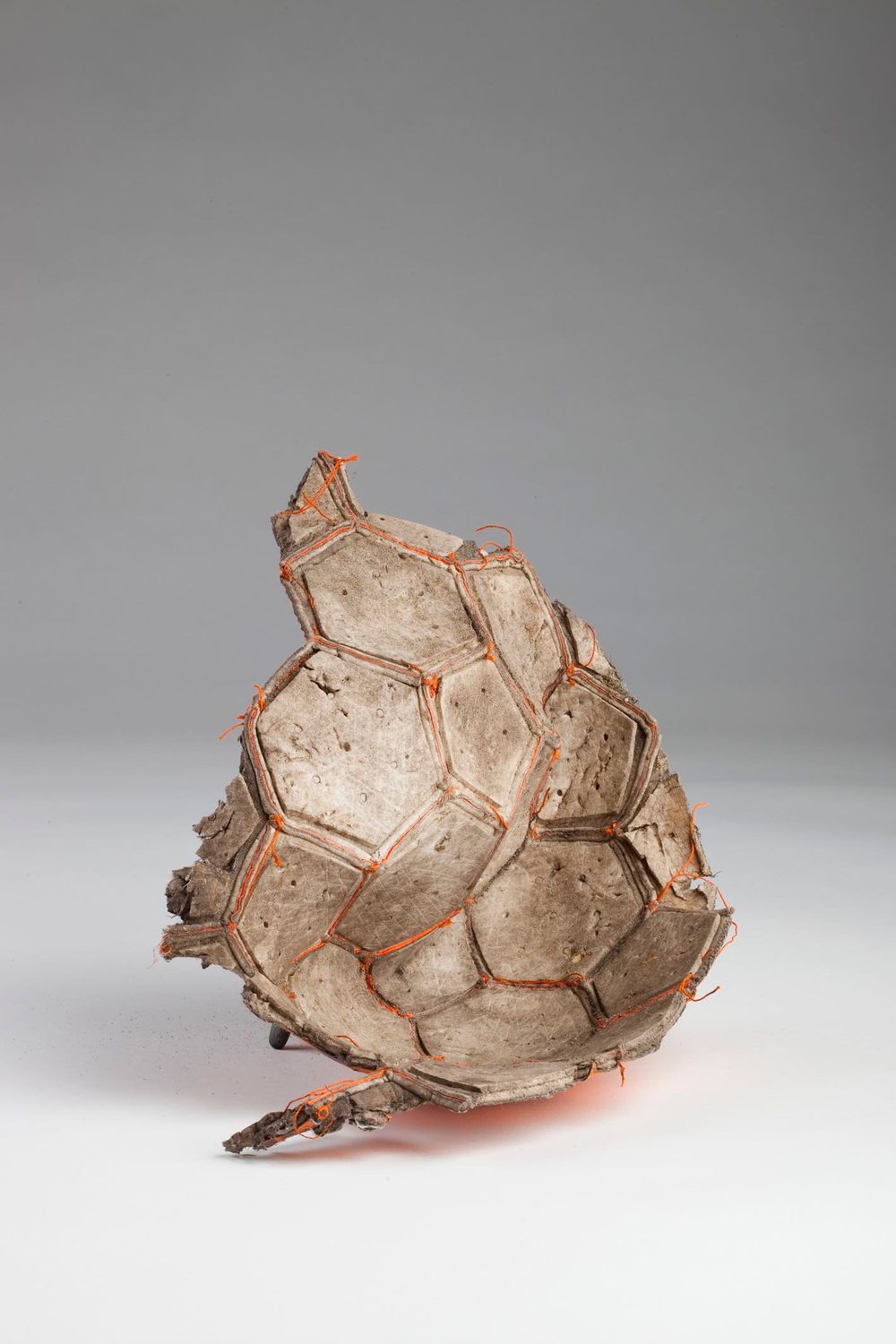
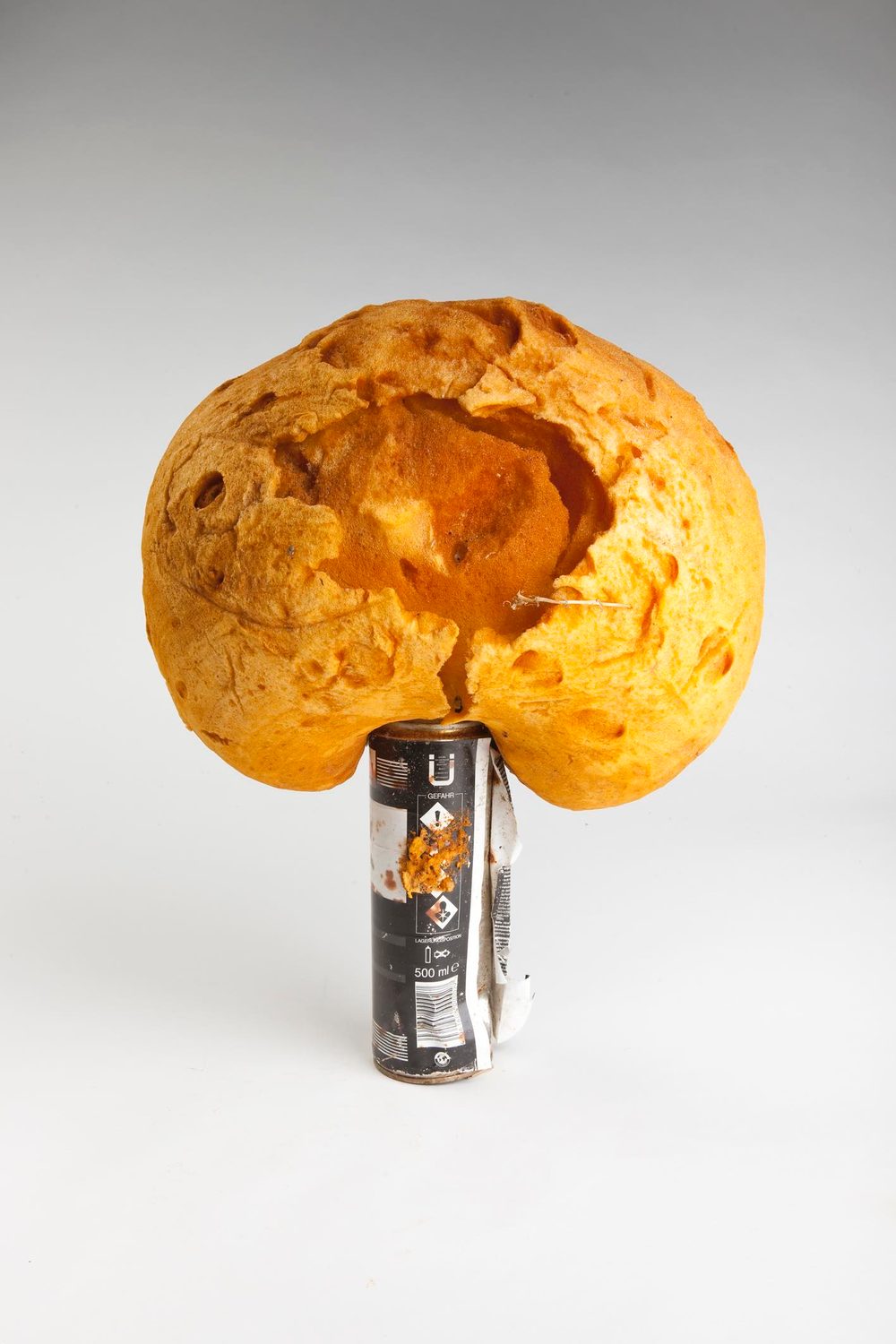
Animals and plants ‘read’, interpret and transform the world around them – meaning that they perceive the world through their senses and use that data to make estimates and possibly intervene. They in some way or other process all of the material that is available to them. Nowadays, more and more of this material has its origin in the human domain. We make objects out of the raw materials that we take from nature. These materials have been grown, gathered or mined, and transformed into the utensils and appliances we use every day. Take for instance plastics, made from crude oil, which once was biomass.
Everything we make and consume has its origins in the natural world. Finally, inevitably (and at an ever increasing rate), these objects are replaced, discarded, and forgotten, ready for appropriation by other entities and processes. One of the more striking examples of this is the so-called exclusion zones, such as the area surrounding Pripyat/Chernobyl. It is interesting to see how this area has been reclaimed by nature since it was closed to the public due to the nuclear disaster. Many animal and plant species that formerly had been displaced by humans now appear to be flourishing. Trees grow their way through abandoned classrooms; wild boars seek shelter in the ruins of abandoned farms. This apparent idyll has a dark side, however. We might almost forget that the toxicity of the radioactivity, which is still very much present, has a continuing disruptive influence on all organic matter in the vicinity. Plant material is not turning into humus, and animals are suffering from various illnesses.
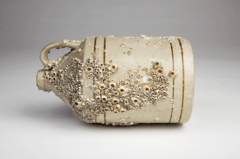
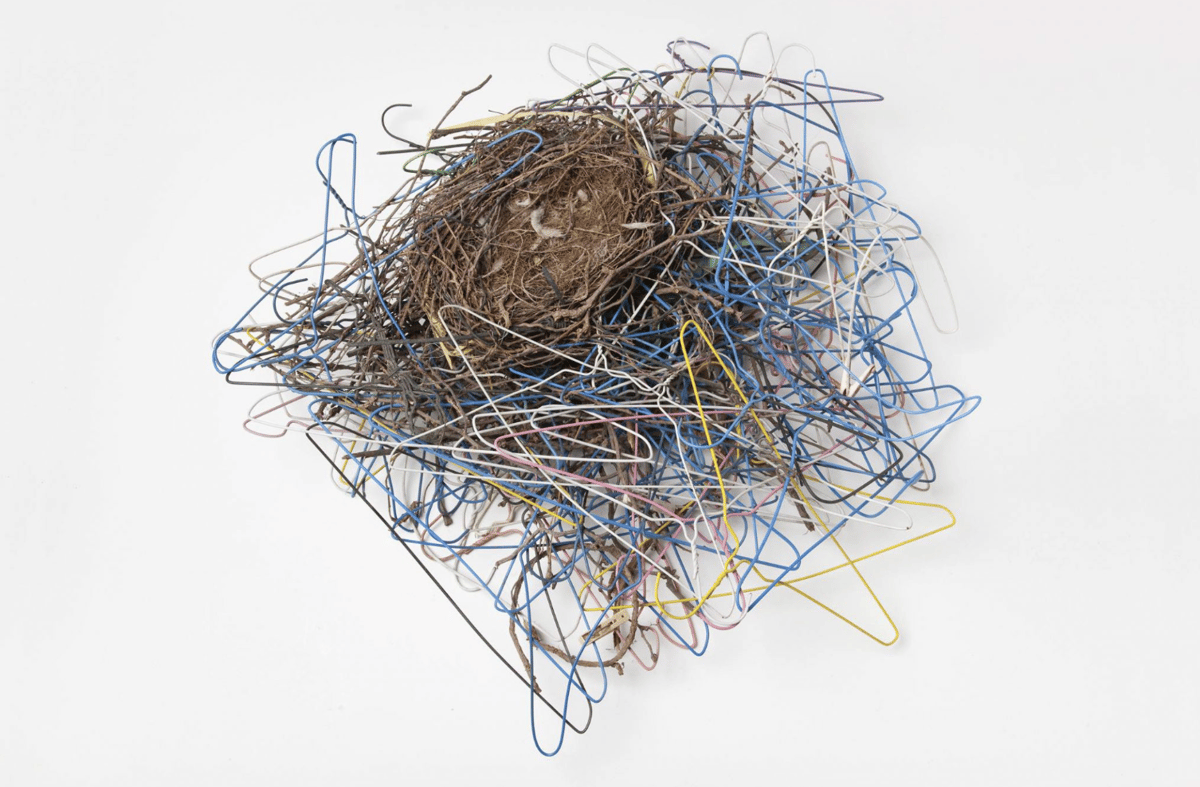
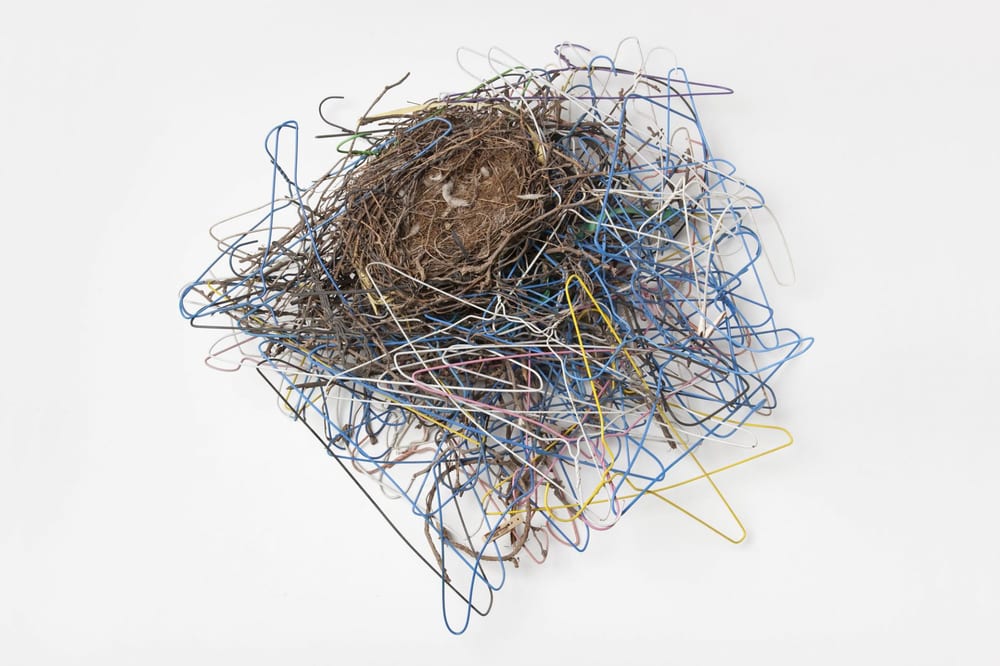
Everywhere, from abandoned industrial sites to our own backyards, we can observe the tension between the world that we have constructed and the many natural processes interacting with our constructions (and, of course, each other). We can see this field of tension as a clash of values. What is valuable to us isn’t necessarily so for weeds, which quickly reclaim an abandoned building site; or my cat, playfully destroying my favourite sweater. One entity’s home is the next entity’s food. What’s junk to some is a treasure to others. In many instances, the use of material from the human domain by non-human entities seems to be a mere act of resilience, but in some cases, man-made stuff appears to be favored over more traditional material. The common coots that populate the Amsterdam canals, for example, thrive not in spite of but because of all the garbage that’s floating around in their habitat. They use our junk as nesting material, with all kinds of bizarre aesthetical implications. It seems that it’s not just us who interpret nature; nature interprets us as well.
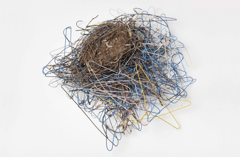
Not only living organisms, but also climatological and geological processes transform the world around them: the sea, hammering the cliffs; an earthquake reducing a city to rubble and chaos. Nature doesn’t appear to take us into account all that much. It’s always ready to upend our deceptively familiar world. All these processes operate according to systems, laws specific to them, which leads to a great diversity of results. Whether engendered by an animal or by a force of nature, each of these results has its own aesthetic – an aesthetic which, surprisingly, often brings contemporary art to mind. Reading by Osmosis researches the different ways and means used by natural processes to reclaim man made artefacts: the precise path chosen by moss across a soccer ball; a newspaper rendered unreadable by the rain; nests built by crows out of clothes hangers stolen from drying racks.
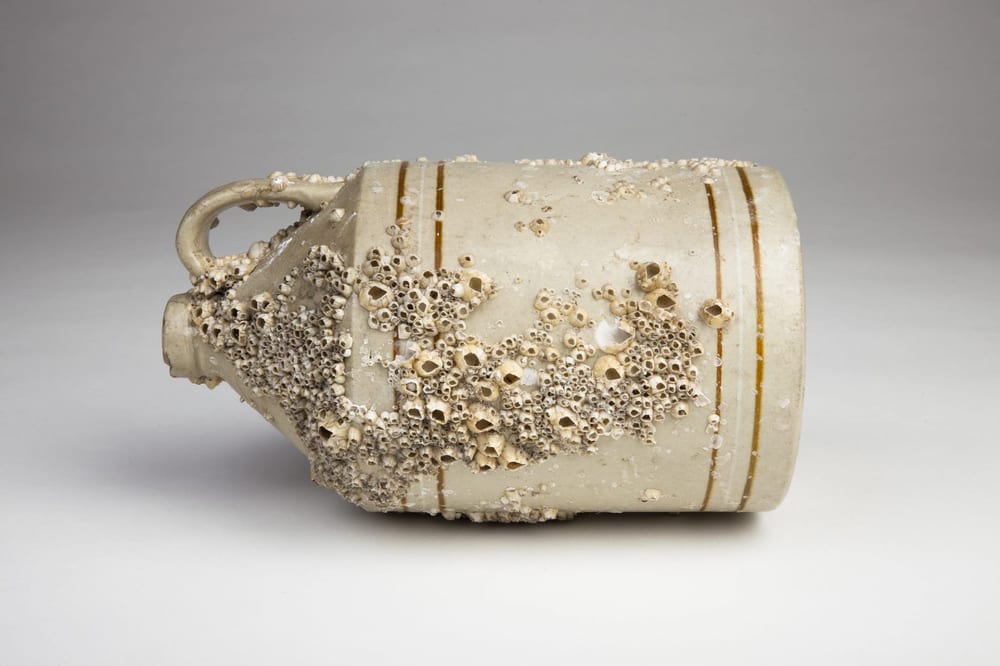
The objects depicted in this book came to me through different channels. Some I found myself during my explorations of post-industrial dump sites. Others were brought to me by fellow artists or borrowed from art collections. The background stories of these objects and the people who brought them to me could fill a whole other book. But that would once again have placed man at the centre of the proceedings, which is something I have purposely tried to avoid.
Historically, the things we have valued as art tell us something about the society we live in. An example: in the past, women were viewed as being incapable of originality, and non-western art practices were seen as primitive. Nature has inspired humankind ever since the dawn of civilization. And, from the 1960s onward, artists have allowed natural processes into their practice. Many of my own works fall into this category. In this book, I have tried to extend this idea and stretch our understanding of art to encompass the non-human domain, until the notion of human authorship pretty much disappears.
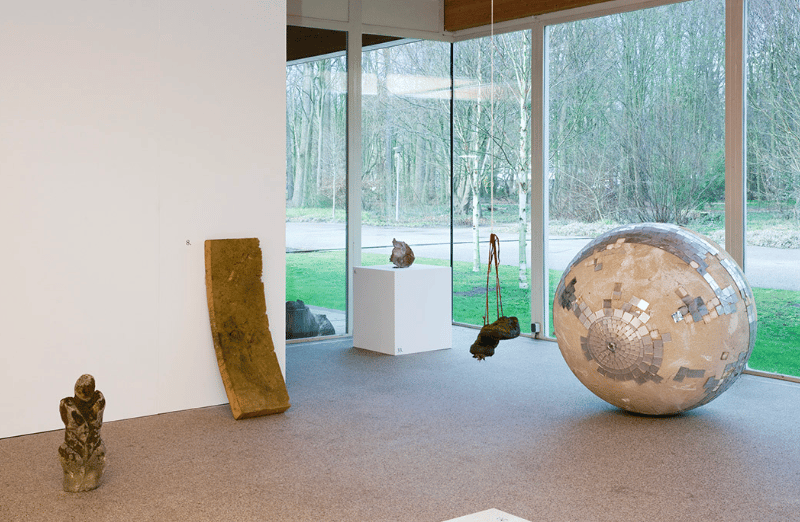
Reading by Osmosis, exhibition view, Zone2Source, Amsterdam, 2019
Contrary to the work of an artist like Duchamp, who appropriated found objects, thereby turning them into art, the works in this book emphatically lack a human author. The animals, plants and natural phenomena that made these works are acknowledged as artists here. In some cases, the history of a work was difficult to ascertain, making human interpretation unavoidable. Things we associate with art, like play, symmetry, or creativity, can be found everywhere in the natural world. Still, you might wonder what the point is in extending the definition of art into the non-human domain. I am not under the illusion that cows, the wind or snowflakes will in some way appreciate their new status as artists. Reading by Osmosis is a project for a human audience, and is meant more as a mirror for us to look in, to re-think existing values and hierarchical systems.
I don’t suppose it is necessary to elucidate the current ecological situation. We know that man is a fragile creature and is, as the cliché goes, by no means an island. The literal and figurative, semi-permeable membrane that makes life possible also makes us vulnerable. The universe, our planet, our cities, our bodies, and countless other inseparably connected processes influence each other, each according to their own logic. If we open ourselves up to a broader, all-encompassing understanding of art, allowing non- human makers their place, we might curb our habit of putting humans front and centre in our worldview. There is an infinity of possible viewpoints, some unexpectedly familiar, others entirely alien. A non-hierarchical view on this enormous spectrum of perspectives will inevitably broaden our own.
(Originally published in the book Reading by Osmosis, November 2019)
I would like to thank the wind, dogs, mussels, the North Sea, a hummingbird, rain, rust, dust, a spider, mice, moths and all the other animals and processes whose work is featured in this book. I would also like to thank all the institutions and humans who made this project possible:
Everybody who sponsored us trough Voor de Kunst crowdfunding.
Niemeijer Fund, Amsterdam Fund for the Arts, Municipality of Amsterdam Zuid, Mondriaan Fund, ZK/U, ICI Berlin, Zone2Source, Museumgoed, Residency 11:11, London Canal Trust, Museon Den Haag, SDEI – Senckenberg, German Entomological Institute (DEI), Gananoque Wasp Nest Museum, Glazenwasserij Aanzicht, BPD Kunstcollectie.
Tudor Bratu, Marcus Bruystens, Maria Van Den Broek, Isabel Cordeiro, Bruno Ciaramicoli Cabral, Timo Demollin, Carol van Dyk, Lee Ellickson, Eric Feijten, Lotte Geeven, Rosie Heinrich, Maureen Ho, Arnoud Holleman, Studio IJm, Tomoko Kawachi, La.Va. Productions, Ruth Legg, Daniel Liu, Michael Marder, Teferi Mekonen, Tobias Mulders, Kees Moeliker, Peter Moll, Will Nash, Kerem Ozan Bayraktar, Claudia Peppel, Pia Pol, Johan Rijpma, Gustavo Sanromán, Sebastiaan Schneiders, Tytis Sonnenfeld, Mamoru Suzuki, Sophia Schultz Rocha, Jip van Steenis, Alison Sperling, Alice Smits, Roy Taylor, Elejan van der Velde, Peter Visser, Simon Wald-Lasowski, Andrew Wilson
Semâ Bekirovic (1977, Amsterdam, NL) is an artist and curator whose work explores the origins and nature of creativity. She is interested in creativity as a natural phenomenon, and the extent to which non-human entities might also be considered artists. Semâ views creativity not only in terms of expression or ideas, but as a means of survival, for humans and nonhumans alike.