ofAirThinkingHands.jpg)
ofAirThinkingHands.jpg)
Airing Ideas Through Matter
Annemarie Piscaer
Airing Ideas Through Matter by Annemarie Piscaer
Published 24 June 2026
The founder of Studio Dust reflects on unseen yet rich matter of air
I am a Dutch designer, fascinated for nearly twenty years by dust as a material - an in-between condition of the material and the immaterial. From this fascination, I initiated Studio Dust. Dust also functions as a metaphor in design, from dust to dust, highlighting interconnectedness, and forms the matter through which I think about what design is and does. Pausing as I write, I look out the window at a bright blue sky. Only by reading do I grasp that the climate crisis unfolds within it - rising CO₂ in the atmosphere - yet I cannot see it. It remains largely invisible and immaterial, difficult to grasp through immediate experience.
And yet, with every breath, I am intimately bound to these vast, abstract processes. Each inhale draws in air composed of roughly 78% nitrogen, 21% oxygen, 0.04% carbon dioxide, and countless microscopic particles, dust. With each exhale, that balance shifts: oxygen decreases, carbon dioxide increases through cellular respiration, while fine particles linger, settling deep in the lungs. Air is unseen, yet dense with pollen, soot, metal, soil, even skin.
What I breathe does not simply pass through me; it becomes part of me, shaping my body and health. In a harbor city like Rotterdam (where I live), this includes pollutants that increase the risk of respiratory and cardiovascular disease. Breathing polluted air blurs the boundary between body and environment: we carry the world within us, just as the atmosphere carries traces of us. I am not separate from climate change; I am materially implicated in it.
Articulating air makes it perceptible—its composition, health effects, and politics. Art and design play a role in making the invisible tangible, translating data and atmospheric processes into forms that can be sensed, experienced, and publicly debated, allowing ideas to be “aired”. Projects such as Pollution Pods (Michael Pinsky, 2017), We Do Not All Breathe the Same Air (Tomás Saraceno, 2021), Smog Collectors (Kim Abeles, 1987), and Smogware (by Lab AIR: Iris de Kievith and Annemarie Piscaer, 2017) exemplify this. By materializing air and its contaminants, they make abstract environmental issues graspable, enabling shared ways of understanding.
This emphasis on “airing ideas through matter” resonates with Jussi Parikka’s Multiscalar Media Matter text in Mater, which argues that matter is inseparable from the scales through which knowledge is produced, including in relation to climate change. It also aligns with Tim Ingold’s reflections in Footprints through the Weather-World: Walking, Breathing, Knowing (2010), where he suggests that knowledge does not arise from a distance, or indoors, but within the material world itself—amid the ongoing mingling of air, light, and earthly substances. Knowledge is grown as an improvisatory movement—of ‘going along’ or wandering.
As Ingold writes:
“to wander is to follow a course that is sinuous instead of straight, or literally, to wind along. And it is to winding’s namesake, the wind.”
In this essay, I explore what it means to “air” ideas and knowledge through matter within my artistic practice, drawing on my fascination with dust as a guiding material. I approach “airing” as a layered concept: airing ideas —making issues public, voicing concerns— and allowing air to pass through —drying, altering, and transforming material conditions. In this sense, “airing” resists the detached, top-down “aerial” gaze: a disembodied view from nowhere. Instead, it proposes an embodied, situated approach to knowledge —relational, responsive, and grounded in material experience.
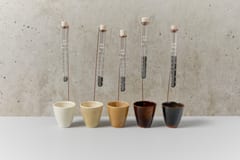
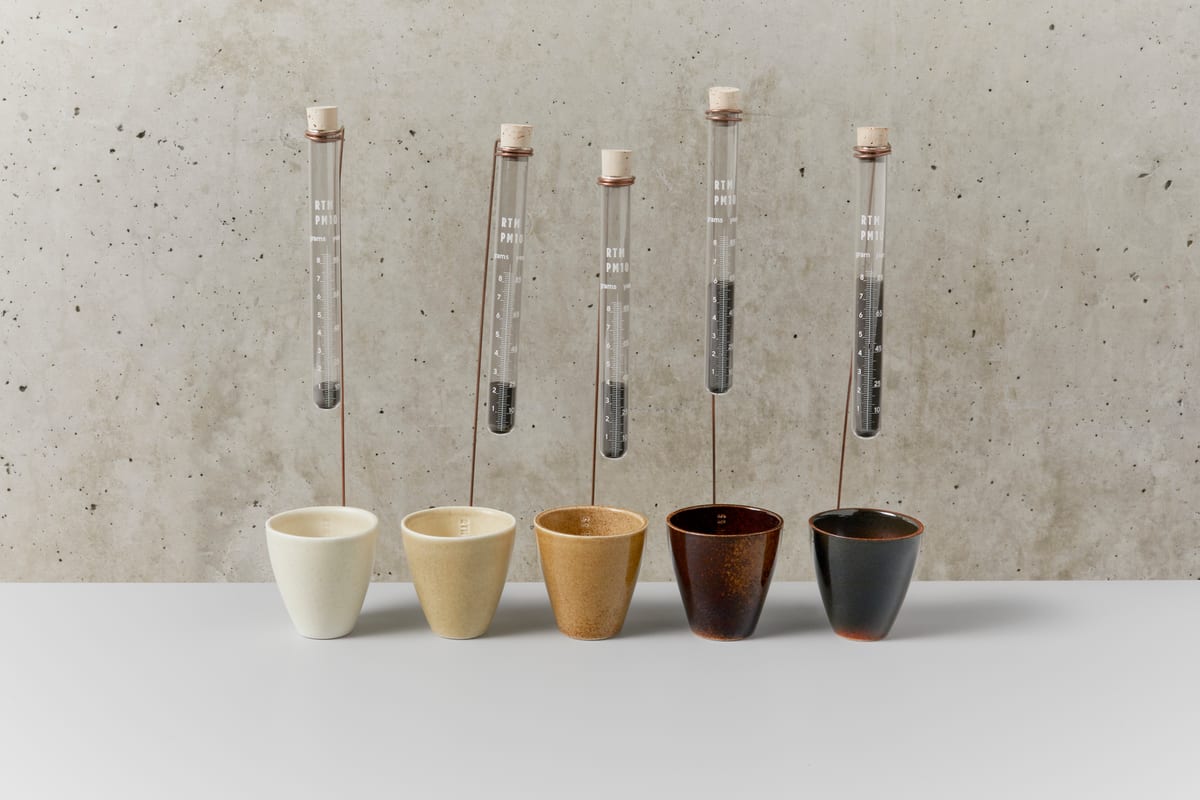
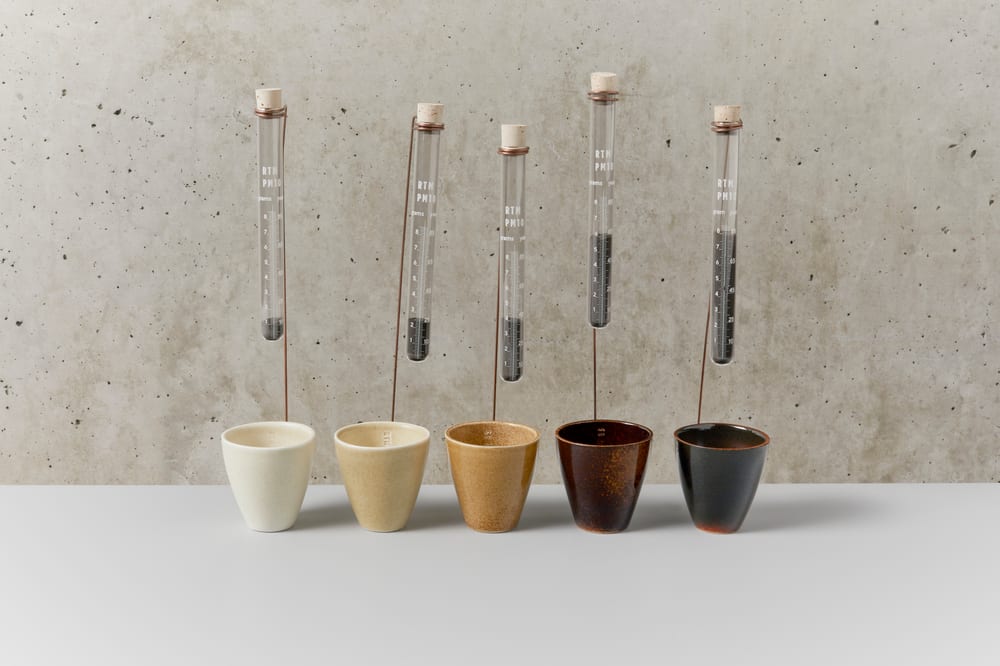
Working with dust—approaching air through its materiality—offers a way in: a means to visualize and materialize what would otherwise remain unseen. In collaboration with architect and social designer Iris de Kievith, the international project Smogware transforms air pollution into ceramic glazes on porcelain tableware. Each piece is colored using particulate matter, representing how much fine dust a person inhales over time—about one gram over ten years in cities like Rotterdam. The glazes reflect a city’s atmospheric “DNA”: sand can create translucency (as in coastal or desert-influenced air), while metal particles produce matte black surfaces typical of industrial areas like Wijk aan Zee. In a way the dust from the different cities from Milan to Amsterdam, to London, has a different material story to tell, where the design process unlocks these.
The tableware raises an intimate question: would you drink from this? By linking breathing and drinking, Smogware makes pollution bodily, sensorial, and immediate. Participants collect dust themselves on the streets, grounding the work in lived environments, while the pieces serve as tools for dialogue—such as sharing tea with local politicians, enabling people to “air” concerns within public and political contexts. Sensorial responses were revealed during the On Air exhibition in London (2022). A member of Mums for Lungs described her reaction after drinking from a Smogware teacup glazed with the amount of particulate matter a Londoner would inhale over 85 years: “I feel the pollution, and feel quite shocked by that—the blackness of the cup—and also fascinated, to be completely honest.”
Whereas Smogware operates as a communicative instrument that foregrounds the notion of airing ideas, the educational design project Lux(ury) of Air approaches “airing” as air passing through —drying, altering, and transforming material conditions and a process in which participants “wind along” and think through making. The workshop asks: what makes up our atmosphere? How dependent are we on it? Is air a necessity or a luxury? It invites students to be “in the air” through outdoor making and exposure to diverse atmospheric conditions, engaging weather and environment not as backdrop but as co-constitutive forces.
%20of%20Air%20%20%202M0A4487.jpg)
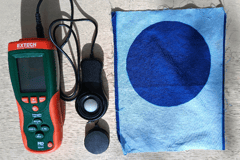
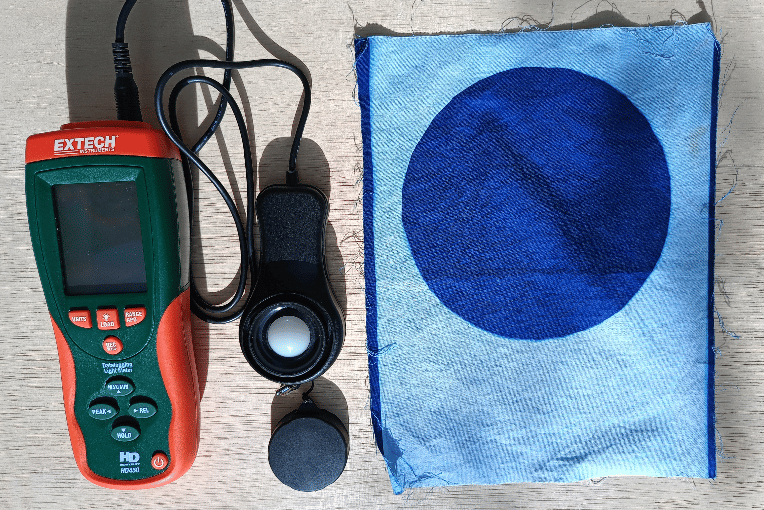
In Lux(ury) of Air, participants work outdoors by observing the sky through drawing, writing, and data collection; creating cyanotypes with light as an active agent; and drying textiles in the wind. These processes allow environmental conditions to co-shape the outcomes, giving matter a degree of agency in the making process—almost as if it is given space to “air” its own tendencies. Through measuring light—the most basic element—and collecting data in Lux, they capture sunlight in cyanotype prints: the deeper the blue, the sunnier the day, but also the cleaner the air, since a deep blue sky often indicates fewer pollutants, while a lighter blue can signal higher levels of pollution.
The workshop unfolded across three iterations: at the Graphic Lyceum Rotterdam (craft and maker course), at CASE (Centre for Arts & Sciences Education) during the Arts*Sciences Symposium in Amsterdam, and as a two-week ICI Summer School at Xiamen University, China. In each version, students worked in outdoor, situated contexts to explore how the atmosphere can be made visible, engaging directly with environmental conditions and matter as a vital force.
%20of%20Air%20%20%202M0A4493.jpg)
In Xiamen, the workshop also drew on the concept of Qi—a vital life force in Chinese philosophy connecting breath, air, movement, and life. Air was approached not only as a physical condition but as something perceptual and flowing through things, emphasizing “airing” as a process of passage. While taking students outside may seem simple, it remains a meaningful shift, as education is largely indoor-based—something that, as Tim Ingold (2010) argues, materially shapes how we think.
I end this essay, in which I have aired my ideas through a materially engaged practice, by turning toward the very act it describes: going outside, into the air. So: I’m off on a wander, wandering through the world that matters to me.
Annemarie Piscaer is a Dutch designer and researcher, PhD candidate at KU Leuven/LUCA (Unfolding Ecologies), affiliated with Avans Centre of Applied Research for Art, Design and Technology (CARADT). Her NWO-funded research-project Aerial and Airing explores situated material engagement. Trained at Design Academy Eindhoven and Master in Education in Arts, she founded Studio Dust (2014), which uses dust as material and metaphor to reveal hidden forces and interconnected systems. She co-founded Lab AIR with Iris de Kievith, including the international design project Smogware, which turns air pollution dust into ceramic glazes for tableware through participatory making, rendering the invisible issue of air pollution tangible.